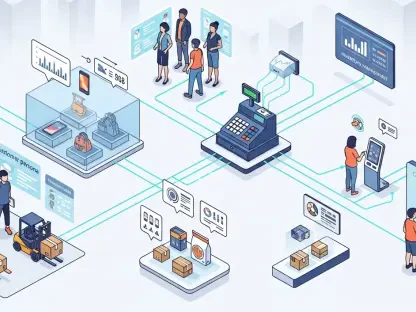

The widespread integration of Artificial Intelligence is fundamentally rearchitecting the digital commerce sector, moving far beyond simple automation to become the core engine of growth and innovation. This review will explore the evolution of AI-powered tools, their key features, performance metrics, and the impact they have had on various merchant operations. The purpose of this review is to provide a thorough understanding of the technology, its current capabilities, and its potential future development.
The Dawn of an AI-Centric Ecommerce Landscape
Artificial intelligence has rapidly transitioned from a peripheral advantage to a foundational component of the modern commerce technology stack. This shift is driven by an escalating demand for hyper-personalization, operational efficiency, and data-driven decision-making in a fiercely competitive market. Core AI principles, including machine learning, predictive analytics, and sophisticated generative models, are no longer abstract concepts but tangible tools reshaping every facet of merchant operations, from customer acquisition to post-purchase support.
The new standard for commerce involves leveraging AI to synthesize vast amounts of customer data into actionable strategies. Platforms are increasingly built around AI to automate complex tasks, predict consumer behavior, and generate bespoke content at a scale previously unimaginable. This evolution signifies a move away from reactive, manual processes toward a proactive, intelligent ecosystem where technology anticipates both merchant needs and customer desires.
An In-Depth Look at Core AI Capabilities
Generative AI for Automated Content and Ad Creation
Generative AI tools are revolutionizing how brands communicate with their audiences by automating the creation of on-brand marketing materials. Platforms like ROAS Suite demonstrate this capability by analyzing a merchant’s online store to extract key brand assets—such as logos, fonts, and product catalogs—and using them to produce structured video ad variants. This process dramatically reduces the manual effort required for content production.
This technology enables highly scalable and personalized marketing campaigns that were once prohibitively resource-intensive. For instance, Intuit Mailchimp’s integration of generative AI helps users build brand-consistent emails and marketing content from reusable templates. By tailoring messaging to different customer segments and stages of the marketing funnel, merchants can ensure greater relevance and consistency across all touchpoints, fostering a more cohesive brand experience.
Predictive Analytics for Advanced Customer Insights
The ability to forecast customer behavior is a critical advantage, and predictive analytics is the engine driving this capability. AI-powered tools now integrate deeply with CRM and customer review platforms to create a holistic, 360-degree view of the consumer. By analyzing behavioral data, purchase history, and even sentiment from reviews, these systems can identify high-value customer segments and, crucially, predict potential churn with remarkable accuracy.
This foresight allows merchants to shift from reactive to proactive engagement. Platforms like Splio and Mailchimp utilize predictive models to help brands target at-risk customers with retention campaigns or engage high-potential shoppers with personalized offers. This data-driven approach ensures that marketing efforts are directed where they will have the most significant impact, optimizing resource allocation and maximizing customer lifetime value.
Agentic and Conversational AI for Enhanced Experiences
Intelligent agents and conversational AI are reshaping the user journey, creating more interactive and intuitive shopping experiences. Agentic AI platforms, such as the one developed by Xnurta, automate complex, multi-step tasks like managing and optimizing ad campaigns across various retail media networks. These agents can analyze performance data in real time and make autonomous adjustments to maximize return on investment.
Simultaneously, conversational AI is transforming search and customer service functions. Google’s introduction of ad formats within its AI-driven search mode allows brands to engage with customers in a dynamic, conversational context. Furthermore, startups like Newo are developing human-like AI voice agents to handle customer support inquiries, guiding users from discovery to purchase and resolution with a level of sophistication that blurs the line between human and machine interaction.
Emerging Trends and Recent Innovations
The AI-commerce ecosystem is characterized by rapid innovation and the convergence of multiple technologies. A dominant trend is the deep integration of AI into retail media networks, enabling more sophisticated campaign management and optimization across platforms like Amazon and Reddit. This is complemented by the rise of novel advertising formats within conversational search experiences, which embed products directly into AI-generated dialogues and comparisons.
These advancements do not exist in a vacuum; they are converging with other key technologies to create a more seamless and unified customer journey. The integration of flexible payment options like Klarna into digital wallets such as Google Pay reduces friction at checkout, while strategic partnerships between shipping platforms and carriers offer smarter, more cost-effective logistics solutions. This holistic approach ensures that AI-driven enhancements in marketing and discovery are supported by an equally efficient and user-friendly transactional framework.
Real-World Applications Across the Commerce Funnel
Revolutionizing Marketing and Customer Relationship Management
AI is the new cornerstone of omnichannel marketing, empowering brands to unify their communications and deliver highly personalized experiences at scale. Platforms like Splio are using predictive AI to orchestrate targeted messages across email, SMS, and WhatsApp, ensuring each customer receives the right communication at the right time. This level of precision moves beyond simple segmentation to true one-to-one personalization.
Moreover, these platforms are making complex data more accessible to marketers through conversational interfaces. Features like Splio’s “Ask My CRM” allow marketing teams to query their customer data using natural language, transforming complex datasets into actionable insights without needing a data scientist. This democratization of data empowers marketers to make smarter, faster decisions and refine their strategies in real time.
Optimizing Advertising and Retail Media Spend
In the fragmented digital advertising landscape, AI has become indispensable for managing and optimizing spend across diverse channels. Automation platforms like Shirofune now offer unified dashboards that integrate major networks from Google and Meta to Reddit, allowing advertisers to centralize campaign monitoring and management. This consolidation provides a comprehensive view of performance across the entire media mix.
These tools leverage AI to automate critical but time-consuming tasks such as budget allocation and bid management. By continuously analyzing campaign data, the AI can reallocate funds to the best-performing channels and adjust bids to maximize return on ad spend (ROAS). This not only improves efficiency but also enables a more strategic approach to advertising, freeing up human teams to focus on higher-level creative and strategic planning.
Streamlining Payments, Shipping, and B2B Operations
The impact of AI and automation extends deep into the logistical and transactional fabric of commerce. In B2B commerce, for example, Salesforce’s acquisition of Cimulate introduces an AI-powered intent engine designed to improve product discovery by better understanding user context and goals. This leads to more relevant search results and a more efficient procurement process for business buyers.
Transactional processes are also becoming smarter and more efficient. Innovations like Amazon’s Pay by Bank in the U.K. leverage account-to-account payments for enhanced security and faster refunds. In logistics, strategic partnerships between platforms like Easyship and carriers such as FedEx provide small businesses with access to discounted shipping rates, leveling the playing field and improving the post-purchase experience for their customers.
Prevailing Challenges and Market Limitations
Despite the rapid advancements, the widespread adoption of AI in commerce is not without its obstacles. One of the primary technical hurdles is data integration and quality. AI models are only as effective as the data they are trained on, and many businesses struggle with siloed, inconsistent, or incomplete datasets, which can significantly limit the performance of AI-driven tools.
Furthermore, the commerce technology landscape has become increasingly fragmented, with a proliferation of specialized AI tools for every conceivable function. For merchants, particularly small and medium-sized businesses, navigating this complex ecosystem and integrating multiple disparate systems can be a daunting task. The potential high cost of implementing and maintaining these sophisticated platforms also presents a significant barrier to entry, creating a risk of a widening technology gap between large enterprises and smaller players.
The Future Trajectory of AI in Commerce
The future of AI-powered commerce is moving decisively toward more sophisticated, human-like AI agents and deeper, more seamless platform integrations. The industry’s long-term commitment to this trajectory is evident in recent strategic acquisitions and significant funding rounds. Salesforce’s acquisition of an intent-aware context engine and Newo’s $25 million investment for developing AI voice agents signal a clear focus on building more intelligent and context-aware commerce ecosystems.
This evolution points toward a future where AI does more than just execute commands; it will anticipate needs, manage complex workflows autonomously, and interact with both merchants and consumers in a more natural and intuitive manner. As platforms become more interconnected, the result will be a highly predictive and responsive commercial environment where the entire customer journey, from initial discovery to final delivery, is orchestrated by intelligent systems.
Final Assessment and Strategic Takeaways
The evidence reviewed established that Artificial Intelligence has transcended its status as an optional add-on to become a critical driver of competitive advantage in digital commerce. The tools and trends analyzed underscore a fundamental shift in how merchants operate, with AI-powered automation, personalization, and data analysis becoming the new standards for success. This technology proved instrumental in optimizing everything from ad creative and campaign management to customer service and logistics.
Ultimately, merchants who strategically embraced and effectively leveraged AI to create more relevant customer experiences and more efficient operations were best positioned to thrive. The platforms that succeeded were those that not only offered powerful standalone features but also integrated them into a cohesive ecosystem. The trajectory indicated that this deep integration of intelligence across the entire commerce stack will continue to define the market leaders of tomorrow.