
The era of the ‘exclusive’ customer has effectively ended, replaced by a hyper-fragmented reality where shoppers treat brand loyalty like a casual negotiation rather than a long-term commitment. In this landscape, traditional methods of measuring success—such as total enrollment numbers or year-over-year sales—often fail to capture the true health of a brand. Retailers are now forced to confront the fact that a customer who signs up for a rewards program is not necessarily a loyal advocate. Instead, these individuals are frequently ‘promiscuous’ shoppers who maintain several memberships simultaneously to extract the maximum value from each transaction. This behavior has created a paradigm shift where companies must look beyond their own internal databases to understand how they are performing relative to their competitors. The modern challenge lies in capturing a larger ‘share of wallet’ in a market where consumers are increasingly tech-savvy and price-conscious, using mobile devices to compare deals instantly.
Analyzing Market Realities: Moving Beyond Internal Performance Data
Relying solely on internal performance data can create a dangerous illusion of growth for even the most established brands. A retailer might celebrate a significant rise in sales or program enrollment, but these numbers can hide the fact that their customers are spending even more money at rival stores. When a brand’s internal metrics show improvement while its broader market share actually shrinks, it signals that the brand is falling behind in the eyes of the consumer. To avoid this trap, retailers are adopting a broader view that measures how often a shopper prioritizes them over a competitor. This provides a more realistic look at brand health through metrics like the closure rate of shopping trips. By focusing on why a customer chose one store over another for a specific category, businesses can identify the exact points where they are losing ground and adjust their inventory or pricing.
This visibility is essential because American shoppers are spreading their budgets across more retailers than they did in previous cycles. Data indicates that even the most successful retail giants are seeing their share of the average shopper’s budget decline as consumers become more sophisticated in their purchasing habits. Instead of sticking to one favorite store, modern shoppers use their smartphones to compare prices and find the best offers in real-time before making a final decision. This fragmentation means that even if a store is gaining new households, it may still be losing the battle for those customers’ total annual spending. The goal for the period from 2026 to 2028 is to consolidate these fragmented trips into a more cohesive brand relationship. Success depends on understanding that a high volume of low-value transactions does not equate to a sustainable or loyal customer base.
Addressing Enrollment Friction: The Evolution Of Shopper Psychology
The psychology behind loyalty program participation has evolved into something purely transactional and opportunistic. Most consumers now belong to multiple free loyalty programs, often joining six or more just to grab whatever immediate rewards or discounts are available at the point of sale. However, high participation rates do not necessarily translate to high devotion; it often just means people are maximizing their savings across every store they visit without a preference. Retailers also face significant barriers to enrollment, such as app fatigue, where consumers are reluctant to download another piece of software that takes up space. Additionally, privacy concerns regarding how personal data is harvested and the fear of being bombarded with constant marketing notifications discourage many. A program that requires too much personal information upfront often drives away potential members.
In contrast to the general indifference toward free programs, paid loyalty tiers are demonstrating a much more powerful impact on consumer behavior. Shoppers are proving that they are willing to pay for memberships if the financial benefits—like free shipping and everyday savings—are clear and consistent. These programs do more than just increase the size of a single purchase; they fundamentally change how often people shop by creating a sunk-cost effect. Paid members dedicate a much larger portion of their total budget to their chosen retailer, often spending double or triple what non-members spend on digital platforms. The psychological shift occurs when the customer feels they must “earn back” their membership fee through frequent use. This leads to a virtuous cycle where the retailer becomes the default choice for the shopper, significantly reducing the likelihood of them visiting a competitor.
Maximizing Value: The Strategic Success Of Paid Loyalty Tiers
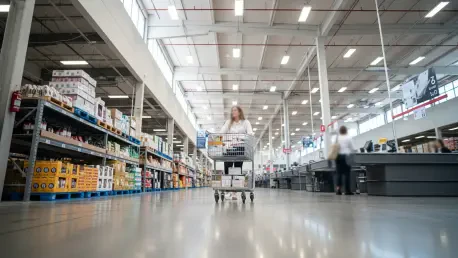
Warehouse clubs like Costco provide a perfect example of how tiered memberships can drive deeper engagement across diverse demographics. Shoppers who upgrade to premium membership levels spend significantly more and visit the store much more frequently than standard members. However, even these highly dedicated shoppers do not give a single retailer their entire budget, with data revealing that even top-tier fans still spend about 80% of their retail dollars elsewhere. This highlights a vital reality: even the best customers are omnichannel shoppers who will always look for value outside a single ecosystem. Retailers must therefore stop trying to achieve 100% loyalty and instead focus on becoming the primary destination for specific, high-value categories. By analyzing where the other 80% of the budget goes, a brand can expand its assortment to capture more sales.
Despite the rise of high-tech apps and paid tiers, loyalty is still built on a foundation of basic retail excellence that cannot be ignored. When asked what keeps them coming back, consumers consistently rank low prices, product quality, and convenient locations as more important than any specific digital reward. These programs are most effective when they act as a force multiplier for an already strong value proposition rather than a band-aid for poor service. A retailer that fails to deliver on the basics will find that no amount of digital perks or gamification can save them from a consumer base that is always looking for a better deal. The focus remains on ensuring that the physical and digital shopping experience is frictionless, as convenience has become the new currency for the modern household. Loyalty is earned at the shelf and the checkout, not just in the app.
Establishing Core Foundations: Retail Excellence In An Omnichannel World
As the industry moved forward, the key to winning involved identifying leakage points where customers were taking their business to competitors. Success was no longer defined by how many people signed up for a program, but by how much of a shopper’s total annual budget a brand could capture relative to the rest of the market. By recognizing that loyalty was no longer about exclusivity, but about being the most frequent choice in an omnichannel world, brands built strategies that offered genuine value. The transition required a departure from traditional internal growth targets toward a more aggressive pursuit of market share. Companies that prioritized the closure rate of each individual trip found themselves in a much stronger position to navigate economic shifts. They utilized data not just to track spending, but to predict when a customer was likely to stray to a competitor for a specific need.
The most successful retailers discovered that long-term retention was achieved by combining the efficiency of paid membership models with the reliability of core retail operations. They moved beyond the simple accumulation of user data to focus on the practical elimination of friction across all shopping channels. By 2026, the shift from enrollment-based metrics to share-of-wallet analysis provided a more accurate reflection of brand strength in a crowded marketplace. Those who redefined loyalty did so by acknowledging they could not own a customer’s entire budget, but they could certainly aim to be the most frequent choice through consistent execution. These organizations focused on delivering a seamless omnichannel experience that justified the consumer’s time and money. Ultimately, the industry learned that digital perks were only as strong as the logistical foundations they supported, ensuring every dollar spent was a step toward a deeper relationship.