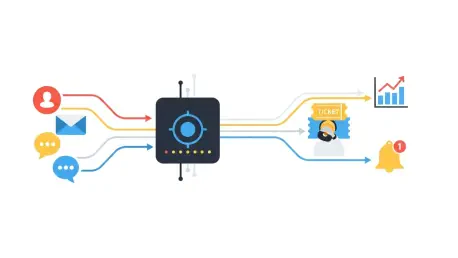

The immense volume of unstructured customer feedback generated daily has long represented both a critical resource and an overwhelming challenge for businesses seeking to understand their audience. The application of AI-Powered Sentiment Analysis in customer feedback tools represents a significant advancement in the business intelligence and customer experience sectors. This review will explore the evolution of the technology from simple keyword analysis to context-aware emotional mapping, its key features, performance in early 2026, and the impact it has had on various operational applications. The purpose of this review is to provide a thorough understanding of the technology, its current capabilities as an integrated operational tool, and its potential for future development in driving strategic business decisions.
The Foundational Shift from Measurement to Understanding
The core principles of modern AI-powered sentiment analysis have fundamentally altered how organizations perceive customer feedback, moving beyond surface-level metrics toward a deep, actionable comprehension of the customer’s voice. This evolution marks a transition from a manual, reactive process of sifting through comments to an automated, precise, and deeply operationalized function. In this new paradigm, the technology treats customer sentiment not as a decorative score or a lagging indicator but as a “first-class signal” integral to strategic decision-making.
This shift empowers businesses to translate vast quantities of unstructured qualitative feedback into a coherent, actionable language for product, support, and marketing teams. Rather than relying on anecdotal evidence or biased survey samples, decision-makers can now access a synthesized view of customer emotion, identifying specific pain points and moments of delight at scale. This capability transforms vague notions of dissatisfaction into specific, addressable issues, enabling a more agile and responsive approach to business strategy and operations.
Key Technological Advancements and Core Features
From Keyword Spotting to Context-Aware Analysis
The most significant technological leap in sentiment analysis has been the move away from brittle, keyword-based logic toward sophisticated AI models capable of understanding context. Early iterations of this technology relied on identifying simple positive or negative words, a method that frequently failed to capture nuance, sarcasm, or mixed emotions. A comment like, “Fantastic, my package is delayed again,” would often be misinterpreted, leading to inaccurate data and flawed conclusions.
Modern systems, however, analyze surrounding phrases, conversational turns, and inferred intent to grasp the true underlying sentiment. This context-aware approach is particularly crucial for identifying subtle but critical signals like “thin negatives”—politely worded feedback that masks deep dissatisfaction and often predicts customer churn. By understanding that a statement such as, “I suppose the product works as described,” may signal resignation rather than satisfaction, businesses can intervene before a customer quietly departs for a competitor. This deeper level of comprehension provides a much more accurate and reliable foundation for action.
Mapping the Emotional Arc in Customer Interactions
Beyond analyzing static comments, a core feature of contemporary sentiment analysis is its ability to map the “emotional arc” within live service interactions, such as chat transcripts and call logs. A single conversation can contain a wide spectrum of feelings, and understanding this dynamic journey provides invaluable insights. For instance, an AI can track how a customer’s frustration level changes throughout a support call, pinpointing the exact moments where an agent’s response either de-escalated or heightened the tension.
This emotional mapping provides a detailed diagnostic tool for improving customer-facing processes. By identifying common friction points—such as a confusing prompt in a self-service system or a policy that consistently generates negative reactions—organizations can make targeted improvements. The insights derived from these emotional arcs inform everything from UI design and agent training curricula to the development of more effective escalation protocols, ensuring that the entire service experience is optimized for positive outcomes.
Latest Developments in Operationalizing Sentiment
The latest developments in the field are focused on integrating sentiment analysis directly into the fabric of business workflows, moving it beyond the realm of “analytics theater” and into a practical, operational safety net. The true value of real-time sentiment data is unlocked only when it is used to trigger immediate and relevant actions within the organization. This trend reflects a broader shift in enterprise AI, where the emphasis is on turning conversational data into automated tasks and alerts.
This operational integration ensures that customer feedback does not languish in a dashboard but instead directly drives corrective action and preventative measures. By connecting sentiment signals to ticketing systems, project management tools, and communication platforms, businesses can create automated feedback loops. This ensures that the voice of the customer is not just heard but is an active participant in shaping product development, service delivery, and overall business strategy, fostering a culture of continuous, customer-centric improvement.
Real-World Applications and Use Cases
Feedback Automation and Proactive Alerting
A prime example of operationalized sentiment is how the newest generation of feedback platforms integrates with core business systems like e-commerce engines and CRMs to trigger automated actions. These systems can monitor feedback streams for unusual patterns and respond proactively. For instance, a sudden spike in negative sentiment related to a broken promo code can instantly alert the e-commerce team, correlate the issue with a recent software deployment, and generate a high-priority incident report.
This automation extends to individual customer issues as well. A workflow can be configured to detect severe negative sentiment around a topic like refund delays, automatically opening a high-priority ticket for the finance department. Simultaneously, the system can send a pre-approved, empathetic acknowledgment to the customer and create a follow-up task for a support manager, ensuring the issue receives the appropriate level of attention and is resolved swiftly. This proactive alerting mechanism transforms the support function from reactive problem-solving to proactive issue prevention.
Emotion-Aware Routing and Prioritization
An innovative and highly impactful use case is the routing and prioritization of customer issues based on emotional intensity rather than just the stated topic. A simple query about order status can originate from a patient customer or an extremely frustrated one, and treating these cases identically is inefficient and risky. Emotion-aware systems can analyze the language and tone of an incoming request to gauge its emotional severity.
This capability allows for more intelligent resource allocation. High-intensity cases can be automatically directed to senior agents trained in de-escalation, while routine, low-emotion queries are handled by standard templates or automated systems. This approach not only improves first-contact resolution times and reduces agent burnout but also creates a fairer and more effective support ecosystem. It ensures that customers who are quietly at risk of churning receive the timely, high-touch support they need, preventing their issues from escalating.
A Unified Cross-Channel View of the Customer
One of the most powerful applications of modern sentiment analysis is its ability to unify disparate feedback streams from surveys, chat logs, call transcripts, and social media into a single, coherent narrative. Customer feedback is often fragmented across these channels, with each providing only a partial view. By synthesizing these streams, companies can uncover critical insights that would otherwise be missed in the noise of isolated data points.
This unified view allows organizations to move beyond broad generalizations and map specific emotions to distinct topics and stages of the customer journey. For example, an analysis might reveal that customers express excitement during the product discovery phase but anxiety during the checkout process due to unexpected shipping costs. This level of granularity enables product and marketing teams to pinpoint the exact sources of friction and satisfaction, allowing them to make targeted interventions that have a measurable impact on the customer experience and, ultimately, the bottom line.
Governance Privacy and Technical Challenges
Upholding Data Governance and Building Trust
As AI delves deeper into the nuances of customer emotions, the challenge of managing data responsibly becomes paramount. Building and maintaining customer trust requires a steadfast commitment to robust data governance principles. Organizations must operate on a foundation of data minimization, collecting only what is necessary for the stated purpose, and purpose limitation, ensuring that data is used only in ways the customer has consented to.
Practically, this translates into specific design choices and operational policies. Anonymization and pseudonymization techniques are essential to protect personally identifiable information (PII) within analytics datasets. Furthermore, implementing role-based access controls for raw customer quotes and configuring dashboards to show redacted data by default are critical measures. These safeguards not only ensure regulatory compliance but also demonstrate a tangible respect for customer privacy, which is fundamental to a healthy long-term relationship.
Addressing Bias and Model Inaccuracy
A significant technical hurdle for AI sentiment analysis is the reality that models can be “confidently wrong.” These systems may misinterpret regional dialects, industry-specific jargon, or cultural humor, leading to flawed classifications and misguided actions. An AI might, for instance, mistake sarcasm for genuine enthusiasm or fail to recognize the negative connotation of a niche technical term, skewing the overall analysis.
Mitigating these limitations requires a continuous and collaborative effort. High-performing organizations conduct ongoing audits, comparing AI outputs against human reviews to identify and correct systematic biases. The disagreement rate between the AI and human reviewers is treated as a critical health metric for the system, prompting recalibration and retraining. This human-in-the-loop approach fosters a culture of humility and continuous improvement, acknowledging that AI is a powerful tool but one that requires constant vigilance and refinement to remain accurate and fair.
Future Outlook and Implementation Strategy
A Practical Framework for Platform Evaluation
As organizations look to adopt or upgrade their sentiment analysis capabilities, a practical framework for platform evaluation is essential. The focus should extend beyond the core accuracy of the AI model to encompass the broader operational and governance features that determine its real-world value. Key vendor evaluation criteria for the near future include robust data controls, such as the ability to set distinct retention policies for raw text versus aggregated insights, and sophisticated PII redaction capabilities that function automatically across all channels.
Furthermore, model explainability—the ability of the system to show which words or phrases influenced its classification—is crucial for building trust and enabling effective correction. Seamless integrations with operational tools like ticketing systems and product management platforms are non-negotiable for turning insights into action. Finally, proven performance across different languages and cultural contexts, alongside granular access governance controls, ensures that the platform is both effective and secure for a global user base.
Linking Sentiment Signals to Business Outcomes
The ultimate future trend and long-term impact of this technology lie in creating a clear operating rhythm that consistently turns sentiment signals into strategic business decisions. This involves building a defensible chain of evidence that connects shifts in customer sentiment to core business metrics like customer lifetime value, support costs, and churn rates. Success is not measured by a rising sentiment score alone but by its tangible effect on the health of the business.
Achieving this requires establishing a cross-functional process where insights are regularly reviewed and translated into prioritized initiatives. By blending data on customer impact with business impact and implementation effort, teams can make more strategic decisions about where to invest resources. This data-driven approach moves the conversation from subjective debates to objective, evidence-based planning, ensuring that the voice of the customer is a primary driver of sustainable growth.
Conclusion: A New Operating System for Business
In early 2026, AI-powered sentiment analysis had firmly established its transition from a niche analytics tool into a core component of a company’s operating system. The key takeaways from its evolution underscored a fundamental shift from abstract mood tracking to a precise, context-aware, and operationally integrated capability. The technology successfully empowered businesses to close the loop between listening to customers and acting on their needs. By providing this measurable and sustainable competitive advantage, AI-powered sentiment analysis offered a new, more responsive way to conduct business in an increasingly customer-centric world.