
Retailers can now use first-party data to reach consumers on third-party platforms and eventually match that offsite exposure back to a final purchase. This paradigm shift marks the transition of traditional brick-and-mortar and e-commerce giants into sophisticated media entities that leverage their unique position at the intersection of shopping intent and transactional history. Unlike standard digital advertising, which historically leaned on probabilistic models and inferred browsing behaviors, this modern ecosystem is built on a foundation of deterministic data. Every impression is backed by a verifiable record of past consumption, allowing for a level of precision that was previously unattainable. As the industry navigates the complexities of a privacy-conscious digital environment, the ability to close the loop between an advertisement and a specific sale has turned retail properties into some of the most valuable real estate in the marketing world. This evolution has not only changed how brands allocate their budgets but has also fundamentally altered the relationship between retailers and their suppliers, creating a data-driven dialogue that prioritizes measurable outcomes over vague brand awareness metrics.
The Architectural Layers of the Modern Commerce Ecosystem
The current structure of the retail media landscape is organized into three primary environments, each serving a distinct purpose in the consumer journey. Onsite media operates within the retailer’s own digital storefronts and mobile applications, representing the final frontier before a purchase decision is made. Within this space, sponsored product listings have become the standard, appearing seamlessly alongside organic search results to capture the attention of high-intent shoppers. Because these ads are integrated directly into the user experience, they avoid the typical friction associated with digital advertising, functioning more as helpful suggestions than intrusive interruptions. The value of this onsite inventory lies in its proximity to the transaction, providing brands with an immediate opportunity to influence the basket at the exact moment a consumer is looking for a solution or comparing various options.
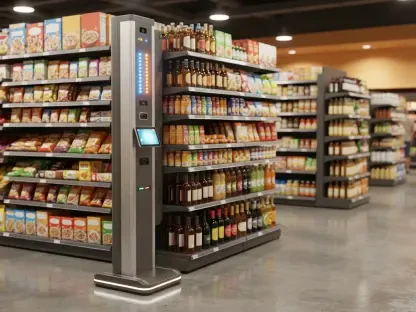
In contrast, the offsite and in-store components expand the reach of these networks beyond the digital search bar. Offsite environments utilize the retailer’s deep understanding of their customers to find those same individuals as they browse the open web, watch connected television, or engage with social media. By applying loyalty data and purchase history to programmatic buying, advertisers can maintain a consistent conversation with known shoppers across the entire internet. Meanwhile, the physical store is being revitalized through the integration of digital out-of-home screens, smart carts, and localized audio systems. These physical touchpoints are now measured with the same rigor as digital clicks, allowing for a unified view of the shopper’s path to purchase. This holistic approach ensures that a brand can influence a consumer through a video ad on a streaming platform, reinforce that message on a mobile app, and finalize the sale through a strategically placed digital display in a physical grocery aisle.
Economic Incentives and the Quest for Margin Expansion
The explosive growth of these networks is driven by the stark economic realities of the modern retail industry. For decades, traditional retail operations, particularly in high-volume sectors like grocery and general merchandise, have operated on razor-thin margins that rarely exceed three percent. By building an advertising business on top of their existing infrastructure, retailers are effectively creating a high-margin revenue stream that carries very little additional cost. The infrastructure required to serve these ads is often already paid for by the core commerce business, meaning that the majority of advertising revenue flows directly to the bottom line. This financial injection has become critical for retailers as they face rising operational costs and increased competition, providing them with the capital necessary to reinvest in price competitiveness and supply chain innovation while simultaneously increasing their overall valuation in the eyes of investors.
For the brands themselves, the strategic rationale for investing in these networks is centered on the concept of closed-loop attribution. In a digital world where third-party cookies have been phased out and privacy regulations have limited the efficacy of traditional tracking, the retailer’s “walled garden” offers a safe haven of transparency. Because the retailer owns both the ad server and the point of sale, they can definitively prove that a specific ad exposure resulted in a specific purchase. This replaces the era of proxy metrics, such as impressions or click-through rates, with hard sales data. Marketers are no longer forced to guess whether their digital spend is working; instead, they can optimize their campaigns based on the actual return on ad spend. This level of accountability has made retail media a non-negotiable part of the marketing mix, forcing a reconciliation between sales teams and brand marketers who must now collaborate to ensure their combined efforts drive both long-term loyalty and immediate conversion.
Technical Integration and the Shift Toward Programmatic Standards
The history of this sector was long defined by technical silos, where each retailer operated its own manual booking system or proprietary platform that was disconnected from the broader advertising ecosystem. In the early days, sponsored product listings were difficult to purchase through automated channels because they relied on internal product feeds that didn’t match the standard creative formats used by media agencies. However, the landscape shifted dramatically with the adoption of updated OpenRTB protocols that introduced specific objects for product identifiers. This technical breakthrough allowed retail media to be integrated into the wider programmatic world, enabling brands to use their preferred demand-side platforms to buy inventory across multiple retailers simultaneously. This automation has removed significant friction from the buying process, making it as easy to purchase a sponsored listing on a supermarket app as it is to buy a display banner on a news website.
This move toward standardization has also encouraged a burgeoning ecosystem of third-party technology providers who offer the machinery necessary for smaller retailers to compete with industry giants. While the largest players have the resources to build their own bespoke technology stacks, mid-sized retailers are increasingly turning to specialized ad-serving platforms and management tools to launch their networks. These platforms provide the necessary infrastructure for reporting, bidding, and audience segmentation, allowing any retailer with sufficient traffic and data to monetize their digital footprint. As a result, the barrier to entry has dropped, leading to a proliferation of networks across diverse categories, from home improvement and consumer electronics to travel and financial services. This democratization of technology has ensured that the benefits of commerce data are no longer restricted to a handful of global corporations, but are available to any business that sits on a wealth of transactional insights.
Measurement Integrity and the Challenge of Incrementality
As the retail media industry reached a level of maturity, the focus shifted from simple expansion to the rigorous validation of its impact. One of the primary hurdles has been the lack of uniform definitions across different networks, which often used varying lookback windows and attribution models to claim credit for sales. To combat this “wild west” atmosphere, governing bodies and industry councils introduced standardized guidelines that mandate transparency in how sales are reported. These standards have brought a much-needed level of consistency, allowing brands to compare performance across different retailers with greater confidence. However, the inherent tension of retailers “marking their own homework” remains a topic of significant discussion. Because these networks act as both the publisher and the measurement provider, there is a constant demand from advertisers for third-party verification to ensure that the reported metrics are unbiased and accurate.
Beyond the basic mechanics of attribution, the industry has turned its attention to the complex issue of incrementality. Marketers are increasingly asking whether an advertisement actually changed a consumer’s behavior or if it merely targeted someone who was already planning to make the purchase. This has led to the adoption of more sophisticated testing methodologies, such as randomized controlled trials and lift studies, which compare the behavior of an exposed group to a control group. Furthermore, the concept of the “cross-retailer halo” has emerged as a critical area of study, acknowledging that an ad seen on one platform might lead to a purchase at a different store entirely. Current measurement models are evolving to account for these omnichannel effects, recognizing that a narrow focus on immediate, direct-click sales might miss up to half of the total advertising impact. Addressing these measurement gaps is essential for the long-term credibility of retail media as it moves from a tactical performance tool to a strategic brand-building platform.
Navigating Fragmentation and the Operational Tax on Brands
The rapid proliferation of individual networks has created a highly fragmented marketplace that presents significant operational challenges for consumer packaged goods companies and other major advertisers. With the number of active retail media networks growing each year, brands are often required to manage dozens of different interfaces, each with its own terminology, audience segmentation logic, and reporting cadence. This fragmentation creates what many industry experts describe as an “operational tax,” where a substantial portion of a marketing team’s time is spent on manual data entry and campaign reconciliation rather than strategic optimization. To manage this complexity, brands are increasingly centralizing their retail media operations, bringing together disparate teams to create a unified strategy that can be executed across multiple retail partners with consistent messaging and budgeting.
This organizational shift is also reflected in how advertising budgets are being allocated and managed. Historically, retail media was funded through trade marketing or shopper marketing budgets, which were often controlled by sales teams and focused on short-term promotions or physical shelf space. However, as these networks expand their capabilities into video and connected television, they are increasingly competing for larger brand marketing budgets that were previously reserved for national television or general digital displays. This transition is forcing a cultural change within large organizations, as sales and marketing departments must align their goals and metrics. The ability to track a consumer from a top-of-funnel video ad to a final purchase has effectively erased the traditional boundaries between brand building and performance marketing, leading to a more integrated approach to total commerce growth.
Strategic Interoperability and the Future of Connected Commerce
In the most recent phase of market development, the industry moved toward a state of greater interoperability, breaking down the traditional “walled gardens” that once restricted how retail data could be used. Retailers began to integrate their valuable shopper audiences into independent demand-side platforms, allowing for more flexible activation across external inventory, such as premium video and social feeds. This level of cooperation allowed brands to leverage retailer data with unprecedented scale, reaching the right person at the right time regardless of which platform they were currently using. This shift acknowledged that the true value of a retail media network lies not just in its owned inventory, but in the unique data it provides to power smarter decision-making across the entire digital advertising ecosystem. As these barriers continued to fall, the focus shifted from platform-specific silos to a more holistic, audience-centric approach.
Innovation also reached new heights through the integration of conversational artificial intelligence and more granular omnichannel reporting. Retailers experimented with advertising within natural language interfaces, allowing brands to reach consumers through helpful, dialogue-based interactions rather than static search results. Additionally, the ability to provide retailer-level breakouts for offsite ads allowed marketers to see exactly which physical locations were benefiting from their digital spend, providing a clear picture of the online-to-offline journey. The industry successfully transitioned from a collection of isolated ad businesses into a comprehensive commerce media landscape. Leaders in the space adopted a forward-thinking perspective, prioritizing the development of transparent, easy-to-integrate solutions that proved their value in a complex world. These advancements ensured that retail media remained the gold standard for data-driven marketing, offering a roadmap for how transactional insights could be used to create more relevant and effective consumer experiences.