
From Dusty Binders to Digital Assistants: A New Era for Convenience Retail
The transition from static manual training to real-time, interactive AI support on the store floor has redefined how workers interact with their professional environment. Production-ready artificial intelligence is finally moving beyond the pilot phase into live retail environments, providing associates with tools that were previously the stuff of science fiction.
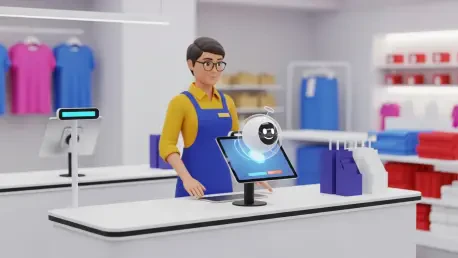
The immediate impact of Genie on the daily workflow of a Loop Neighborhood Market associate is profound. Instead of seeking out a busy supervisor, an associate now consults a voice-activated interface to resolve complex issues instantly. This shift maximizes operational uptime and ensures that customer service remains uninterrupted during busy shifts.
Addressing the Labor and Knowledge Gap in Modern Retail
Modern retail in the fuel sector frequently grapples with high turnover rates and steep learning curves for new hires. Training an employee to manage fuel pumps, food safety, and loyalty programs simultaneously is a daunting task. Maintaining premium service standards is a strategic necessity that cannot be compromised by staffing fluctuations.
Bridging the gap between complex requirements and the need for instant guidance is essential for long-term success. AI agents provide a consistent knowledge base that stays with the store even when personnel change. This continuity allows the brand to preserve its reputation for excellence while significantly reducing the stress of onboarding.
The Architecture of Innovation: How Genie Functions Within Loop
Deployment of Genie utilizes a modular architecture that implements AI-native technology without overhauling existing hardware. This lightweight integration ensures that retailers do not endure costly downtime to modernize their operations. The platform provides immediate utility that scales across multiple locations with minimal friction.
The shift toward agentic technology represents a move to autonomous workflow coordination rather than simple data retrieval. Unlike basic chatbots, these agents provide specific steps for troubleshooting hardware or managing vendor deliveries. Multilingual support enhances accessibility, ensuring guidance remains consistent across diverse shifts and worker demographics.
Measuring Success Through First-Contact Resolution
Achieving a 100% first-contact resolution milestone for tasks like POS maintenance demonstrates the true efficacy of the system. Genie handles these challenges independently, eliminating the need to escalate minor technical issues to corporate support. This capability ensures that the checkout process remains fluid and efficient for every patron.
Insights from leaders like Varish Goyal and Shyam Rao highlight the measurable utility of this specific launch. Managers are now liberated from routine inquiries, allowing them to prioritize high-level strategy and store aesthetics. This shift in managerial focus empowered leadership to enhance the overall customer experience through better engagement.
Strategies for Integrating AI Agents into Retail Workflows
Integration requires identifying specific friction points where AI can replace time-consuming manual searches and escalations. Retailers must map out frequent obstacles to ensure the agent is trained on the highest-impact solutions. Establishing an AI-native framework creates an environment where human labor is augmented by digital intelligence.
Future-proofing the floor involved preparing for a trajectory where AI capabilities expanded into end-to-end workflows. Implementation of such systems ensured that the workforce remained agile and informed. Retailers discovered that operational efficiency increased while training costs plummeted. This evolution paved the way for a more resilient retail landscape where technology and human service existed in perfect harmony.