
The modern retail landscape presents a formidable challenge, demanding that businesses simultaneously deliver flawless, personalized customer experiences while navigating the immense operational complexities of a global supply chain. In an environment where shoppers expect instant gratification and seamless service across every channel, from in-store to online, the pressure to optimize sales, enhance profitability, and maintain customer loyalty has never been greater. The traditional approach of bolting on new technologies to legacy systems is proving insufficient to meet these demands. A more profound transformation is underway, one that involves weaving intelligence directly into the very fabric of retail operations. This evolution signifies a move away from reactive problem-solving towards a proactive, data-driven ecosystem where every decision, from the stockroom to the boardroom, is informed by powerful, accessible artificial intelligence.
Empowering the Frontline with Conversational AI
A significant leap forward in retail technology involves the deployment of specialized AI agents designed to act as expert assistants for customer-facing and operational staff. By leveraging a natural language interface, these embedded tools allow employees to ask complex questions and receive immediate, actionable insights without navigating cumbersome dashboards or reports. For instance, a store associate can now instantly query inventory levels for a specific product across all nearby locations, while a contact center agent can access a customer’s complete order and return history to resolve issues with unprecedented speed and accuracy. This direct access to information on sales trends, inventory status, and customer behavior empowers frontline teams to provide a higher level of personalized support, turning potential points of friction into opportunities to build stronger customer relationships and drive sales.
The integration of this intelligence extends beyond the sales floor and into the complex world of backend systems, streamlining what were once highly technical processes. With tools like an OMS Configuration Agent, businesses can more easily manage and adapt the sophisticated logic of their order management systems, responding swiftly to changing market conditions or new corporate strategies. This holistic approach, which embeds AI directly into the core of an enterprise platform rather than offering it as a separate add-on, represents a crucial strategic shift. It ensures that every team, from marketing and sales to logistics and customer service, operates from a single, unified source of truth. The result is a more agile, cohesive organization where intelligent assistance is not an afterthought but a fundamental component of the operational workflow, enhancing efficiency and decision-making across the board.
Redefining the In-Store and Fulfillment Experience
The checkout counter, a critical touchpoint in the retail journey, is also being reimagined to enhance customer interaction and operational efficiency. The introduction of a dedicated Customer Facing Display at the point of sale transforms the payment process from a passive transaction into an engaging, interactive experience. As items are scanned, shoppers can see their cart being built in real time, apply loyalty information, input shipping details for items not on hand, and select their preferred receipt options on a dedicated screen. This seemingly simple addition yields significant benefits; it improves transactional speed by reducing verbal back-and-forth, increases accuracy by allowing customers to verify their purchase details, and provides a modern, transparent process that gives shoppers a greater sense of control. This innovation demonstrates a commitment to improving every facet of the physical shopping experience, ensuring it remains relevant and compelling.
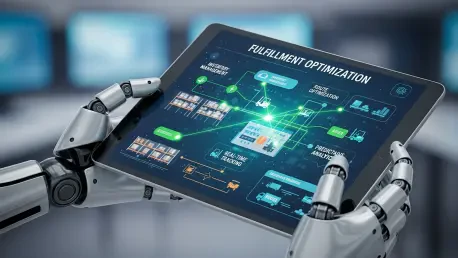
Beyond the storefront, the ability to strategically manage fulfillment has become a key differentiator for successful retailers. A new Fulfillment Optimization Simulation engine provides businesses with a powerful tool for sophisticated “what if” scenario planning, enabling them to model and compare the impact of alternative strategies on cost, speed, and service levels. By replaying historical order data against different fulfillment models—such as shipping from a distribution center versus a local store—retailers can accurately forecast the effect on key performance indicators like split shipments, delivery times, and total costs. This capability allows businesses to move from a reactive to a proactive fulfillment posture, continuously refining their approach to uncover hidden savings and improve performance. It empowers them to confidently balance the often-competing demands of customer expectations and operational profitability in an increasingly complex market.
A New Foundation for Retail Operations
The recent advancements in integrated retail platforms marked a definitive turning point for the industry. What became clear was a strategic move away from disparate technological solutions and toward a unified, intelligent operational core. The embedding of conversational AI agents, the enhancement of the in-store checkout, and the introduction of powerful fulfillment simulation tools collectively represented more than just an upgrade; they signified a fundamental rethinking of how data could be harnessed. The focus shifted decisively from merely collecting vast amounts of information to making that information immediately accessible and actionable for every employee, from the associate on the sales floor to the strategist in the executive suite. This cohesive approach established a new benchmark for operational excellence, providing retailers with the sophisticated, enterprise-ready tools needed to operate with greater confidence and agility.