
Today we’re joined by Zainab Hussain, an e-commerce strategist specializing in customer engagement and operations management. With deep experience in the B2B landscape, she’s at the forefront of integrating cutting-edge technology into the complex world of food service distribution. We’ll be exploring how innovations in AI-driven ordering and logistics technology are not just streamlining operations but are fundamentally reshaping how distributors support their customers, particularly independent restaurants, in a dynamic market.
Your new AI-driven ordering tool can translate photos and handwritten notes into digital orders. Could you walk us through the practical steps of how this technology works for a restaurant owner and what was the most significant technical hurdle in ensuring its accuracy?
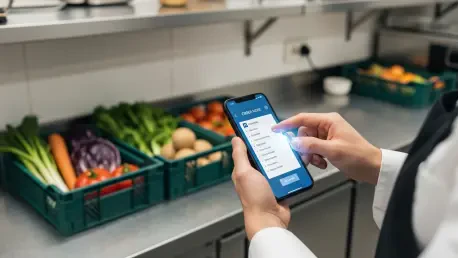
Absolutely. Imagine a busy head chef at the end of a chaotic dinner service. Instead of typing out a long order, they can simply scribble their needs on a notepad—”10 lbs Roma tomatoes, 2 cases avo, etc.”—snap a photo with their phone right inside our MOXē platform, and upload it. Our AI gets to work instantly. It uses advanced character recognition, but the real magic is that we’ve trained it on thousands of examples of actual kitchen notes, so it understands industry shorthand and even messy handwriting. It then intelligently matches those items to our product catalog and populates a digital order draft. The chef just has to give it a quick review and hit ‘confirm.’ The biggest hurdle, without a doubt, was perfecting that recognition for the incredible variety of handwriting and informal terms used in kitchens. It took an immense amount of data and refinement to teach the system the difference between “chx breast” and “chicken broth” when it’s scribbled on a greasy piece of paper.
You’ve framed the AI ordering feature as a tool for both customer retention and sales force productivity. Beyond freeing up time, what specific metrics are you using to measure its impact on sales rep performance and the “stickiness” of customers using the MOXē platform?
We look at this from two angles. For customer “stickiness,” we’re tracking adoption rates, of course, but more importantly, we’re seeing that clients who use these AI tools have a higher order frequency and a measurably lower churn rate. They become deeply integrated into our ecosystem because it’s just so much easier to do business with us; we’re actively removing friction from their day. On the sales productivity side, we measure the percentage of time our reps have reclaimed from manual order entry. We then correlate that to a clear uptick in strategic activities, like new account development and on-site consultations with existing customers to help them optimize their menus and profitability. It’s a shift from being order-takers to becoming true growth partners, and we’re seeing that reflected in both new account acquisitions and share-of-wallet growth with our established clients.
Achieving a 2% improvement in delivery efficiency with the new routing technology is a solid start. Can you describe the practical changes your drivers and logistics teams experienced during this deployment, and what specific refinements will unlock further gains as the system matures?
That 2% improvement in cases delivered per mile represents a massive operational win across our entire network. For our drivers, the change was immediate. Their daily routes are no longer static; they’re dynamic, optimized in real-time based on traffic, weather, and delivery windows. It means less time sitting in traffic and more predictable arrival times for our customers. For our logistics teams in the distribution centers, they now have a bird’s-eye view of the whole system, allowing for smarter load balancing and dispatching. As the system matures, the gains will come from deeper data integration. We’re moving toward predictive logistics—anticipating delivery bottlenecks before they happen and incorporating more granular customer data to further optimize routes. The system is constantly learning, and we expect that 2% is just the beginning.
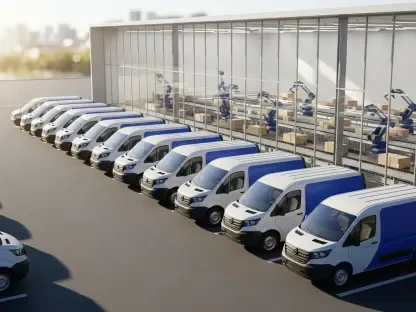
The Pronto small-truck service is expanding rapidly into new markets. What specific customer need does this agile delivery model solve that your broadline business can’t, and how do you decide which markets are best suited for its next-day service expansion?
Pronto is all about agility. Our broadline business is the backbone, delivering large, scheduled orders with incredible efficiency. But an independent restaurant might have a surprise dinner rush and run out of a key ingredient, or want to test a new special without committing to a full case. They can’t wait three days for their next big delivery. Pronto solves that immediate, smaller-scale need with its nimble, small-truck fleet, often with next-day service. It allows our customers to be more responsive to demand without having to tie up capital in excess inventory. When we decide where to expand, we look for markets with a high density of independent restaurants, healthcare, and hospitality clients—our key segments. We also analyze the geographic footprint of our existing distribution centers to ensure we can support the service efficiently from day one. We’re already in 46 markets and are targeting another 10 to 15 this year because the demand for this kind of flexibility is just exploding.
With net sales up 4.1% for the fiscal year, it’s clear your strategy is connecting with key segments like independent restaurants. How do these new digital tools and delivery options specifically help an independent restaurant owner compete more effectively in today’s uneven demand environment?
For an independent restaurant owner, every minute and every dollar counts. In an environment where customer traffic can be unpredictable, our tools become a competitive advantage. The AI ordering feature gives them back precious time they would have spent on the phone, time they can now invest in menu development or staff training. Pronto gives them the inventory flexibility of a large chain. They don’t have to over-order and risk spoilage; they can order what they need, when they need it. This combination of digital efficiency and logistical agility levels the playing field, allowing them to operate with a leanness and responsiveness that is absolutely critical to not just surviving, but thriving against larger competitors. It’s our way of being an indispensable partner in their success.
What is your forecast for the role of AI and logistics technology in the food service distribution industry over the next three to five years?
I believe we are on the cusp of a truly predictive era. Over the next three to five years, AI will move from simply translating a handwritten note to proactively suggesting orders. Imagine a system that analyzes a restaurant’s past sales, local weather forecasts, and community event schedules to predict that they’ll need extra burger buns for a sunny weekend and automatically adds it to their draft order. In logistics, the focus will be on hyper-optimization and sustainability, with AI routing trucks not just for speed, but for fuel efficiency and reduced emissions. The technology will become so integrated that it will feel less like a tool and more like an intelligent, indispensable partner, anticipating needs and solving problems before our customers even know they have them.