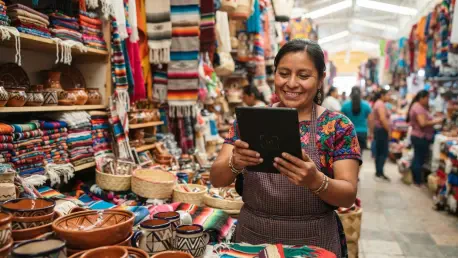

Navigating the complexities of the Mexican Tax Administration Service has become more accessible through AI tools that automatically suggest correct tax codes for every product sold. This advancement marks a significant turning point for the Mexican retail landscape as the platform T1 introduces a sophisticated, AI-driven ecosystem designed to bridge the persistent digital divide. Under the leadership of Director General Arturo Elías Slim, this initiative focuses on unifying fragmented operations through a conversational interface, providing millions of local enterprises with the necessary infrastructure to compete against established international giants. The digital transformation within the region is no longer just a luxury for large corporations but a strategic necessity for businesses of all sizes in 2026. By integrating logistics, financial compliance, and digital storefront management into a singular dashboard, the platform empowers entities that have historically remained disconnected from the modern economy. This shift is essential for a market where e-commerce volume has reached approximately MX$941 billion.
Empowering Small Businesses Through Conversational AI
Streamlining Operations: The Role of Intelligent Assistants
The heart of this technological shift lies in the AI-powered assistant known as “UNO,” a generative virtual expert designed to handle more than 250 operational tasks. Unlike traditional e-commerce back-ends that often require extensive manual data entry and complex navigation through nested menus, this system responds directly to natural language prompts. This allows business owners to manage sales, update product listings, and interact with client data as if they were communicating with a human operations manager. The intuitive nature of the tool significantly reduces the training time required for staff, making it possible for traditional retailers to modernize without hiring specialized technical teams. By removing the friction associated with legacy software, the platform ensures that small-scale entrepreneurs can devote their energy to product development and customer service. This approach effectively democratizes access to high-level enterprise tools that were previously reserved for well-funded industry leaders with massive IT budgets.
Rapid Storefront Generation: Lowering the Technical Barrier
Speed is a defining characteristic of this new retail era, exemplified by the capability to generate a fully customized, transaction-ready digital storefront in just 31 seconds from a single text prompt. This rapid deployment feature is particularly transformative for the millions of “analog” businesses in Mexico that have been hesitant to move online due to the perceived technical complexity. By providing an immediate presence in the digital marketplace, the platform lowers the barrier to entry and encourages a more inclusive economic environment. Beyond simple website creation, the AI assistant continuously monitors performance and suggests optimizations to improve conversion rates and customer engagement. This proactive support system functions as a digital consultant, guiding merchants through the nuances of online retail. As these businesses establish their digital footprints, the ability to iterate and expand becomes seamless, allowing for a scalable growth path that adapts to the specific needs of the individual business goals.
Multi-Channel Synchronization: Mitigating Operational Fatigue
Modern commerce requires a presence across multiple platforms, yet managing various sales channels often leads to significant operational fatigue for small business owners. To combat this, the architecture provides a unified multi-channel system that synchronizes with major global marketplaces including Amazon, Mercado Libre, and TikTok Shop. This integration ensures that inventory levels remain consistent across all touchpoints, effectively eliminating the risk of overselling which often plagues smaller vendors. When a product sells on one platform, the stock count is instantly updated across the entire ecosystem, including the merchant’s private storefront. This level of automation allows local sellers to maintain a professional standard of reliability that rivals large-scale international incumbents. Furthermore, the centralized dashboard aggregates data from all sources, providing a holistic view of sales trends and customer preferences, which is vital for making informed inventory and marketing decisions in a competitive environment.
Social Commerce Integration: Utilizing WhatsApp for Growth
Recognizing the unique cultural and technological habits of the Mexican market, there is a strategic move to integrate this entire functionality into WhatsApp. This decision reflects the reality that many local entrepreneurs already use the messaging app as their primary tool for customer communication and order placement. By bringing professional commerce tools directly into a familiar interface, the platform meets business owners where they are already most active. This integration will allow merchants to manage their entire digital operation—from inventory updates to shipping coordination—within a chat window. Such a move simplifies the user experience to the highest degree, removing the need to switch between multiple specialized applications. This strategy not only enhances accessibility but also leverages the high trust and engagement levels associated with mobile messaging. As social commerce continues to grow, this deep integration positions local businesses to capture a larger share of the burgeoning mobile-first consumer market.
Bridging the Gap Between Physical and Digital Sales
Inventory Synchronization: Connecting Brick-and-Mortar to Online
For many traditional retailers, the disconnect between their physical stores and their online presence creates a significant barrier to efficient growth. The introduction of the “T1 POS” module addresses this by serving as a real-time bridge between brick-and-mortar locations and digital storefronts. Every transaction made at a physical counter immediately reflects in the global inventory count, ensuring that online customers never encounter “out of stock” notifications for items sitting on a shelf. This synchronization is crucial for maintaining brand integrity and customer trust, as it prevents the logistical nightmare of manual stock adjustments across disparate systems. By unifying these touchpoints, the platform allows for a truly omnichannel experience where the boundaries between physical and digital retail are effectively erased. This level of technical sophistication enables even the smallest neighborhood shop to offer the same seamless service that consumers expect from major retailers, providing a competitive edge in a digital-first economy.
Pricing Consistency: Managing Promotional Strategies
Beyond inventory management, this unified approach allows for consistent pricing and promotional strategies across all consumer touchpoints. A merchant can launch a flash sale or update a price in the central dashboard and see it reflected instantly on their website, third-party marketplaces, and physical point-of-sale systems. This consistency is vital for building a coherent brand identity and ensuring that customers receive the same value regardless of how they choose to shop. The ability to track customer behavior across both physical and digital environments also provides invaluable insights into the buyer’s journey. Merchants can identify which products are popular in-store versus online and adjust their procurement strategies accordingly. This data-driven approach to retail management helps small businesses optimize their shelf space and reduce waste, ultimately leading to higher profit margins. By professionalizing the operations of local shops, the platform fosters a more resilient retail ecosystem capable of weathering shifts in habits.
Logistics Orchestration: Optimizing Delivery Routes
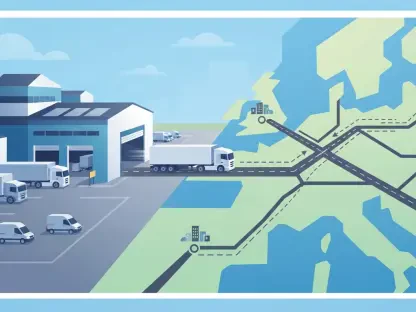
Efficient logistics remain one of the most challenging hurdles for any e-commerce operation, particularly in a geographically diverse country like Mexico. To solve this, the “T1 Envíos” module operates as an AI-driven orchestrator that integrates directly with major carriers like DHL and FedEx. The system automatically calculates the most cost-effective and efficient shipping routes based on parcel dimensions, weight, and regional delivery performance. This automation removes the guesswork for the merchant, ensuring that customers receive their orders as quickly as possible while keeping shipping costs manageable. By leveraging the collective volume of the platform, even micro-enterprises can access competitive shipping rates that were previously only available to high-volume shippers. This democratization of logistics infrastructure is essential for leveling the playing field