
The retail landscape is currently navigating a period of intense fragmentation, yet few stories are as compelling as the recent turnaround at Stitch Fix. Undergoing a significant strategic shift, the company managed to post a 9.4% increase in net revenue to $341.3 million, even as the broader apparel market contracted. To help us decode these results, we are joined by Zainab Hussain, an e-commerce strategist who has spent years analyzing how customer engagement and operational agility drive long-term retail success. Her perspective provides a unique window into how data-driven personalization is evolving from a mere recommendation engine into a robust financial moat.
The conversation explores the mechanics of high-volume curated shipments and the integration of advanced visual AI to bridge the gap between browsing and buying. We delve into the surging demand for footwear and accessories—a billion-dollar opportunity—and the delicate logistical balance required to mix private labels with national brands. Additionally, we address the social and emotional nuances of styling clients through major life changes, such as significant weight loss, and how these deep human connections are stabilizing the business against a backdrop of economic uncertainty and a slightly declining active client base.
Net revenue recently rose by over 9% despite a contracting apparel market. How are you leveraging larger eight-item shipments to offset a declining total client base, and what metrics determine when a client is ready for these higher-volume, curated formats?
The reality of the current market is that while we saw the total U.S. apparel and footwear sector contract by 0.5%, our revenue actually climbed to $341.3 million. This divergence is largely due to our pivot toward quality over quantity; even though our active client base dipped by 3.5% year-over-year to 2.288 million, we are seeing those remaining clients engage much more deeply. The transition from the traditional five-item “Fix” to our newer eight-item format is a response to clients who have high styling confidence and a history of high “keep rates.” We look closely at purchase frequency and the diversity of categories a client explores—if someone is consistently buying from our Freestyle shop and keeping most of their curated shipments, they are a prime candidate for the larger format. By offering more items, we aren’t just increasing the chances of a sale; we are capturing a larger portion of their seasonal wardrobe in one single interaction, which is why we’ve seen average order values grow for ten consecutive quarters.
Visual AI tools and conversational assistants are significantly boosting engagement and on-demand shop spending. Could you walk through the specific data points used to refine these outfit previews and explain how you measure the long-term impact on customer loyalty versus one-time purchases?
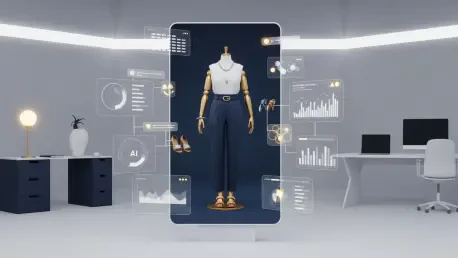
Our AI Style Assistant and the Stitch Fix Vision platform are built on a foundation of billions of proprietary data points that reflect real-world feedback on fit, budget, and aesthetic preference. When a client interacts with an AI-generated outfit idea, we track everything from the time spent viewing a specific head-to-toe look to the nuances of their conversational feedback. The results have been transformative, with 75% of users returning to these tools in subsequent months, signaling that this isn’t just a novelty but a functional part of their shopping habit. We measure loyalty by looking at the 100% increase in spending on our Freestyle on-demand shop among those who engage with these previews over a 90-day period. This data tells us that when a client can visualize a complete look, their “one-time purchase” mindset shifts into a long-term styling partnership because we have removed the friction of wondering how a single piece fits into their existing closet.
Revenue from footwear and accessories is surging alongside a growing demand for special-occasion styles. What logistical hurdles do you face when expanding into these high-growth categories, and how do you ensure your private labels successfully complement well-known national brands in a single shipment?
Expanding into footwear and accessories—which saw revenue growth of 33% and 51% respectively—presents unique spatial and inventory challenges within our distribution centers. Shoes, in particular, require more storage volume and have higher return complexities than a simple blouse, but the “wallet share” opportunity here is roughly $1 billion within our existing client base. To balance this, we use a sophisticated brand-mixing strategy where our private labels are designed using direct client feedback to fill specific gaps that national brands might miss, such as a particular heel height or a specific fabric weight. We view national brands as the “hooks” that draw clients in, while our private labels act as the perfect, data-backed accompaniment that ensures the shipment feels like a cohesive, curated wardrobe rather than a random collection of items. This synergy is a major reason why our special-occasion and night-out styles grew by 46%, as clients trust us to build the entire look from the jewelry down to the shoes.
Stylists are seeing a massive spike in requests related to significant weight loss and body changes. What specific guidance or tools are provided to stylists to manage these sensitive transitions, and how does this shift influence your inventory planning for the coming seasons?
This is an incredibly personal area of our business, especially with mentions of weight loss in request notes tripling over the last two years and jumping 75% in the most recent quarter alone. We provide our stylists with specialized training on “transitional styling,” focusing on versatile fabrics and silhouettes that can accommodate a body in flux, ensuring the client feels confident rather than frustrated by sizing labels. From an inventory standpoint, this shift requires us to be much more agile with our size curves and to increase our investment in categories like activewear and athleisure, which grew by 37% combined this past quarter. We are leveraging our algorithms to predict how these clients will cycle through sizes so we can have the right inventory ready before they even realize they need a smaller belt or a more tailored blazer. It’s about being there for the client’s “new self” with empathy and precision, which builds a level of emotional loyalty that a standard rack-and-shelf retailer simply cannot replicate.
Revenue per active client recently reached record highs, even as broader economic pressures weigh on consumer sentiment. How are you adjusting your pricing or service tiers to maintain this momentum, and what role do themed shipments play in capturing a larger share of the customer’s wallet?
Reaching a record revenue per active client of $577 is a testament to the value our clients find in a service that saves them time and reduces decision fatigue. We haven’t just hiked prices; instead, we’ve diversified our formats to include “themed Fixes” and shipments built around specific “Freestyle” items the client has already expressed interest in. These themed shipments allow us to capture seasonal “micro-moments”—like a vacation or a return-to-office push—making the purchase feel essential rather than discretionary. Even as gas prices and general inflation weigh on consumer sentiment, the deep relationship between our stylists and clients allows for a transparent dialogue about shifting budgets. If a client needs to tighten their belt one month, the stylist can pivot to high-versatility “workhorse” pieces that offer more value for the dollar, ensuring we remain their retailer of choice regardless of the economic climate.
What is your forecast for the personalized styling industry?
I anticipate that the industry will move away from the “one-size-fits-all” subscription box model and toward a hybrid ecosystem where AI-driven “always-on” styling meets human expertise. While we expect to return to year-over-year active client growth by fiscal 2027, the interim will be defined by a massive surge in “visual commerce” where shoppers expect to see themselves in outfits before they ship. The winners will be those who can leverage billions of data points to provide not just clothes, but confidence during major life transitions, effectively turning the act of shopping into a personalized service. As AI assistants become more conversational and our ability to predict fit becomes near-perfect, the distinction between “online shopping” and “having a personal stylist” will virtually disappear for the average consumer.