
The fundamental mechanics of moving goods through Mexico’s rugged terrain and congested urban corridors have entered a phase of radical reconstruction that favors precision over sheer volume. This shift represents a departure from the traditional model of simple freight transportation, evolving instead into a sophisticated, end-to-end fulfillment loop. In this new landscape, the final leg of the journey has become the primary determinant of market survival, especially as the post-surge e-commerce environment demands higher levels of agility and accountability from every participant in the supply chain.
Established retail giants and agile startups alike are recognizing that the last mile is no longer a peripheral concern but the central theater of competition. To stay relevant, traditional retailers are increasingly weaving third-party logistics providers directly into their operational fabric, creating a seamless interface between digital storefronts and physical delivery. This integration allows for a more responsive system that can adapt to the rapid fluctuations of consumer demand while maintaining a consistent brand experience that extends all the way to the customer’s doorstep.
Technological infrastructure and urban regulations are currently redefining the boundaries of delivery in major metropolitan hubs. Local governments and logistics firms are collaborating to navigate the complexities of city planning, seeking ways to alleviate traffic congestion without sacrificing delivery speed. By leveraging real-time data and sophisticated mapping tools, companies are finding ways to operate within the strictures of modern urban life, ensuring that the physical limitations of the city do not become insurmountable barriers to commercial growth.
Mapping the Trajectory of a Rapidly Evolving Delivery Ecosystem
Emergent Trends Reshaping Consumer Connectivity and Distribution
A significant trend currently reshaping the industry is the rise of hybrid logistics models that effectively blend owned fleets with versatile on-demand platforms. This approach allows companies to maintain a core infrastructure for consistent volume while tapping into networks like Uber Direct to handle unexpected surges or specialized delivery needs. By diversifying their delivery methods, businesses can ensure continuity and resilience even when faced with the inherent unpredictability of the Mexican market.
Consumer psychology has also undergone a notable transformation, moving away from a narrow focus on raw speed toward a deeper valuation of transparency and reliability. Modern shoppers are often more concerned with knowing exactly when their package will arrive than getting it in the shortest possible time. This shift has led to an increased demand for specific delivery time slots and granular tracking updates, forcing logistics providers to prioritize communication and precision over simple velocity.
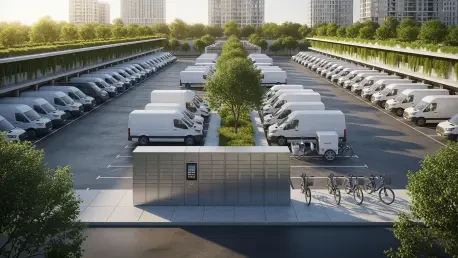
Out-of-Home solutions, including smart lockers and pickup-drop-off points, are rapidly gaining traction as a strategic means to bypass urban congestion and reduce failed delivery attempts. Furthermore, the adoption of dynamic inventory allocation is allowing companies to use artificial intelligence to position stock closer to the consumer before an order is even placed. This predictive approach minimizes the distance traveled in the final leg of the journey, directly addressing the inefficiencies that have historically plagued the logistics sector.
Deciphering Growth Indicators and the Economic Forecast for Fulfillment
Market projections for e-commerce growth indicate a sustained demand for last-mile capacity over the next several years. As more consumers across various demographics embrace digital shopping, the pressure on the fulfillment infrastructure will only intensify. Industry analysts suggest that the ability to scale operations efficiently will be the hallmark of successful companies, as they strive to meet the rising volume without incurring proportional increases in operational costs.
The logistics sector’s performance during peak volatility events, such as Hot Sale and El Buen Fin, serves as a critical benchmark for systemic resilience. These periods of intense activity reveal the strengths and weaknesses of current networks, providing valuable data that can be used to refine forecasting models and resource allocation. Companies that successfully navigate these high-pressure windows demonstrate a level of operational maturity that is essential for long-term stability in a competitive market.
Looking ahead, the scalability of multi-model networks offers a promising path for reducing capital expenditure while maintaining high service standards. By leveraging a combination of different transportation modes and delivery partners, firms can optimize their cost structures and adapt more quickly to changing market conditions. This flexible approach to infrastructure allows for a more efficient use of resources, ensuring that companies can grow their capacity in a sustainable and financially responsible manner.
Overcoming Structural Hurdles and Regional Operational Friction
The high cost of the last mile remains a formidable challenge, often accounting for more than fifty percent of total shipping expenses within the country. This disproportionate cost structure is driven by a variety of factors, including the need for specialized handling, the frequency of failed deliveries, and the inherent inefficiencies of navigating complex urban environments. Addressing these costs requires a multifaceted strategy that combines technological innovation with a fundamental rethinking of how goods are moved through the final stage of the supply chain.
Navigating the complexities of the three Mexicos presents another significant hurdle for logistics providers. The dense, traffic-heavy hubs of Mexico City and Guadalajara require vastly different strategies than the low-density rural zones or areas with inconsistent addressing systems. Successfully managing these diverse geographical realities demands a high degree of local expertise and a flexible operational model that can be tailored to the specific challenges of each region, ensuring that no segment of the population is left underserved.
Proposing strategies for balancing fixed infrastructure with variable capacity is essential for preventing margin erosion during demand fluctuations. Companies must find the right equilibrium between maintaining their own assets and utilizing third-party resources to handle peak periods. By creating a more elastic supply chain, businesses can protect their profitability while still providing the level of service that consumers have come to expect in a modern, digitally-driven economy.
Security challenges and operational limits also play a crucial role in shaping the delivery landscape. Maintaining service quality in high-risk areas requires a careful balance of proactive risk management and the establishment of clear operational boundaries. Companies are increasingly investing in secure transit protocols and real-time monitoring systems to protect both their assets and their personnel, recognizing that safety is a non-negotiable component of a reliable logistics network.
The Regulatory Framework and Security Standards in Modern Transit
Labor laws and platform regulations are significantly influencing the gig-economy drivers who form the backbone of the last-mile workforce. As the legal landscape evolves, companies must ensure that they are in full compliance with new standards while still maintaining the flexibility that makes the gig model viable. This regulatory shift is pushing the industry toward more formalized structures, which can lead to greater stability for workers but also requires careful management to avoid rising costs.
The importance of compliance with security protocols and digital data protection cannot be overstated in an era of real-time tracking and vast data collection. Protecting the integrity of the supply chain and the privacy of consumer information is vital for maintaining public trust. Logistics firms are dedicating more resources to cybersecurity and data management systems, ensuring that their technological advancements do not inadvertently create new vulnerabilities for the business or its customers.
Evolving environmental standards are also pushing companies toward the adoption of greener fleets and more optimized packaging solutions. There is a growing recognition that economic efficiency and environmental sustainability are not mutually exclusive but are, in fact, increasingly interconnected. By reducing fuel consumption through better route planning and minimizing waste in the packaging process, companies can lower their environmental impact while also improving their bottom line.
The Strategic Horizon: AI, Sustainability, and Intelligent Ecosystems
The industry is moving toward an intelligent ecosystem where artificial intelligence and data analytics serve as the central nervous system for route optimization and decision-making. These tools allow for a level of precision and foresight that was previously unattainable, enabling companies to respond to real-time changes in traffic, weather, and demand. This data-driven approach is transforming logistics from a reactive function into a proactive strategic advantage that can drive growth and innovation.
Nearshoring trends in border cities like Tijuana and Reynosa are having a profound impact on domestic logistics networks. As more manufacturing and distribution activities move closer to the North American market, the demand for sophisticated domestic transport and fulfillment services is increasing. This shift provides a unique opportunity for Mexican logistics firms to integrate themselves more deeply into global supply chains, leveraging their geographical advantage to serve both domestic and international clients.
Reverse logistics is also emerging as a critical frontier for building consumer trust rather than being viewed simply as a cost center. An efficient and transparent returns process can significantly enhance customer loyalty, as it demonstrates a company’s commitment to service even after the initial sale is completed. By streamlining the flow of goods back through the supply chain, businesses can recover value from returned items and provide a more satisfying end-to-end experience for their shoppers.
Bridging the Gap Between Digital Expectations and Physical Reality
A holistic approach that integrated advanced technology, flexible business models, and a nuanced geographic strategy became the only viable path forward for the industry. Stakeholders realized that solving the last-mile puzzle required more than just faster vehicles; it demanded a complete synchronization of the digital and physical realms. Successful firms moved beyond traditional silos to create integrated systems where inventory data and delivery logistics functioned as a single, unified entity that responded dynamically to the needs of the consumer.
Reliability emerged as the ultimate currency of trust in the Mexican market, outweighing almost every other metric of performance. Companies that consistently met their delivery promises, even in the face of structural challenges and regional friction, secured a dominant position in the minds of the public. This focus on consistency helped to stabilize the market and provided a solid foundation for the continued growth of the digital economy, proving that a dependable physical presence was the essential counterpart to a successful digital storefront.
Recommendations for the future emphasized the need for continued investment in asset relocation and predictive demand tools to achieve true logistics resilience. Stakeholders were encouraged to position their infrastructure closer to high-demand clusters and to embrace AI-driven forecasting to stay ahead of market shifts. These strategic investments allowed the industry to bridge the gap between what was promised online and what was delivered on the ground, ensuring that the Mexican logistics sector remained a vital engine of economic progress.