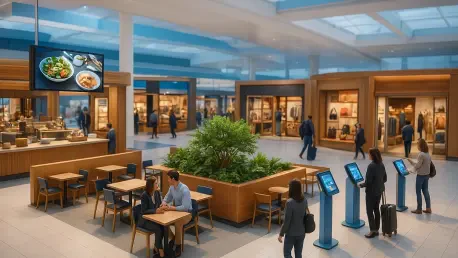

The modern airport terminal has successfully transitioned from its utilitarian origins as a simple transit point into a complex commercial landscape that functions as a premier destination for global luxury and localized culture. This evolution reflects a profound change in the aviation business model, where non-aeronautical revenue has become the lifeblood of infrastructure sustainability. Global hubs no longer view shopping and dining as secondary amenities; instead, they serve as core elements of the passenger experience, designed to engage travelers the moment they clear security.
Aviation leaders now prioritize non-aeronautical income as it provides a stable financial buffer against the volatility of ticket sales and fuel prices. Major industry concessionaires, such as Avolta, SSP, and Gebr. Heinemann, have responded by developing sophisticated retail strategies that mimic high-end urban shopping districts. While some airports rely on these third-party operators to manage their commercial portfolios, others utilize airport-owned subsidiaries to maintain tighter control over brand alignment and service quality. This dual management approach ensures that terminals remain competitive in a landscape where every square foot of floor space must justify its investment.
Analyzing Key Drivers and Market Dynamics in Travel Commerce
The current commercial environment is defined by a shift away from traditional storefronts toward integrated, immersive experiences. Airport operators are moving toward holistic layouts that blend retail, food, and beverage into a single, cohesive journey. This integration is not merely aesthetic; it is a strategic response to the changing expectations of the modern traveler who seeks efficiency alongside entertainment.
Shifting Consumer Behaviors and the Rise of the Integrated Walk-Through Model
Consumer habits have shifted toward a preference for the “central marketplace” atmosphere, where the boundaries between corridors and shops are virtually non-existent. The walk-through duty-free model, recently expanded in hubs like Munich and Vilnius, forces a natural interaction with products without creating a sense of obstruction. By removing physical barriers, airports have successfully increased the visibility of premium goods, significantly boosting impulse purchases while maintaining a steady flow of traffic toward the boarding gates.
Furthermore, there is a growing demand for a “sense of place,” where travelers want to feel the cultural identity of their destination within the terminal walls. Hubs in Perth and Belfast have successfully integrated regional produce and local design aesthetics into their commercial zones. This hyper-localization transforms the terminal into a cultural representative, offering everything from artisanal local spirits to regional culinary specialties. Hybrid dining models, such as those implemented in Edinburgh, further cater to this by providing both formal sit-down service and high-speed grab-and-go options for time-sensitive passengers.
Evaluating Growth Projections and Global Performance Metrics
Recent performance data indicates a direct correlation between the expansion of retail square footage and a rise in per-passenger spending. Major terminal overhauls, particularly those in the Asia-Pacific region like the Kansai International renovation, have demonstrated that luxury retail remains a dominant force in high-traffic hubs. From 2026 to 2030, the duty-free and food and beverage sectors are projected to experience steady growth as airports continue to diversify their offerings to include mid-tier specialty shops that appeal to a broader demographic of travelers.
Regional spotlights highlight Europe and Asia as the primary drivers of this commercial boom. Modernization programs in these areas are increasingly data-driven, using passenger flow analytics to determine the optimal placement of high-margin luxury brands versus essential convenience services. While luxury remains the primary revenue generator in international terminals, the rise of specialty boutiques suggests that personalized, niche shopping experiences are becoming equally important for long-term growth and passenger satisfaction.
Navigating Operational Hurdles and Commercial Obstacles
Despite the financial promise of terminal expansion, managing construction within an active facility remains a logistical nightmare. Engineering teams must execute complex structural changes while millions of passengers continue to navigate the space, requiring meticulous phase-based planning to avoid disrupting flight operations. The friction between rigorous security requirements and the desire for an open, inviting retail environment continues to challenge architects who must balance safety with commercial accessibility.
Beyond physical constraints, the industry faces significant labor challenges and rising operational costs. Staffing retail and dining outlets in remote airport locations often necessitates higher wages and specialized logistics for employee commuting. Moreover, airports must cater to an incredibly diverse demographic, ranging from budget-conscious families to ultra-high-net-worth individuals. Successfully balancing these varied needs within limited physical space requires a highly flexible commercial strategy that can adapt to changing flight schedules and passenger profiles.
Regulatory Frameworks and Their Impact on Airport Retail
Navigating the legal complexities of international travel remains a cornerstone of airport commerce. Operators must manage the intricate duty-free regulations that differ between Schengen and non-Schengen zones, ensuring that pricing and tax exemptions are applied correctly at the point of sale. Additionally, international health and safety standards have become more stringent, influencing the design of modern airport kitchens and the sourcing of ingredients to meet global quality benchmarks.
Sustainability mandates are also reshaping how terminal retail is constructed. Green building certifications, such as LEED, are now frequently required for new concessions, forcing brands to adopt eco-friendly materials and energy-efficient lighting. Compliance with local trade laws while hosting international luxury brands adds another layer of complexity, as airports must ensure that global franchise agreements do not conflict with regional employment or commerce regulations. These frameworks, while demanding, ultimately lead to more resilient and ethically responsible commercial environments.
Predicting the Next Frontier of the Passenger Experience
The integration of artificial intelligence is set to revolutionize personalized marketing within the duty-free sector. By utilizing passenger data and flight information, airports can now deliver targeted promotions directly to a traveler’s smartphone, suggesting specific products or dining options based on their past behavior and current dwell time. This digitalization extends to the physical space through biometric integration, which promises a truly frictionless shopping experience where payments are processed automatically as passengers exit a store.
Looking ahead, the move toward direct management by airport authorities is expected to gain momentum as hubs seek to capture a larger share of the profit margin. Terminals will likely evolve into curated galleries of regional produce, where hyper-localization is not just a theme but a primary business strategy. This shift will turn airports into premier destinations for global investment, where brands can gain unprecedented exposure to a captive, high-value audience in an environment that is increasingly indistinguishable from a luxury metropolitan shopping mall.
Synthesizing the Future of High-Performance Airport Hubs
The industry’s strategic shift toward integrated, culturally enriched commercial spaces proved successful in driving both revenue and passenger engagement. Stakeholders realized that maximizing dwell time required more than just a variety of shops; it necessitated a seamless blend of retail, dining, and regional identity. This report noted that the most successful hubs were those that viewed the traveler as a guest rather than a passenger, offering a high-quality environment that reduced the inherent stress of air travel.
Moving forward, airport authorities should prioritize hyper-local partnerships and investment in biometric technology to maintain their competitive edge. The long-term outlook for the sector remains positive, provided that operators continue to adapt to shifting consumer demographics and environmental regulations. By embracing digital personalization and flexible service models, global airports established themselves as essential platforms for brand exposure and significant drivers of the broader aviation economy.