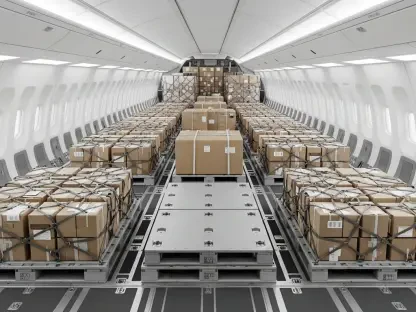

The ghost of empty shelves and overstuffed warehouses from the last few years has fundamentally reshaped retail strategy, forcing a seismic shift away from stockpiling goods toward a relentless pursuit of inventory velocity. In the wake of profound supply chain disruptions and persistent economic volatility, retailers are aggressively rewriting their playbooks. The former safety net of “just-in-case” inventory has become a liability, tying up precious capital and risking obsolescence. Consequently, a new philosophy is taking hold, one that treats inventory not as a static asset but as a dynamic current that must be kept flowing.
The Post-Pandemic Reality: Rethinking the Modern Supply Chain
The current retail landscape is a direct consequence of past upheavals, where congested ports and unpredictable consumer demand exposed the fragility of global supply chains. This has catalyzed a strategic pivot from building massive stockpiles to embracing a “just-in-time” velocity model. The focus is no longer on how much inventory a company holds, but on how quickly it can move products from a supplier to a customer. This change reflects a broader understanding that agility and responsiveness are now the primary determinants of success.
This transformation is not confined to a single sector; it is a market-wide phenomenon. Major discounters, specialty apparel brands, and electronics retailers are all re-evaluating their inventory philosophies, seeking to minimize holding costs and improve cash flow. Underpinning this shift is a significant investment in technology and logistics. Advanced analytics platforms for demand forecasting, automated warehousing systems, and more sophisticated transportation management are becoming standard infrastructure for companies aiming to thrive in this high-velocity environment.
The Driving Forces and Financials of a Leaner Tomorrow
The Velocity Mandate: Prioritizing Speed Over Stockpiles
At the heart of this new approach is the “dynamic inventory” model, a strategy that prioritizes the rapid turnover of goods over the sheer volume of stock on hand. The goal is to keep products in constant motion, reducing the time they spend sitting in warehouses and freeing up capital that would otherwise be stagnant. This mandate for speed is forcing difficult but necessary decisions throughout the supply chain.
One of the most significant trade-offs is in logistics. Retailers are increasingly choosing faster, albeit more expensive, trucking options over slower, more cost-effective rail transport. While this decision increases operational expenses, the financial benefits are compelling. Chief Financial Officers now prioritize the liquidity and operational agility gained by minimizing tied-up capital. In their view, the higher freight cost is a worthwhile investment to accelerate cash conversion cycles and respond more nimbly to market changes.
Projecting the 2026 Landscape: Data and Case Studies
Market analysis confirms this trend, with projections showing that while overall inventory levels are declining across the retail sector, logistics spending is on the rise. This indicates a widespread acceptance of paying a premium for speed and flexibility. The success of this model is best illustrated through real-world examples that highlight both the potential rewards and the operational challenges.
Discount retailer Dollar Tree serves as a prime case study for the benefits of this strategy. By focusing intensely on increasing inventory turns, the company successfully slashed its inventory by 5% while simultaneously boosting sales by over 9%. In contrast, a beauty retailer like Ulta faced inventory spikes due to a slate of new product launches. However, its response was not to stockpile but to invest heavily in its distribution infrastructure, designing a system to push products through its network more efficiently and avoid the pitfalls of obsolescence.
Navigating the High-Stakes Risks of the High-Velocity Model
The pursuit of a leaner inventory model is not without significant risks. The peril of deadstock, or “inventory obsolescence,” can severely damage profitability. Nike’s recent experience provides a stark warning, as the company’s margins eroded under the weight of unsold goods, underscoring the high cost of failing to move products quickly. This pressure to sell through inventory places immense strain on marketing and sales teams.
Furthermore, retailers must perform a delicate balancing act. While lean operations reduce holding costs, they simultaneously heighten the risk of stockouts, which can lead to lost sales and frustrated customers. Managing the increased financial pressure from higher freight costs also requires careful planning to protect profitability. Finally, the accelerated pace of operations can strain relationships with suppliers and challenge the accuracy of fulfillment, demanding greater coordination and more robust quality control processes across the entire supply network.
Financial Tactics and Compliance in a Fast-Paced Environment
To support the operational shift toward speed, companies are deploying complementary financial strategies designed to enhance cash flow. A key tactic involves renegotiating payment terms with wholesalers and suppliers. By extending payment cycles from the traditional 30 days to 60 or even 90 days, retailers can effectively use their suppliers’ capital to fund their operations, creating a crucial buffer that improves financial flexibility in this fast-paced environment.
This high-velocity model also presents new complexities in international trade and compliance. Navigating tariffs and customs regulations requires greater precision when shipments are smaller and more frequent. Moreover, ensuring security and compliance across a more distributed and constantly moving supply network becomes a paramount concern. Companies must invest in systems that provide end-to-end visibility and control to mitigate risks associated with theft, damage, and regulatory non-compliance.
The Future is Fluid: What’s Next for Inventory Management
Looking ahead, the evolution of inventory management will be driven by even more sophisticated technologies. Predictive analytics and artificial intelligence are poised to play a central role, enabling retailers to forecast consumer demand with unprecedented accuracy. This will allow for more precise ordering and a further reduction in excess stock, making the entire supply chain more responsive and efficient.
The rise of micro-fulfillment centers and localized distribution hubs represents another key development. By positioning inventory closer to the end consumer, retailers can drastically reduce delivery times and transportation costs, further enhancing the high-velocity model. However, the industry must also watch for potential disruptors, from emerging direct-to-consumer brands to shifting consumer attitudes toward consumption. Finally, the sustainability question looms large, as companies will need to balance the environmental impact of faster shipping methods against the demands of a market that prioritizes speed.
Final Verdict: Agility as the New Currency in Retail
The industry report has shown a fundamental re-evaluation of inventory, where its value was no longer measured by volume but by its velocity. The core conclusion reached by market leaders was that accepting higher logistics costs was a necessary and strategic investment in the operational agility and improved cash flow required to compete. This perspective marked a permanent departure from the decades-old practice of stockpiling goods as a buffer against uncertainty.
Strategic recommendations for retailers centered on a holistic approach. It was not enough to simply change logistics providers; companies needed to integrate financial planning, supplier relationship management, and technological infrastructure to support a leaner model. The retailers who successfully navigated this transition did so by fostering a culture of adaptability. Ultimately, the ability to master inventory velocity became the defining characteristic of market leaders, separating those who thrived from those who were left behind with warehouses full of obsolete assets.