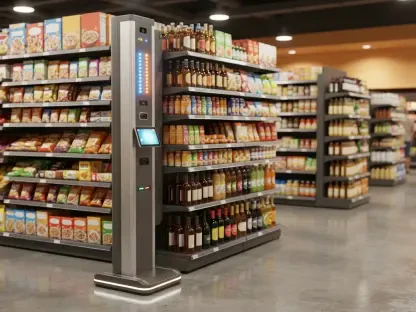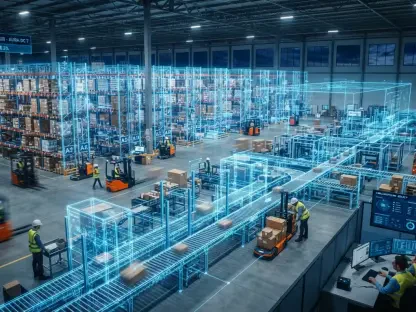

The realization that a sophisticated digital offensive could paralyze the nation’s grocery distribution networks almost overnight has prompted government officials to issue unprecedented directives concerning household self-sufficiency. As digital systems increasingly manage everything from inventory tracking to point-of-sale transactions, the potential for a “catastrophic shock” has moved from theoretical concern to an imminent operational reality for the Department for Environment, Food & Rural Affairs. To mitigate the impact of such disruptions, ministers have officially advised citizens to maintain a three-day supply of non-perishable goods, specifically items like tinned meats, nuts, and dried fruits that do not require specialized cooking or refrigeration. This shift highlights a fundamental change in national security strategy, prioritizing decentralized resilience over the assumption that central logistics will always function. By encouraging citizens to act as the final line of defense, the government aims to buffer the immediate panic that typically follows a breakdown.
Identifying Vulnerabilities in the Modern Infrastructure
The decentralized nature of the food sector presents a unique set of challenges that distinguish it from other critical infrastructure components like energy or water. While a handful of major hubs control the electrical grid, the food supply chain is composed of tens of thousands of individual firms ranging from small farms to massive international shipping companies. This “farm to fork” network is highly fragmented, making it an exceptionally difficult target to defend because every single link in the chain represents a potential entry point for malicious actors. Security experts have noted that while large retailers might have robust defenses, a smaller supplier further down the line could be the weak link that allows a virus to propagate through the entire system. Defense Secretary Wes Streeting recently pointed out that the collapse of supermarket payment systems is no longer a distant possibility but an everyday challenge that the nation must prepare to face with a higher degree of logistical flexibility and local readiness.
Beyond structural fragmentation, the rapid integration of internet-connected technology into basic retail operations has introduced a new layer of risk that was previously non-existent. A significant catalyst for this renewed focus on security was a recent cyberattack targeting supermarket refrigeration systems in France, which demonstrated how easily hackers could spoil massive amounts of inventory remotely. Furthermore, the detection of a critical security flaw in the PHP web programming system—a foundation for many online retail platforms—highlighted the fragility of the digital tools used to manage inventory and sales. When these software vulnerabilities are exploited by hostile state actors or sophisticated terrorist groups, the resulting disruption can bypass traditional physical security measures entirely. This technological exposure necessitates a shift in how retailers view their hardware, moving away from simple convenience and toward a model where every connected device is treated as a potential gateway for a systemic failure.
Implementing Systemic Resilience: A Unified Defense Strategy
In direct response to these evolving threats, the Department for Environment, Food & Rural Affairs established the Food Preparedness Group to centralize the nation’s defensive strategy. This specialized body is composed of high-ranking government officials and prominent industry leaders who are tasked with analyzing past failures to build a more resilient future. By examining specific instances such as previous ransomware attacks on major retailers like the Co-op and Marks & Spencer, the group can identify patterns in how hackers infiltrate corporate networks. These historical case studies serve as the foundation for new protocols designed to isolate infected segments of the supply chain before they can affect the broader market. The goal is to move beyond simple recovery and toward a state of active deterrence where the cost and difficulty for an attacker to disrupt food supplies become prohibitively high. This involves sharing intelligence across the private sector and ensuring that even competitors cooperate when a national threat is detected.
The strategy ultimately moved toward a model of shared responsibility where the government, retailers, and citizens each played a vital role in maintaining national stability. While the British Retail Consortium focused on strengthening technical barriers in partnership with the National Cyber Security Centre, the emphasis on individual preparedness served as a critical safety net. Officials suggested that public patience and a modest stockpile of essentials significantly reduced the pressure on emergency services during periods of digital interference. By addressing the psychological impact of supply chain disruptions, the state managed to prevent the secondary effects of cyberattacks, such as panic buying or civil unrest. This multi-layered approach transformed the concept of national security from a centralized government duty into a collective community endeavor. The lessons learned from analyzing digital vulnerabilities led to a more robust framework that prioritized long-term resilience over immediate convenience, ensuring that the food supply remained secure.