
The Backbone of the Continent: Mapping Australia’s Logistics and Freight Landscape
The vast Australian landscape, once a symbol of boundless opportunity for the logistics sector, is currently being remapped by the volatile and unforgiving reality of global energy prices. As the lifeblood of the national economy, the freight and logistics industry facilitates the movement of billions of dollars in goods across massive distances, connecting remote production centers with concentrated urban markets. This sector remains dominated by road transport, which provides the critical flexibility needed for door-to-door delivery, yet it is also the segment most exposed to the fluctuations of the global oil market.
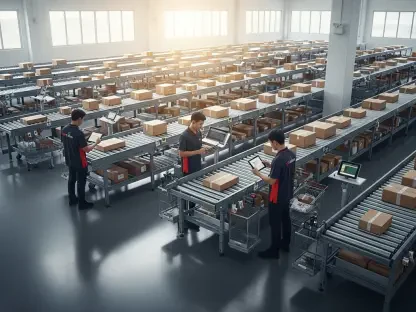
Recent years have seen the industry embrace a wave of technological influences, from sophisticated telematics that optimize route planning to automated warehouse systems that reduce idle time for heavy vehicles. These advancements are not merely luxury upgrades but essential tools for survival in a market where efficiency is the only hedge against rising overhead. Major market players are increasingly consolidating their operations, while regulatory frameworks focus on safety and environmental standards, pushing the entire landscape toward a more integrated and digitally monitored ecosystem.
Economic Volatility and the Shift Toward Operational Efficiency
Geopolitical Shocks and the Rising Burden on Domestic Trade
Geopolitical instability in key energy-producing regions has historically dictated the rhythm of Australian trade, but recent shocks have created a more permanent and heavy burden on domestic commerce. When international tensions flare, the immediate impact is felt at the local pump, where diesel—the essential input for heavy haulage—becomes a prohibitively expensive commodity for many operators. This volatility has forced a fundamental shift in how transport companies approach their contracts, with many moving away from fixed pricing toward more dynamic models that account for real-time energy fluctuations.
The burden of these shocks is not distributed evenly across the economy, as those involved in long-haul transport across the Nullarbor or into the Far North face disproportionate costs compared to urban couriers. This geographical reality means that any disruption in the global energy supply acts as a de facto tax on regional development and interstate trade. Consequently, the industry is witnessing a shift toward radical operational transparency, where every liter of fuel is tracked and every unnecessary kilometer is eliminated to preserve the thin margins that remain.
Measuring the Impact: Growth Projections Amidst Energy Uncertainty
Current market data suggests that while the volume of freight demand continues to rise, the profitability of the sector is under severe duress due to ongoing energy uncertainty. Performance indicators for the period from 2026 to 2028 show that while logistics firms are moving more tonnage than ever before, the net return on investment is being eroded by the rising cost of traditional fuels. This trend has led to a cautious approach to capital expenditure, with many companies delaying fleet expansions in favor of upgrading existing vehicles with fuel-saving technologies.
Forward-looking projections indicate that the industry must achieve a significant increase in energy productivity to maintain its current growth trajectory. Forecasts suggest that the most successful players will be those that can decouple their operational costs from the spot price of crude oil. This involves a strategic pivot toward alternative fuels and more efficient multimodal logistics hubs. The focus is no longer just on moving goods from point A to point B, but on doing so with the smallest possible energy footprint to ensure long-term commercial viability.
Navigating the Squeeze: Obstacles for Small Businesses and Primary Producers
Small businesses and primary producers are currently facing the most acute pressure in the supply chain, as they lack the financial scale to negotiate bulk fuel discounts or hedge against price spikes. For a regional vegetable grower or a local delivery contractor, fuel is not a discretionary expense but a non-negotiable input that dictates the feasibility of every harvest and every delivery. When costs rise, these operators find themselves in a precarious position where they must either absorb the loss or pass the cost onto a consumer base that is already struggling with broader inflationary pressures.
The agricultural sector, in particular, has reported instances where growers have opted to reduce planting schedules or leave mature crops in the field because the cost of transport would exceed the market value of the produce. This squeeze creates a significant risk to national food security and the stability of rural economies. To overcome these obstacles, small-scale operators are exploring cooperative logistics models, sharing transport resources and consolidating shipments to gain the same efficiencies that larger corporations enjoy through sheer volume.
Strengthening National Resilience Through Policy and Compliance
In light of these vulnerabilities, the regulatory landscape is shifting toward a model that prioritizes national resilience and supply chain security. The federal government has initiated comprehensive assessments of the food and fuel supply chains, recognizing that a disruption in diesel availability could bring the nation to a standstill. These policy shifts include the establishment of strategic fuel reserves and the implementation of taskforces designed to monitor the stability of critical inputs like fertilizer and energy for the agricultural sector.
Compliance in the modern era extends beyond safety checks to include a commitment to national contingency planning. Industry players are now expected to participate in data-sharing initiatives that allow the government to track supply chain health in real-time. This regulatory evolution aims to create a more robust framework that can withstand international shocks, ensuring that essential goods continue to flow even when global markets are in turmoil. By aligning industry practices with national security goals, the government seeks to foster a more predictable and stable trading environment.
Forging a New Path: Innovation and the Strategic Transition to Rail
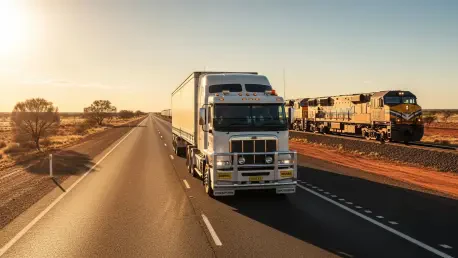
Innovation is increasingly focused on the strategic transition from road to rail, an shift that offers a significant boost to fuel efficiency for long-distance freight. Rail transport is capable of moving massive quantities of goods using a fraction of the fuel required by road-based heavy haulage, making it a critical component of a fuel-resilient supply chain. This transition is being supported by large-scale infrastructure projects that aim to better connect major ports with inland hubs, reducing the reliance on diesel-intensive trucking for the middle-mile of the journey.
Beyond traditional rail, the industry is exploring potential market disruptors such as electric heavy vehicles and hydrogen-powered locomotives. While these technologies are still in various stages of adoption, their promise of a zero-emissions, low-cost energy future is a powerful driver for investment. Consumer preferences are also shifting, with a growing demand for “greener” supply chains that minimize the environmental impact of delivery. This combination of economic necessity and social responsibility is carving a new path for an industry that is ready to leave the era of high-cost, high-emission transport behind.
Securing the Future: Summary of Industry Prospects and Strategic Recommendations
The assessment of the Australian logistics landscape demonstrated that the era of predictable, low-cost energy had drawn to a definitive close, necessitating a structural rethink of freight movements. It was observed that the most resilient segments of the industry were those that had already begun the transition toward multimodal transport and digital optimization. These findings highlighted that while fuel costs remained a significant burden, they also acted as a powerful catalyst for long-overdue innovations in operational efficiency and energy diversification.
Strategic recommendations for the future prioritized the rapid expansion of the national rail network and the incentivization of alternative fuel adoption for heavy industry. It was determined that the integration of regional producers into a more cohesive and cooperative logistics framework provided the most effective defense against global price volatility. Moving forward, the industry placed a higher value on energy productivity and supply chain transparency, recognizing that the ability to navigate energy uncertainty became the primary benchmark for success in a rapidly changing global economy.