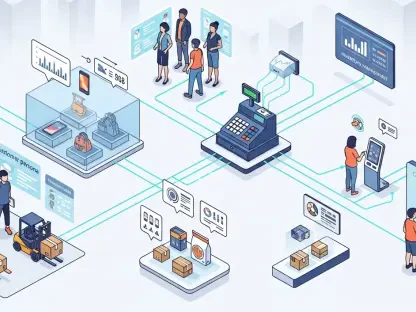

The contemporary retail landscape demands a level of precision where a single second of data latency can result in thousands of dollars in lost revenue and permanently fractured customer relationships. For many years, the logistics sector operated through a series of disconnected islands, where the warehouse management system barely communicated with the digital storefront or the physical point of sale. Today, this fragmented approach has become a liability as the industry migrates toward centralized commerce brains. These systems act as a single source of truth, ensuring that every department, from marketing to fulfillment, operates with the same set of real-time facts. By eliminating the reliance on antiquated middleware, businesses are finding that they can respond to market fluctuations with an agility that was previously impossible.
Economic significance in the current market is measured by more than just top-line growth; it is defined by the optimization of the total cost of ownership and the preservation of customer lifetime value. High-competition environments leave no room for inefficient shipping routes or inaccurate inventory counts that lead to canceled orders. When a supply chain is unified, the cost of acquiring a customer is better protected because the fulfillment experience reinforces brand trust. Efficiency in the back end translates directly to value in the front end, as reduced operational overhead allows for more competitive pricing or reinvestment into product innovation. The connection between logistics and brand equity has never been more direct.
The intersection of e-commerce, retail point of sale, and third-party logistics now occurs within a singular, unified framework. In the past, these were treated as distinct business units with separate goals and separate software stacks. However, the modern consumer does not see these boundaries. A customer might discover a product on social media, check local availability via a mobile app, and choose to pick it up at a physical store. To meet this expectation, the underlying technology must be native cloud infrastructure. This shift eliminates the synchronization delays that once plagued legacy systems, allowing for a seamless flow of information that keeps the entire enterprise in sync without the need for manual reconciliation.
Defining the Future: Trends and Market Projections
Emerging Technologies and Evolving Consumer Behaviors
Real-time orchestration has transitioned from a niche competitive advantage to a fundamental industry standard. Automated rules now dictate shipping paths based on a complex matrix of variables, including carbon footprints, real-time carrier rates, and localized inventory levels. This shift signifies a departure from static routing toward a dynamic model that prioritizes both environmental impact and the bottom line. Consequently, the decision-making process for fulfillment has been removed from human hands and placed into the control of intelligent systems that can evaluate thousands of permutations in milliseconds. This ensures that every package follows the most logical and cost-effective path to the end consumer.
Hyper-local fulfillment has emerged as a primary driver of consumer satisfaction as the demand for speed continues to intensify. The rise of ship-from-store and buy online, pick up in-store models has effectively turned traditional retail spaces into micro-distribution centers. This evolution allows brands to leverage their existing physical footprints to compete with massive centralized warehouses. By fulfilling orders closer to the point of consumption, companies are reducing the “last mile” burden, which remains the most expensive and complex part of the logistics journey. Moreover, this approach aligns with a growing consumer preference for sustainable options, as shorter transit distances naturally lead to lower carbon emissions.
Closed-loop feedback systems are now being used to refine demand forecasting through the integration of real-time operational signals. In previous years, forecasting was often a reactive process based on historical sales data that failed to account for immediate disruptions. Now, signals such as transit delays, warehouse labor shortages, and inventory shrinkage are fed back into the planning engine instantaneously. This allows AI-driven systems to adjust replenishment cycles on the fly, preventing the buildup of dead stock in one region while another faces a shortage. The result is a more resilient supply chain that anticipates problems rather than simply reacting to them after they occur.
Market Data and Growth Forecasts
Despite the clear benefits of integration, a significant gap remains between industry leaders and those struggling with legacy infrastructure. Recent statistics indicate that only 29% of supply chains are currently classified as future-ready, meaning they possess the integrated ecosystems and enterprise-wide strategies necessary to thrive. However, this segment is projected to grow rapidly as the cost of maintaining siloed systems becomes prohibitive. Organizations that fail to bridge this gap face increasing pressure from more agile competitors who can offer faster delivery times at lower operational costs. The transition to a unified model is no longer a matter of if, but a matter of how quickly it can be achieved.
Investment in orchestration technology is seeing a dramatic upswing as retailers move away from the rigidity of traditional enterprise resource planning software. The projected growth in spending on advanced fulfillment systems reflects a broader industry realization that a unified data model provides a much higher return on investment than modular patches. Modern systems offer the flexibility to scale rapidly and integrate new sales channels without the need for extensive custom coding. This shift in capital allocation is creating a new hierarchy in the retail world, where the most technologically proficient brands are capturing the lion’s share of market growth by providing a consistently superior customer experience.
The expected return on investment for unified systems is increasingly tied to the reduction of split shipments and the elimination of overselling. In a siloed environment, the lack of real-time visibility often leads to multiple packages being sent for a single order, which exponentially increases shipping costs and packaging waste. Unified data models allow for smarter consolidation, ensuring that orders are fulfilled from the most efficient location in their entirety. For many retailers, the savings generated from reducing these inefficiencies are enough to fund the transition to a unified platform within the first year of implementation.
Overcoming Structural Friction: Challenges in Supply Chain Unification
The Visibility Gap: Addressing Dark Shipments
One of the most persistent challenges in modern logistics is the visibility gap, often referred to as the problem of dark shipments. When a package leaves a distribution center and enters a carrier network, the flow of data often becomes fragmented or stops entirely. This lack of transparency prevents customer support teams from providing accurate updates, leading to a surge in inquiries and a decline in consumer trust. To combat this, businesses are increasingly adopting systems that integrate carrier milestones directly into the central commerce platform. This ensures that the status of an order is visible to both the internal team and the customer from the moment of purchase to the final delivery.
Fragmented data also complicates the process of internal auditing and performance tracking. Without a clear view of where inventory is located at any given moment, managers are forced to rely on guesswork or outdated reports. This lack of clarity often leads to suboptimal decision-making, such as ordering more stock when existing inventory is simply hidden in a different part of the network. By illuminating these dark spots in the supply chain, organizations can improve their inventory turnover rates and reduce the amount of capital tied up in excess stock. Visibility is the foundation upon which all other supply chain improvements are built.
Integration Complexity: Why Tech Investments Fail
The complexity of integrating disparate systems is the primary reason why a vast majority of technology investments fail to deliver their promised results. Historically, businesses have attempted to connect their various tools through a web of custom APIs and middleware, which creates a fragile architecture prone to failure. Data lag is a common byproduct of this approach, as information must be translated and synchronized across multiple formats and platforms. When the digital storefront shows a product is in stock, but the warehouse management system knows it is sold out, the resulting customer disappointment is a direct failure of integration.
To avoid these pitfalls, the industry is moving toward platforms that offer native unification. By building the inventory, order, and fulfillment logic on a single infrastructure, the need for complex integrations is eliminated. This ensures that every part of the business is working with the same data in real time, without the risk of formatting inconsistencies or transmission errors. Organizations are discovering that the most successful technology strategies are those that prioritize simplicity and data integrity over a collection of “best-of-breed” tools that cannot effectively communicate with one another.
Inventory Inaccuracy and Decay: The Batch Processing Problem
Inventory inaccuracy remains a significant drain on profitability, often caused by the limitations of batch processing. In many legacy systems, updates to stock levels only occur at specific intervals, such as once an hour or even once a day. This delay creates a window of time where the system reflects an incorrect quantity, leading to overselling or unnecessary “out-of-stock” notifications. This phenomenon, known as inventory decay, erodes the reliability of the digital storefront and frustrates customers who expect real-time accuracy. In contrast, a unified system updates inventory levels the instant a transaction occurs, regardless of the channel.
Strategic solutions to these issues involve a commitment to rigorous SKU hygiene and barcode discipline. Maintaining a clean item master list ensures that every product is identified consistently across the entire enterprise, preventing duplicate records and phantom inventory. Furthermore, implementing strict scanning protocols at every touchpoint—from receiving and picking to packing and shipping—guarantees that the digital record matches the physical reality on the warehouse shelf. These operational habits, when supported by a unified data layer, eliminate the communication breakdowns that lead to inventory discrepancies and lost sales.
The Compliance and Security Framework: Navigating Modern Regulations
Sustainability and Carbon Reporting
Emerging regulations are placing a renewed emphasis on the environmental impact of logistics and supply chain operations. Governments are increasingly requiring businesses to report on their carbon footprint, including the emissions generated by transportation and packaging. A unified supply chain is essential for meeting these standards, as it provides the granular data necessary for accurate reporting. By optimizing routing and reducing the distance traveled by each package, companies can significantly lower their environmental impact while simultaneously meeting regulatory requirements. Sustainability is no longer just a corporate goal; it is a legal and operational necessity.
Unified routing helps organizations prioritize eco-friendly shipping methods without sacrificing delivery speed. For instance, a system can automatically choose a local bicycle courier for a short-distance delivery instead of a long-haul truck. This level of control allows brands to integrate their sustainability commitments directly into their fulfillment logic. Furthermore, the reduction in packaging waste through better order consolidation contributes to a more circular economy. As consumers become more conscious of the environmental cost of their purchases, brands that can prove their commitment to sustainable logistics will gain a significant competitive advantage.
Data Governance and Security
The protection of customer information is a paramount concern in an era where data breaches can have devastating financial and reputational consequences. Maintaining a secure, unified data layer is critical for ensuring that sensitive information is handled consistently across all sales channels. When data is siloed, each system represents a potential point of vulnerability that must be individually secured and monitored. A unified approach allows for a more robust security framework, where access controls and encryption can be managed centrally. This reduces the attack surface and ensures that customer data is protected according to the highest industry standards.
Data governance also plays a vital role in ensuring compliance with privacy regulations such as GDPR and CCPA. A unified system makes it easier to track where data is stored and how it is used, facilitating the fulfillment of data access and deletion requests. Organizations that can demonstrate a high level of data integrity and security are more likely to build long-term trust with their customers. In a marketplace where consumer data is a highly valuable asset, the ability to manage it responsibly is a key differentiator for successful brands.
Service-Level Agreements (SLAs) and Partner Compliance
Managing relationships with third-party logistics providers requires a standardized approach to compliance to ensure a consistent brand experience. When fulfillment is outsourced, it is easy for the brand’s standards to become diluted if there is no clear framework for performance. Unified supply chains solve this by integrating 3PL partners into the central commerce brain, allowing for real-time monitoring of key metrics. This ensures that every partner is held to the same service-level agreements, regardless of their location or specific role in the supply chain. Standardized compliance ensures that a customer in one region receives the same level of service as a customer in another.
Consistent brand experiences are built on the foundation of reliable performance from every partner in the ecosystem. If a 3PL fails to meet its picking and packing deadlines, the impact is felt directly by the customer and reflected in the brand’s reputation. By using unified data to track partner performance, retailers can identify bottlenecks and address issues before they escalate. This proactive approach to partner management allows for more collaborative and productive relationships, where both parties are aligned toward the goal of providing an exceptional customer experience.
The Outlook: Innovation and Market Disruptors
Generative AI in Logistics
Generative AI is fundamentally changing the way logistics documentation is handled, drastically reducing the time required for administrative tasks. The preparation of customs manifests, bills of lading, and shipping labels, which once required significant human oversight, can now be automated with high precision. This technology minimizes the risk of human error, which is a frequent cause of delays at international borders. By streamlining the flow of information alongside the flow of physical goods, AI is helping to remove the friction that has historically slowed down global commerce. The efficiency gains in documentation allow logistics teams to focus on more strategic tasks rather than routine paperwork.
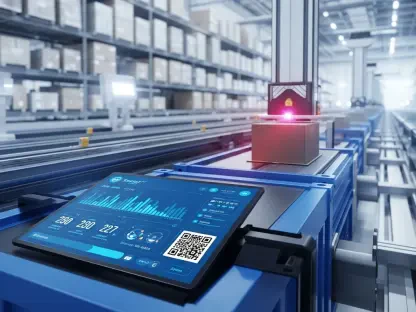
The implementation of AI also extends to warehouse execution, where intelligent systems are optimizing picking paths and labor allocation. By analyzing order volume and warehouse layouts, these systems can direct workers to the most efficient routes, reducing physical fatigue and increasing throughput. This is particularly valuable during peak seasons when order volumes can fluctuate wildly. The integration of AI into the warehouse environment ensures that resources are used effectively, allowing businesses to handle higher volumes without a corresponding increase in overhead.
Predictive Stockout Rerouting
The evolution of supply chain systems has led to the development of predictive stockout rerouting, a proactive strategy that anticipates regional surges in demand. Rather than waiting for a location to run out of a product, these systems use predictive analytics to identify trends and move inventory before a shortage occurs. For example, if a specific item begins to trend on social media in a particular city, the system can automatically trigger a replenishment order to the local retail store or nearby distribution center. This ensures that the product is available exactly where and when the customer wants it, maximizing sales opportunities and minimizing disappointment.
This proactive movement of inventory also helps to balance the load across the entire fulfillment network. By redistributing stock based on anticipated demand, organizations can avoid situations where one warehouse is overwhelmed while another sits idle. This level of coordination requires a truly unified view of both inventory and demand, highlighting the importance of a single source of truth. The ability to stay one step ahead of the consumer is the ultimate goal of the modern supply chain, and predictive rerouting is the key to achieving it.
The Demise of the Traditional ERP
The industry is witnessing the decline of the traditional, monolithic enterprise resource planning system in favor of more flexible and modular commerce platforms. Legacy ERPs were designed for a different era of commerce, one that was characterized by predictability and slow-moving supply chains. In today’s volatile market, the rigidity of these systems has become a hindrance to growth. Modern brands are seeking solutions that act as a central nervous system, providing the core logic for inventory and orders while allowing for easy integration with specialized tools. This move toward flexible architecture is allowing businesses to evolve their tech stacks at the speed of the market.
Flexible platforms provide the agility needed to launch new products, enter new markets, and adopt new technologies without the need for a total system overhaul. This modular approach ensures that the supply chain can adapt to changing consumer behaviors and economic conditions. As the traditional ERP fades into the background, the focus is shifting toward unified commerce platforms that prioritize data accessibility and operational speed. This transition represents a fundamental shift in how businesses think about their technological foundations, moving from a model of control to a model of empowerment.
Achieving Operational Excellence: A Strategic Roadmap for Success
The transition to a unified supply chain was historically managed through a phased implementation strategy that prioritized stable foundations over rapid, large-scale changes. This process typically began with a rigorous audit of data integrity, focusing on SKU hygiene and the establishment of a single item master list across all channels. Organizations that took the time to clean their historical data and standardize their internal processes found that subsequent automation efforts were far more effective. By establishing a solid data layer first, businesses avoided the common pitfall of automating existing inefficiencies, ensuring that their new systems were built on a reliable and accurate foundation.
Once the data foundations were secured, the focus shifted toward the unification of inventory and order workflows. This stage involved the implementation of sophisticated order-orchestration rules that balanced fulfillment speed with operational costs. Retailers successfully leveraged their physical store locations to offer omnichannel options like buy online, pick up in-store, which significantly enhanced the customer experience. The integration of real-time visibility tools then allowed for proactive management of the supply chain, where potential disruptions were identified and mitigated before they could impact the end consumer. This sequential approach ensured that each new layer of technology added measurable value to the organization.
Critical performance indicators played a central role in measuring the success of these unification efforts. Metrics such as on-time, in-full delivery rates and split-shipment percentages provided clear evidence of operational health and efficiency. Organizations that monitored their cost per order fulfilled were able to identify specific areas where further optimization was needed, leading to continuous improvement in the bottom line. Inventory accuracy and time-to-restock also emerged as vital signs of a high-functioning system, proving that a unified data model could effectively eliminate the delays and errors associated with legacy batch processing.
Final recommendations for retailers emphasized the necessity of investing in unified infrastructure to drive conversion and future-proof their operations. The shift toward a centralized commerce brain was shown to reduce the total cost of ownership while simultaneously improving the customer lifetime value. Organizations were encouraged to move away from rigid legacy software and embrace flexible platforms that could adapt to the ever-changing demands of the modern market. By prioritizing data integrity, real-time visibility, and intelligent orchestration, businesses were able to transform their supply chains from a source of friction into a powerful engine for growth and innovation.