
Zainab Hussain joins us today to discuss the evolving landscape of retail leadership, drawing from her extensive background as an e-commerce strategist and operations expert. With deep experience in customer engagement, she offers a unique lens on how organizations can bridge the gap between diversity goals and operational excellence. As the retail sector faces increasing pressure to reflect its customer base, Zainab’s insights into talent development and strategic hiring provide a roadmap for companies striving to achieve true gender parity at the highest levels of corporate governance.
Our conversation explores the structural changes necessary to move from high female representation to total balance, focusing on the journey from entry-level roles to senior management in traditionally male-dominated sectors like logistics. We also examine how integrating diverse perspectives in marketing analytics and trading can sharpen a company’s commercial edge. Finally, Zainab addresses the systemic hurdles that still keep women from the CEO’s office and the specific policies that ensure a healthy, long-term talent pipeline.
In organizations where female representation in leadership reaches nearly 48 percent, what specific cultural shifts are most visible? How do you transition from this level to a full 50/50 balance by 2030 while ensuring merit-based advancement and operational stability across the business?
Reaching 47.8 percent female representation in leadership, as seen at A.F. Blakemore, signals a profound shift where diversity is no longer a peripheral goal but a core operational reality. When nearly half of the leadership table is female, the conversation naturally shifts toward a more holistic style of problem-solving that prioritizes long-term resilience and inclusive decision-making. To push toward that final 50 percent goal by 2030, the focus must remain on a robust succession planning model that identifies high-potential talent early without compromising on the rigors of merit. It is about creating a culture where advancement feels inevitable for those who perform, ensuring that the transition is seamless and that operational stability is maintained through diverse perspectives. This evolution is felt in the daily rhythm of the office, where a broader range of lived experiences leads to more innovative solutions for a diverse customer base.
Moving from a graduate position to heading a supply chain department in less than a decade requires significant support. What specific developmental programs are most effective for this trajectory, and how can companies encourage more women to pursue careers in technical fields like logistics, network optimization, and fleet management?
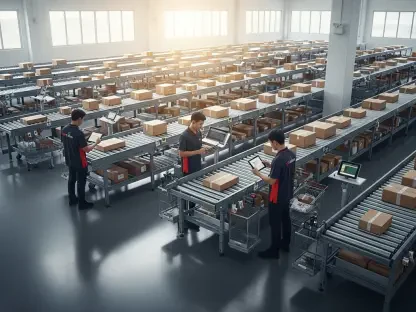
The journey of a professional like Kelly Burrows, who rose from a graduate role to Head of Supply Chain in just eight years, is a masterclass in targeted career development. Effective programs must go beyond basic mentorship; they need to involve hands-on immersion in “hard” operational areas such as supplier negotiations, network optimization, and the expansion of own-fleet collections. Companies can encourage more women to enter these technical fields by showcasing these roles not just as back-end logistics, but as the strategic heartbeat of the company. There is a certain grit and satisfaction in mastering the flow of goods, and when women see clear pathways to oversee demand planning and retail central ordering, the “glass ceiling” in the warehouse begins to shatter. By highlighting these success stories, we normalize the presence of women in the engine room of retail, proving that technical expertise is gender-neutral.
New leadership appointments in trading and marketing analytics bring fresh perspectives to retail operations. How do these diverse skill sets impact commercial strategy, and what methods ensure that external hires from major competitors successfully integrate into a company’s long-term vision and values?
Bringing in leaders with backgrounds from major competitors like Asda, Co-op, or Poundland introduces a wealth of external knowledge that can revitalize a commercial strategy. When you combine high-level trading expertise with advanced analytics, as seen with recent appointments in the sector, you get a leadership team that is both data-driven and intuitively connected to the market. These diverse skill sets allow a company to dissect customer behavior with surgical precision while maintaining the agility needed for ambient trading and marketing. To ensure these hires align with the company’s long-term vision, integration must focus on “value-matching,” where the external hire’s previous experience is woven into the existing corporate DNA. This creates a powerful hybrid culture that respects tradition while aggressively pursuing modern, data-backed growth.
National data indicates that while leadership roles are becoming more inclusive, executive director and CEO positions still lack significant female representation. What systemic barriers prevent this final step, and how does strengthening a talent pipeline specifically address the current softening of top-tier appointment rates?
Despite the progress in general leadership, the fact remains that women hold only 15 percent of executive director roles and a mere 8 percent of CEO positions across the FTSE 350. This “softening” of appointment rates suggests a systemic bottleneck where the final leap to the top is still obstructed by traditional biases or a lack of specialized executive grooming. Strengthening the talent pipeline is the only way to counteract this trend; it involves ensuring that women are not just in management, but are leading the most “strategically significant” operational roles that serve as precursors to the CEO office. By placing women in charge of the most complex commercial and supply chain functions, we provide them with the P&L responsibility and high-stakes experience required for board-level roles. We must move past the mid-management plateau by actively sponsoring women for the most visible and high-pressure assignments in the organization.
Aligning a leadership team with a diverse customer base is a common goal in the grocery sector. Which inclusive workplace policies have the greatest impact on long-term retention, and how should succession planning be structured to support women across various operational and commercial functions?
To truly reflect a diverse customer base, a company must move beyond surface-level diversity and implement policies that support the practical realities of a long-term career. Inclusive policies such as flexible working arrangements for senior leaders and transparent pathways for promotion are essential for retaining high-performing women who might otherwise exit the pipeline. Succession planning should be structured as a continuous loop rather than a static list, where talent is regularly assessed across different functions like marketing, customer experience, and trading. By enabling women to move laterally between operational and commercial roles, the company builds a more versatile leadership cohort that understands every facet of the business. This holistic approach ensures that when a top-tier vacancy opens, there is a diverse pool of internal candidates who have been intentionally prepared for the challenge.
What is your forecast for women in supply chain leadership?
I predict that the next five years will see a dramatic surge in women leading supply chain and logistics, as these roles transition from being viewed as “back-office” to being recognized as the primary drivers of retail profitability. As more organizations follow the lead of the top-ranked grocery firms, we will see a shift where technical proficiency in network optimization becomes a standard part of the female executive toolkit. This will result in a more resilient and tech-forward supply chain sector, where the historic 50 percent gender balance goal becomes a reality rather than just a target. Ultimately, the influx of female talent will lead to more collaborative and data-centric logistics operations globally.