
In the rapidly shifting landscape of modern retail, the lines between a physical shelf and a digital cart have all but disappeared. To navigate this new omnichannel reality, supply chains must be more than just efficient—they must be agile, responsive, and intelligent. We’re joined by Zainab Hussain, an e-commerce strategist who has spent her career at the intersection of customer engagement and operations management, helping retailers build the resilient supply networks needed to thrive. Today, we’ll explore the practical strategies that transform a supply chain from a rigid cost center into a dynamic competitive advantage, touching on the power of unified data, the surprising accessibility of advanced technology like digital twins, and the untapped potential of a flexible, highly skilled workforce.
The article emphasizes creating a single view of inventory by integrating store, warehouse, and e-commerce data. What are the first practical steps a retailer should take to build this unified view, and can you share an example of how it concretely reduces excess safety stock?
The first step, before you even think about technology, is a cultural one: you have to break down the silos. The e-commerce team, the warehouse managers, and the in-store operators often have their own data, their own systems, and their own metrics for success. The initial move is to get these leaders in a room and map out every touchpoint where inventory data is created or used. From there, the practical work begins with a data audit to understand the different formats and systems. The next step is choosing your integration path, whether that’s building a centralized data control tower internally or, more commonly, partnering with a technology provider that specializes in connecting these disparate systems.
I saw this work beautifully for a client who was constantly over-ordering for their urban stores. By integrating their systems, a store manager in one location could see that a neighboring store just two miles away had a surplus of the exact product a customer wanted. Instead of triggering a large, costly reorder from the main distribution center, which creates excess safety stock, the system enabled a simple store-to-store transfer. That single, unified view prevented a duplicate order and ensured the product was exactly where the consumer needed it, turning a potential stockout or a wasteful order into a seamless customer experience.
You mentioned that digital twin technology is becoming more accessible for modeling warehouse operations. Beyond accessibility, could you walk us through a specific scenario a retailer might test—like a surge in e-commerce—and what kind of operational bottlenecks this simulation typically reveals?
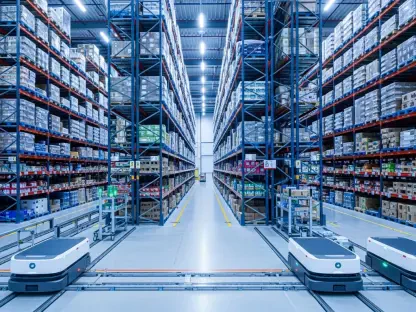
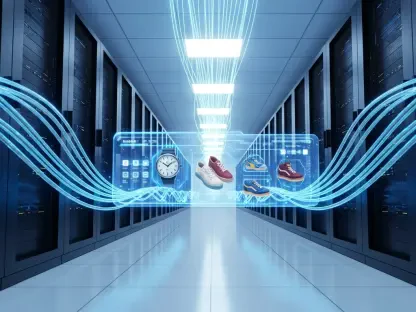
Absolutely. Digital twins are a game-changer because they let you stress-test your operations without breaking a single thing in the real world. Let’s imagine a retailer is planning a major online holiday sale. They can use a digital twin of their warehouse to simulate a 300% increase in order volume over a 48-hour period. What we almost always see first is a massive bottleneck at the packing stations. The virtual model will show pickers arriving with full carts but having nowhere to put them because the packers are overwhelmed. You’ll see the aisles getting clogged with staged goods, which in turn slows down the pickers on their next runs.
The simulation might also reveal that their shipping dock, which works perfectly fine on a normal day, can’t handle the sheer volume of outbound parcels. Trucks are waiting, packages are piling up, and the whole system starts to grind to a halt. By seeing this play out virtually, the retailer can make proactive changes. They might decide to set up temporary packing stations, re-route foot traffic for pickers, or pre-schedule additional trucks for the sale days. These are insights you’d rather have weeks before the event, not in the chaotic moments when it’s already happening.
The article notes that external partners can help uncover inefficiencies like overlapping footprints. How do you start that collaborative process, and can you provide a specific, step-by-step example of how partners can optimize truck space and what kind of cost savings are typically achieved?
The process starts with trust and a willingness to share data. A retailer typically engages a partner like a 3PL or a pooled platform provider by first identifying a specific pain point, like high transportation costs on a certain lane. The first step is for the partner to analyze the retailer’s shipping data—volumes, routes, and frequencies. Step two involves the partner overlaying that data with data from their broader network of clients, looking for those “overlapping footprints.”
For a concrete example, a partner might see that one of their clients is shipping a half-empty truck from City A to City B every morning, while another client is doing the same thing on a nearly identical route. The partner then brokers a conversation. Step three is proposing a consolidated route where a single truck services both companies, creating a multi-stop route that fills the truck to capacity. They’ll run a pilot for a few weeks to prove the concept, and the results are often immediate. By sharing the space, both companies can slash their fuel and labor costs for that route, effectively eliminating those costly “empty miles.” It’s not uncommon to see savings of 15-25% on specific lanes where this kind of collaboration is implemented.
You suggest a flexible workforce using gig labor and cross-training. What are the biggest hurdles in managing gig workers alongside full-time staff, and could you detail a successful cross-training program that helped a retailer pivot between in-store and e-commerce fulfillment during a demand surge?
The biggest hurdles are definitely integration and consistency. You have to ensure that temporary, gig-based workers can get up to speed quickly and safely, which means streamlined onboarding and intuitive tools. There’s also the cultural aspect—making sure your full-time staff sees gig workers as support, not a threat, and that everyone feels part of the same team mission. With 50% of hourly workers now open to gig-type roles, it’s a challenge leaders must solve.
I worked with a retailer that implemented a brilliant cross-training program ahead of the back-to-school season. They trained their entire sales floor team on how to use the same handheld devices their warehouse staff used for picking online orders. The training modules were short, digital, and could be done during quiet periods on the floor. When their e-commerce sales suddenly surged beyond all forecasts, they didn’t panic. Instead of trying to hire and train temporary staff in a day, they simply re-assigned a portion of their in-store associates to focus on “ship-from-store” fulfillment. They used their stockrooms as mini-distribution centers, turning a potential crisis into a massive win for operational agility and customer satisfaction.
What is your forecast for the next big evolution in omnichannel supply chains?
My forecast is that we’re moving from a reactive, agile supply chain to a predictive, autonomous one. The next evolution isn’t just about responding to shifts in consumer demand faster; it’s about anticipating those shifts before they even happen and proactively positioning inventory to meet them. We’re going to see a much deeper integration of AI and machine learning, not just for forecasting but for orchestrating the entire network. Imagine a system that doesn’t just see a blizzard is forecast for the Northeast, but automatically triggers a stock transfer of snow shovels and salt to micro-fulfillment centers in that region and simultaneously pushes targeted offers to customers’ phones for same-day delivery. This future fuses unified data, digital twin simulations, and a highly flexible workforce to create a supply chain that doesn’t just fulfill demand, but actively helps shape it for the ultimate customer experience.