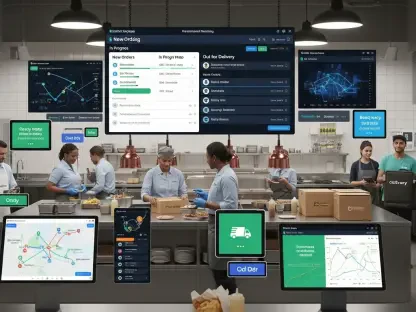

The dream of a borderless global marketplace has long been pursued by online brands, yet it is often shattered by the invisible walls of complex logistics, labyrinthine regulations, and fragmented financial systems. The rise of integrated cross-border e-commerce platforms represents a significant advancement in the global retail sector. This review will explore the evolution of this technology, its key features, performance metrics, and the impact it has on online brands managing complex global operations. The purpose of this review is to provide a thorough understanding of the technology, its current capabilities, and its potential future development.
The Emergence of Global E-commerce Operating Systems
The fundamental challenge for any brand looking to expand internationally is managing a disjointed web of vendors and processes for shipping, taxes, and compliance. In response, a new category of technology has emerged: the integrated global e-commerce operating system. These platforms are designed to serve as a single, unified command center for brands, simplifying the intricate web of global trade.
Pioneers in this space, such as the firm Swap, were founded on the principle of centralizing these disparate functions. This approach is increasingly relevant as more merchants seek to tap into international consumer bases but are deterred by the high operational overhead and risk. Consequently, these systems provide a scalable infrastructure that was once only accessible to the largest multinational corporations.
Core Features of an Integrated Commerce Platform
Unified Logistics and Supply Chain Management
A core strength of these platforms is the consolidation of logistics into a single, manageable interface. This includes orchestrating cross-border shipping, providing real-time order tracking visible to both the merchant and the customer, and managing international returns. By unifying these functions, brands can eliminate the complexity and cost of dealing with multiple logistics partners across different regions.
This integration directly translates to a superior experience for the international buyer. A streamlined returns process and transparent tracking build trust and encourage repeat business, which is crucial for establishing a brand in a new market. Moreover, merchants gain operational efficiency, freeing up resources to focus on marketing and product development rather than logistical troubleshooting.
Automated Financial and Compliance Tools
Navigating the financial and regulatory landscape of global trade is arguably the most daunting aspect of international expansion. Integrated platforms address this by automating critical financial tasks. These tools can automatically calculate and handle cross-border taxes and import duties at checkout, ensuring transparency for the customer and compliance for the merchant.
Furthermore, intelligent inventory forecasting is often built into these systems, helping brands optimize stock levels across multiple international warehouses to meet demand without overinvesting. This level of automation not only mitigates the risk of costly compliance errors but also provides the financial clarity needed to make strategic decisions about market expansion and pricing.
Current Trends and Technological Advancements
The rapid evolution of this technology is being fueled by significant venture capital investment, which has accelerated product development and market expansion. For example, Swap’s recent $100 million Series C funding round highlights investor confidence in the model. This capital is being deployed to enhance platform capabilities, particularly through strategic partnerships with payment firms like Adyen to offer more integrated financial services.
Artificial intelligence is also playing an increasingly vital role. AI algorithms are being used to further automate complex processes such as cross-border tax filing and optimizing returns processing by predicting which items are most likely to be returned. This infusion of advanced technology is pushing the boundaries of what these platforms can accomplish, moving from simple consolidation to intelligent, predictive automation.
Real-World Applications and Market Impact
The tangible impact of these platforms is most visible in the growth of direct-to-consumer (DTC) brands. Companies like Manors Golf and Never Fully Dressed are leveraging this technology to successfully launch and scale their operations in new geographic markets, including Europe and North America. They can manage their entire global presence from a centralized hub, maintaining a consistent brand experience across borders.
This ability to enter and compete in foreign markets without establishing a massive physical infrastructure represents a significant shift in global retail. It empowers smaller but ambitious brands to build an international footprint, effectively leveling the playing field and increasing competition and consumer choice worldwide.
Challenges in Simplifying Global Trade
Despite their advancements, these platforms are constantly working to overcome the inherent complexities of global commerce. A primary technical hurdle is integrating seamlessly with the vast and disparate array of international shipping carriers, payment gateways, and local regulatory systems. Each new market presents a unique set of integration challenges.
Furthermore, the regulatory environment for e-commerce is in constant flux, with new tax laws and trade policies emerging frequently. Platform developers must remain vigilant to keep their systems updated and compliant across dozens of jurisdictions. Overcoming these market-specific obstacles is an ongoing effort that requires continuous innovation and development.
The Future Trajectory of Global E-commerce
Looking ahead, the trajectory for this technology points toward deeper integration of artificial intelligence and automation. The next generation of platforms will likely offer more sophisticated predictive analytics for demand forecasting, supply chain optimization, and personalized marketing. This will enable a shift from reactive management to proactive, data-driven global strategy.
The long-term vision is the creation of a truly seamless and frictionless global retail ecosystem. As these platforms continue to expand their geographic reach and technological capabilities, they have the potential to remove the remaining barriers to entry for businesses of all sizes, fostering a more interconnected and accessible international marketplace.
Conclusion and Overall Assessment
Integrated cross-border e-commerce platforms stand as an essential and rapidly maturing technology for modern retail. By consolidating logistics, automating complex financial and compliance tasks, and leveraging AI for greater efficiency, they provide a powerful solution to the long-standing challenges of international trade.
The technology’s transformative impact is clear. It democratizes global commerce, empowering a new generation of brands to compete on an international stage. As these systems continue to evolve, they are not just simplifying logistics; they are fundamentally reshaping the architecture of the global e-commerce landscape.