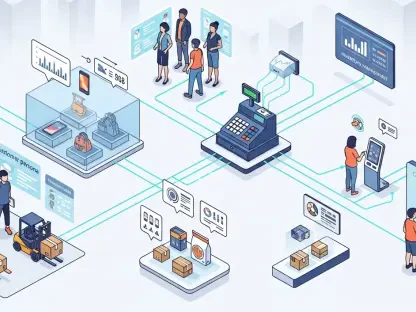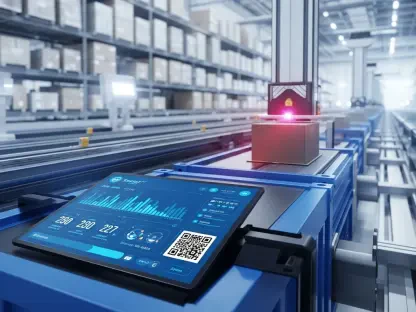

If a customer asked about the availability of a specific product right now, the ability to provide a confident and accurate answer is more critical than ever, yet many businesses are operating with a significant information gap. Global research indicates that retailers possess accurate visibility of their inventory only about 70% of the time, which means that for every ten products a system claims are in stock, three might not actually be available for purchase. For independent retailers managing a complex web of sales channels, physical locations, and supplier relationships, this seemingly small discrepancy translates directly into tangible losses, including missed sales opportunities, bloated carrying costs from excess stock, and the slow erosion of customer trust. Effective inventory tracking transforms this operational guesswork into a strategic asset, providing a clear, real-time foundation for knowing precisely what is on hand, where it is located, and when it is time to reorder. This shift from reactive problem-solving to proactive management is no longer a luxury but a fundamental component of a successful modern retail operation.
1. Understanding the Fundamentals of Stock Control
Inventory tracking is the systematic and continuous monitoring of stock quantity, location, and status as it moves through a business, from receiving docks to customer hands. This process creates a reliable, consistent record of every single unit across all sales channels and storage areas, replacing outdated methods that rely on periodic counts and intuition. While often used interchangeably, inventory tracking and inventory management serve distinct but related functions. Tracking acts as the “eyes” of the business, collecting the raw, real-time data on every item’s journey. Inventory management, in contrast, is the “brain”—the broader strategic discipline that uses this data to make informed decisions about purchasing, supply chain logistics, demand forecasting, and warehouse organization. An effective tracking system captures far more than just quantity; it records an item’s specific location, its complete movement history, its current status—whether it is sellable, reserved for an order, or damaged—and its availability across all integrated sales platforms, such as an e-commerce site and a physical storefront. This granular level of detail provides the visibility needed to run a lean, efficient, and customer-centric operation.
The foundation of any robust inventory tracking system is the stock keeping unit (SKU), a unique alphanumeric code assigned to every distinct product variation. For example, a blue, medium-sized t-shirt would have a different SKU than a blue, large-sized t-shirt (e.g., TSHIRT-BLU-M vs. TSHIRT-BLU-L), and a green version would have its own unique identifier as well. A well-designed SKU system establishes precision and eliminates ambiguity for everyone involved, from warehouse pickers to store associates and e-commerce platforms. Consider a retailer with both a physical store and an online shop that has 12 units of a particular shirt: eight on the sales floor, three in the stockroom, and one reserved for an online order pickup. When a customer purchases two of these shirts in-store, a real-time tracking system instantly updates the total quantity. If this transaction causes the stock level to drop below a preset threshold, the system can automatically trigger a reorder alert. More importantly, this immediate update prevents the online store from selling an item that just left the physical location, a common scenario that leads to overselling, backorders, and significant damage to customer relationships.
2. Comparing Periodic and Perpetual Tracking Systems
Inventory tracking methodologies are generally categorized into two primary frameworks: periodic and perpetual, each with a distinct trade-off between cost, complexity, and accuracy. The periodic inventory system relies on physical counts conducted at regular intervals—such as weekly, monthly, or quarterly—to determine the actual quantity of stock on hand. Between these manual counts, the business operates on estimates that become progressively less accurate with every sale, return, or instance of loss. This approach requires minimal upfront investment, often relying on simple tools like spreadsheets and the labor required for counting. However, its significant drawback is the lack of real-time visibility, which makes it impossible to support the dynamic decisions required in a modern retail environment. Research analyzing nearly 24,000 SKUs in grocery stores revealed that inaccurate inventory records were a pervasive issue; correcting these discrepancies through audits resulted in a sales increase of approximately 11%, demonstrating the direct financial cost of operating with imprecise data. A periodic system is typically only viable for very small, single-location businesses with a limited number of SKUs and low transaction complexity.
In contrast, a perpetual inventory system provides a continuously accurate view of stock levels by updating records in real time with every transaction. Each sale, return, or receipt of new goods is immediately recorded, creating a dynamic and reliable inventory database. This method requires a greater upfront investment in technology, including inventory management software, barcode scanners, and staff training on new workflows. However, the return on this investment is substantial, yielding significantly higher accuracy and enabling the sophisticated omnichannel capabilities that today’s customers expect, such as buying online and picking up in-store. For businesses planning to scale, a perpetual system is not just an option but a necessity. The need for this framework becomes critical once a retailer introduces multiple locations, manages a moderate-to-high number of SKUs, engages in omnichannel sales, or experiences a high volume of transactions. Adopting a perpetual system early in a business’s growth trajectory is a strategic decision that prevents the need for a costly and disruptive migration from a less sophisticated method down the line.
3. The Tangible Business Impact of Accurate Tracking
The implementation of an accurate inventory tracking system directly influences three critical business outcomes: operational efficiency, customer satisfaction, and overall profitability. Stockouts and overstocks represent two sides of the same costly problem, both of which are mitigated by precise tracking. A system showing twelve units in stock when only two are physically present leads to overselling, which results in canceled orders, backorders, and frustrated customers. Conversely, believing stock is low when shelves are actually full leads to unnecessary reorders, tying up valuable capital in slow-moving products and increasing carrying costs. The scale of this issue is immense; in the fashion industry alone, an estimated 2.5 to 5 billion items of excess stock were produced in 2023, representing a staggering $70 to $140 billion in lost sales. Accurate tracking, particularly through a perpetual system, provides the data needed to curb both of these risks, simultaneously boosting revenue by ensuring products are available and saving money by optimizing purchasing.
Beyond preventing stockouts and overstocks, precise tracking enhances operational control and provides critical business insights. “Shrink,” the industry term for inventory loss due to theft, damage, or administrative errors, often remains hidden within flawed data. Without granular tracking, it is nearly impossible to distinguish between an actual sale, an unrecorded transaction, a receiving error, or outright theft. A perpetual system combined with regular cycle counts creates transparency, making discrepancies in inventory levels immediately obvious rather than discovering them months later during an annual count. Furthermore, purchasing decisions are only as effective as the data that informs them. Perpetual tracking generates reliable datasets that reveal crucial sales patterns, including sell-through rates, seasonal demand fluctuations, and product velocity by SKU. This allows for data-driven buying decisions, moving beyond guesswork and an overreliance on safety stock. This unified visibility is also the linchpin of modern omnichannel retail, enabling essential services like buy online, pick up in-store (BOPIS) and ensuring consistent product information and availability across all sales channels.
4. Choosing the Right Method for Your Business Scale
Manual tracking, typically done with spreadsheets in programs like Excel or Google Sheets, involves manually updating inventory counts as products are received, sold, or transferred. The process is straightforward: create columns for SKU, product description, quantity, and other relevant data, then diligently update the quantity column with every transaction. This method is best suited for retailers with a very small catalog (fewer than 50 SKUs), a single physical location, extremely low transaction volume (under 20 per day), and limited plans for future growth. Its primary benefits are its low cost and simplicity of setup. However, the drawbacks are significant and scale with the business. Manual tracking is highly susceptible to human error, offers no automation, cannot support multiple locations or channels, lacks integration with point-of-sale (POS) or e-commerce systems, and provides no real-time visibility. The signs that a business has outgrown this method are clear: forgetting to update the spreadsheet during busy periods, discovering major discrepancies during physical counts, or expanding to a second location or online store. At this point, the inaccuracies and inefficiencies will inevitably cost more in lost sales and excess stock than a more advanced system.
Barcode tracking systems use printed, machine-readable labels on products that are read by handheld or fixed scanners. When an item is received, moved, or sold, a quick scan automatically updates the central inventory management software. The technology stack consists of three main components: barcode labels, scanning hardware, and the software that interprets the data. This method is ideal for growing retailers with 50 to 5,000 SKUs, moderate-to-high transaction volumes, and multi-location or omnichannel operations. The benefits are transformative, offering accuracy rates of over 95%, real-time updates, and excellent scalability. The system also supports more advanced functions like serialized inventory tracking for high-value goods. While there is an upfront investment—scanner hardware can range from $100 to $500 per unit, and capable software typically costs $50 to $300 per month—the return on investment is compelling for any business looking to scale. This approach professionalizes inventory control, reduces manual labor, and provides the accurate data foundation needed for growth.
Radio Frequency Identification (RFID) represents the most advanced tier of inventory tracking, using wireless technology to identify and locate tagged items automatically and without a direct line of sight. Small RFID tags, each containing a microchip and an antenna, are attached to products. RFID readers emit radio waves that power these tags, which then transmit their data back to the system, allowing for the simultaneous identification of hundreds of items at once. This technology is best suited for operations with very high SKU counts (over 5,000), high-value inventory where the cost per tag is justified, or significant problems with shrink. The advantages over barcodes are substantial: RFID enables instant stock counts by simply walking through a stockroom with a reader, automates the receiving process as pallets pass through dock doors, and enhances theft prevention by triggering alerts when tagged items exit without being properly checked out. However, the investment is significantly higher, with tags costing from 10 cents to over a dollar each and readers running from $500 to $3,000 per unit. Despite this, the global RFID market is projected to grow from $15.49 billion in 2024 to $37.71 billion by 2032, signaling that the technology is becoming increasingly accessible and integrated into mainstream retail systems.
5. A Five Step Implementation Roadmap
The first crucial step in establishing a structured inventory tracking system is to assign a unique SKU to every product variation. This means that different colors, sizes, materials, or configurations of the same base product must each have their own distinct SKU. A well-designed SKU naming schema is human-readable and includes clear indicators for categories, key attributes, and sizing. For instance, a small, green sweater might be assigned “APRL-SWT-GRN-S.” It is vital to avoid common mistakes that create long-term problems, such as creating SKUs that are too similar, excessively long, or entirely numeric. Furthermore, SKUs from discontinued products should never be reused. The second step is to choose the tracking method and software that aligns with the business’s complexity and growth trajectory. This requires an honest assessment of current SKU count, number of locations, transaction volume, and budget. When selecting software, it is wise to choose a platform that can support the business not just today, but where it is expected to be in 12 to 18 months. Migrating inventory systems is an expensive and disruptive process, so choosing a solution that the business will not outgrow in a year can prevent significant future challenges.
Once the foundational decisions are made, the third step is to conduct a full physical inventory count. This process establishes an accurate baseline—the ground truth of what is actually on the shelves—before the new system goes live. To ensure accuracy, the count should be scheduled during off-hours, with inventory logically organized beforehand. After the initial count, the business should shift to a cycle counting strategy, which involves counting small sections of inventory on a regular basis rather than performing a single, disruptive annual count. Using ABC analysis helps focus these efforts: high-value “A” items are counted weekly, mid-tier “B” items monthly, and low-impact “C” items quarterly. The fourth step is to deeply integrate tracking into all daily operations. This requires establishing consistent processes for every inventory transaction, from receiving and selling to internal transfers and returns. Mobile inventory tools are invaluable here, enabling staff to capture data accurately at the point of action, whether on the sales floor or in the stockroom. The fifth and final step is to schedule regular audits and use the findings to drive improvement. When cycle counts reveal discrepancies, the goal should be to investigate the root causes—be it theft, unrecorded sales, or process errors—and take corrective action. This “audit-to-action” loop transforms inventory counting from a simple compliance task into a powerful tool for continuous operational improvement.
6. Navigating the Future of Inventory Systems
The effectiveness of an inventory tracking system is largely determined by the capabilities of its underlying software. Foundational features include real-time visibility that updates counts instantly across all channels, robust multi-location support to manage stock separately by warehouse or store, and mobile scanning capabilities that untether staff from fixed terminals. However, leading-edge systems now offer more advanced, AI-driven functionalities that provide a significant competitive advantage. AI-powered demand forecasting analyzes historical sales data, seasonal patterns, and market trends to predict future demand, enabling businesses to shift from reactive reordering to proactive, data-informed purchasing. Serialization is another critical feature, allowing for the tracking of individual units of the same SKU, which is essential for high-value items, electronics requiring warranty management, or regulated products that may need to be recalled. Furthermore, sophisticated software includes integrated purchase order and receiving workflows, which automate the process from PO generation to matching delivered quantities against orders. This seamless integration closes the common gaps between “ordered,” “received,” and “available for sale” that often create operational confusion and inventory inaccuracies.
The strategic adoption of advanced inventory systems was recognized as a critical priority for successful retail operations. In an increasingly interconnected retail landscape, the ability to integrate inventory data across the entire business ecosystem became paramount. Modern inventory software was designed to connect seamlessly with point-of-sale systems, e-commerce platforms, and enterprise resource planning (ERP) platforms like SAP or NetSuite, creating a single source of truth that every department could rely on. This unified approach was essential for enabling complex omnichannel fulfillment options and ensuring that financial and operational data remained perfectly aligned. As noted in Deloitte’s 2025 US Retail Industry Outlook, a significant portion of retail executives planned substantial investments to enhance efficiencies through real-time inventory visibility. This trend underscored a fundamental market shift: businesses that implemented these integrated, data-driven systems were not just improving a single process; they were building a more resilient, agile, and customer-centric foundation that positioned them for sustained growth and profitability.