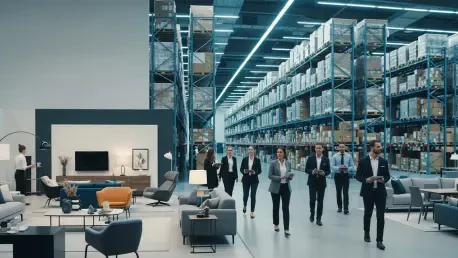

The modern furniture retail sector is currently witnessing a profound transformation where the traditional boundaries between massive storage facilities and consumer shopping showrooms are rapidly dissolving into single, integrated operational units. This shift signals a broader industry movement where logistics has moved from a back-office function to a primary competitive advantage. Large-scale players are no longer just selling aesthetics; they are selling availability and precision. The integration of advanced inventory management systems into brick-and-mortar storefronts allows retailers to maximize floor space while ensuring that the products on display are ready for immediate dispatch.
Transforming the Furniture Retail and Logistics Landscape
The domestic furniture market presently faces a landscape defined by high consumer expectations and a demand for seamless transitions between online browsing and physical testing. To maintain relevance, major retailers are adopting strategies that prioritize supply chain resilience over simple expansion. This approach involves rethinking the traditional warehouse model to support a hybrid environment where sales and distribution coexist under one roof.
Technological integration has moved beyond simple point-of-sale systems to include sophisticated warehouse automation that communicates directly with customer-facing applications. This connectivity allows for a more transparent shopping experience, where inventory levels are updated in real-time, reducing the likelihood of fulfillment delays. As the industry standards evolve, the ability to merge retail footprints with logistical hubs is becoming a hallmark of market leaders.
Evolution of Supply Chain Strategies and Market Growth
The Shift Toward Localized Inventory and Omnichannel Excellence
Retailers are increasingly turning to decentralized warehousing to address the growing demand for immediate gratification. By positioning inventory closer to major metropolitan areas, companies can drastically reduce the time between a customer’s purchase and the final delivery. This localized approach is essential for achieving omnichannel excellence, as it ensures that the physical store can serve as both a showroom and a rapid-fulfillment center for online orders.
Last-mile logistics now represents the most critical phase of the customer journey, often determining whether a buyer returns for future purchases. Modern hubs are being outfitted with high-capacity racking systems and real-time tracking protocols to streamline this process. These advancements allow for a more agile response to local market fluctuations, ensuring that high-demand items remain in stock and ready for local transit.
Economic Indicators and Long-Term Furniture Demand Forecasts
Looking ahead from 2026 through 2030, market data suggests a steady demand for home furnishings, provided that retailers can maintain delivery efficiency. Performance indicators have consistently shown a strong correlation between rapid fulfillment and high customer retention rates. As delivery windows shrink, the pressure on regional distribution networks increases, making the efficiency of these hybrid facilities a vital component of revenue growth.
Regional market potential is particularly high in the Midwest and Southeast, where population shifts are driving new housing developments. Forecasts indicate that companies investing in robust infrastructure within these corridors will be better positioned to capture market share. Speed of service is no longer an optional perk but a fundamental requirement for long-term survival in an increasingly crowded retail environment.
Navigating Economic Volatility and Operational Roadblocks
The furniture sector must currently navigate a cooling housing market, which historically has served as a primary driver for new furniture sales. When home turnover slows, retailers must find new ways to incentivize purchases, often by focusing on upgrade cycles or lifestyle changes. This economic pressure is compounded by elevated tariff costs and persistent disruptions in the global supply chain, which can inflate the cost of goods and squeeze profit margins.
Operational complexities also arise when managing hybrid facilities that require both a retail labor force and specialized warehouse personnel. Mitigating rising line-haul transportation expenses requires a strategic rethink of how goods move from ports to local hubs. By reducing the distance between the final storage point and the end-user, companies can offset some of the inflationary pressures affecting the broader transportation industry.
The Regulatory Framework and Infrastructure Standards
Large-scale distribution centers are subject to a complex web of zoning laws and environmental regulations that vary significantly by municipality. Compliance with these standards is essential for maintaining operational continuity, especially when facilities incorporate high-capacity warehouse components. Safety requirements for high-density storage are particularly stringent, necessitating regular audits and advanced fire suppression systems to protect both the staff and the inventory.
Data security has also emerged as a critical regulatory concern, as real-time tracking technologies collect vast amounts of information regarding inventory flow and customer habits. Retailers must ensure that their digital infrastructure complies with privacy laws while maintaining the transparency needed for interstate transport. Logistical regulations regarding heavy vehicle traffic and regional emissions also play a role in determining the long-term viability of specific distribution sites.
The Future of Retail: Decentralization and High-Speed Fulfillment
The long-term viability of the hybrid retail-distribution model appears promising, with other industries likely to adopt similar strategies to combat rising shipping costs. Future disruptors such as AI-driven demand forecasting and autonomous delivery systems are expected to further refine the efficiency of these hubs. As consumer preferences shift toward more sustainable and efficient delivery methods, the demand for localized fulfillment will only intensify.
Global economic conditions will continue to influence infrastructure investment, but the trend toward decentralization seems permanent. Companies that successfully implement automation at the local level will be able to scale their operations more effectively than those relying on centralized, distant warehouses. This shift represents a fundamental change in how retail space is valued and utilized in the modern economy.
Strategic Outlook for Bob’s Discount Furniture and the Broader Industry
The pilot program in Solon, Ohio, offered clear evidence that integrating retail and logistics provided a pathway to enhanced operational efficiency. This facility utilized its proximity to major transportation arteries to serve as a blueprint for future expansions. The move toward this dual-format model suggested that the company was prepared to prioritize speed and local inventory availability over traditional, standalone storefronts.
In Macon, Georgia, the expansion into a massive regional hub provided the necessary infrastructure to support rapid growth across the Southeast. Stakeholders who observed these developments recognized that geographic placement and cost control were the primary levers for maintaining a competitive edge. The findings from these projects highlighted the importance of localized supply chains in mitigating global economic volatility and meeting the evolving expectations of the modern furniture consumer.