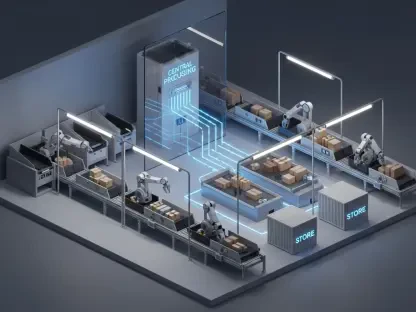

The retail landscape is saturated with captivating technology, where augmented reality mirrors and automated checkout systems promise a seamless and futuristic shopping journey. While these innovations generate considerable buzz and create a modern veneer, they mask a deeper, more pressing reality that is coming into sharp focus: the real determinant of success in today’s competitive market is not the technology customers see, but the complex operational intelligence they never will. A pervasive consensus is forming that the industry’s future will be shaped not by flashy front-end features but by the robust, invisible integration of backend systems. The most sophisticated customer-facing technology is rendered useless if the foundational logistics of inventory, data, and fulfillment are flawed, leading to a critical re-evaluation of where retailers should be directing their substantial technology investments.
The Widening Gap Between Technology and Performance
A significant challenge plaguing the industry is the “investment paradox,” a phenomenon where retailers are funneling unprecedented capital into technology yet continue to grapple with fundamental operational inefficiencies. Research shows that while the vast majority of retailers are actively investing in store optimization, their focus is often misplaced. There is a strong, observable tendency to prioritize highly visible, impressive front-end technologies that enhance the in-store spectacle. These innovations, while meaningful in isolation, are frequently implemented as disparate point solutions layered atop a fragmented and archaic data infrastructure. This strategy addresses the symptoms of a disconnected business—such as poor customer engagement or slow checkout times—rather than curing the underlying disease of data silos and operational disconnects. A smart store, it turns out, is only as intelligent as the data that powers its decisions, and the current economic climate is serving as a critical stress test, exposing whether these substantial investments are generating tangible returns or merely creating an expensive illusion of progress.
The most glaring threat to retail viability, and the primary driver of margin erosion, is the persistent failure in inventory management. No amount of sophisticated front-end technology can compensate for a breakdown in the supply chain, as even the most advanced AI cannot sell a product that is not available. This is the foundational flaw where the promise of the “smart store” ultimately crumbles. For instance, a highly advanced promotion engine might dispatch a perfectly personalized and compelling offer to a high-value customer, but if that specific product is located in the wrong distribution center or is simply out of stock, the technological achievement is entirely negated by the operational breakdown. Such failures inflict immediate damage on the bottom line through lost sales and, more critically, cause long-term harm to customer loyalty and trust. With shopping seasons now extending over several months, inventory resilience, powered by unified and intelligent demand forecasting, is becoming the single most defining factor separating industry leaders from those who will inevitably fall behind.
Redefining the Modern Customer Experience
The concept of the “Store of the Future” is rapidly evolving into the new “Industry Standard Store,” where omnichannel capability is no longer a competitive differentiator but a fundamental, non-negotiable requirement for survival. In this new paradigm, a retailer operating without a unified, real-time data infrastructure becomes effectively invisible to the modern shopper, who has come to expect a completely seamless experience across every physical and digital channel. A successful omnichannel strategy hinges on a single, cohesive, real-time view of the customer, inventory, and order status. The popular “buy online, pick up in-store” (BOPIS) model serves as a perfect illustration. When a customer opts for BOPIS, they are purchasing not just a product but also the promise of certainty and frictionless convenience. Delivering on this promise is entirely dependent on having synchronized, real-time data that ensures the item purchased online is accurately located, efficiently pulled from the sales floor, and ready for pickup precisely when the customer arrives. Without this deep backend integration, a powerful tool like BOPIS quickly devolves into a customer service nightmare, leading to canceled orders, frustrated shoppers, and a permanently tarnished brand reputation.
The era of generic, one-size-fits-all promotions is rapidly drawing to a close, as the only viable path to achieving a positive return on investment is through AI-driven personalization delivered at an enterprise scale. This level of effective personalization extends far beyond simply using a customer’s first name in an email; it is a complex synthesis of multiple, dynamic data streams. An advanced AI system must be able to process a customer’s complete profile—including past purchase history, recent browsing behavior, and abandoned shopping carts—and cross-reference this information with operational data in real time. This includes current inventory levels across the entire network, inbound shipment statuses, and broader market demand signals. By seamlessly integrating these disparate data points, a retailer can deliver the perfect offer for the right product at precisely the right moment, converting a hesitant browser into a confident buyer. However, the efficacy of this entire process is entirely contingent on the quality and completeness of the data it is fed. A fragmented view of the customer or an inaccurate picture of inventory will inevitably lead to promotions that feel intrusive, irrelevant, or, in the worst-case scenario, promote items that are unavailable, thereby eroding trust instead of building it.
Forging a Foundation for True Intelligence
The consequences of failing to bridge the gap between front-end ambition and back-end execution were immediate and severe. Retailers with persistent operational blind spots faced chronic stockouts, frequent and costly order errors, and a growing cohort of frustrated customers who permanently switched to competitors capable of delivering with precision and reliability. These operational failures did not just dilute revenue in a single season; they created a compounding effect of long-term loyalty erosion and ballooning operational costs that ultimately proved unsustainable. The industry learned that customer trust, once lost, was exceedingly difficult to reclaim, and the cost of acquiring new customers far outpaced the cost of retaining existing ones through dependable service. The universal ambition to modernize was clear, but a costly and persistent gap existed between that ambition and its practical execution, a gap that defined the winners and losers.
The path forward that emerged was not to simply spend more on technology but to invest smarter. The solution was found in shifting focus from the shiny, customer-facing features to the foundational “connective tissue” that held the entire retail enterprise together. The most successful retailers prioritized investments in integration platforms that could unify their existing, often siloed, technological solutions. The objective was to create a single source of truth—a unified, real-time decisioning platform that brought clarity from data chaos. By empowering their teams with this integrated view, these retailers were finally able to close the gap between their smart technology and their core operations. In doing so, they not only survived the immense challenges of the modern retail environment but were positioned to define the future of the industry by building truly intelligent, resilient, and customer-centric enterprises from the inside out.