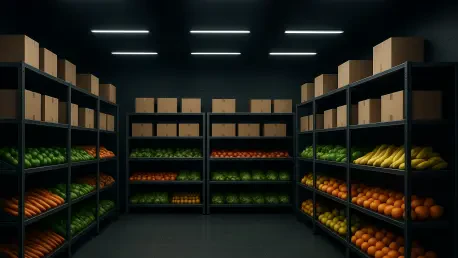

The current competitive landscape has evolved into ecosystem warfare, pitting the massive digital infrastructures of Alibaba, Meituan, and JD.com against one another. This shift marks a pivotal moment for the pre-positioned warehouse model, colloquially known as the dark store, which has transitioned from an industry punchline into a critical strategic asset for 2026. Only two years ago, analysts frequently characterized these localized distribution hubs as a bottomless money pit, citing the spectacular collapse of early pioneers who failed to reconcile high delivery speeds with low-margin grocery items. Today, however, the narrative has flipped entirely as retail giants re-engineer their logistical frameworks to prioritize “instant retail” as a core growth driver. These dark stores, strategically tucked away within dense residential neighborhoods, now serve as high-velocity fulfillment centers that bypass the traditional retail floor entirely. By focusing exclusively on online orders, companies can offer delivery windows of thirty to sixty minutes, fulfilling the immediate needs of a consumer base that has largely abandoned the weekly supermarket trip in favor of on-demand gratification. The return to this model signifies a broader industry realization that physical proximity to the customer is the ultimate competitive moat, provided that the underlying economic logic is sound and technologically supported.
Strategic Realignment: The Shift to Leaner Fulfillment
The most visible manifestation of this strategic pivot is seen in the recent operational overhaul at Hema, also known as Freshippo. Under the guidance of leadership with deep financial backgrounds, the company has aggressively moved away from its earlier phase of experimental, high-overhead physical retail spaces. In major metropolitan hubs like Beijing and Hangzhou, the brand has shuttered several large-format stores that were once considered the crown jewels of the “New Retail” movement. These closures were not a sign of failure but a calculated transition toward a “store-to-warehouse” conversion strategy. By stripping away the customer-facing elements of a traditional grocery store, such as elaborate decor and expensive floor staff, Hema can maintain its extensive service radius while significantly slashing operational costs. This leaner model integrates more seamlessly with the Alibaba ecosystem, specifically aligning with Taobao Flash Purchase to bridge the gap between regional warehouses and hyper-local fulfillment. This evolution reflects a growing preference for financial pragmatism over brand spectacle, focusing on the efficiency of the “last mile” rather than the aesthetics of the “first impression.”
This transformation is not occurring in a vacuum, as a collective rush toward dark store expansion has gripped the entire industry. Meituan Xiaoxiang Supermarket has expanded its network to over 2,000 dark stores, with aggressive plans to add hundreds more before the end of the current fiscal cycle. Similarly, JD.com is leveraging its “1 Store + N Warehouses” model to expand the reach of its instant delivery services far beyond the grocery sector, encompassing electronics, home goods, and apparel. Even traditional brick-and-mortar legacy players like RT-Mart and Yonghui are no longer content to remain on the sidelines of the digital revolution. These companies are now repurposing portions of their existing store footprints into dedicated dark store zones, effectively evolving into “online supermarkets” that can compete with tech-native startups on speed. This industry-wide alignment suggests that the dark store has transcended its status as a niche logistical experiment to become the baseline requirement for any retailer hoping to survive the current landscape of hyper-convenience.
Solving the Margin Puzzle: A New Economic Logic
The primary reason for the historical failure of dark stores was the unsustainable reliance on fresh produce, which often suffers from low margins and high perishability rates. In the current 2026 market, retail leaders have solved this profitability equation by radically diversifying their product mix. Instead of acting solely as localized greengrocers, dark stores now carry a sophisticated blend of general merchandise, high-margin beauty products, and consumer electronics. By mixing essential low-margin items like milk and vegetables with high-margin luxury or technical goods, platforms are able to stabilize their gross profit margins across the entire warehouse inventory. This strategic bundling encourages consumers to add high-value items to their carts alongside daily necessities, effectively diluting the high cost of delivery across a more profitable order total. The shift in inventory management has transformed the dark store from a specialized food locker into a versatile, high-speed fulfillment hub for a wide variety of lifestyle needs, catering to an audience that values time as much as price.
Beyond product diversification, the push toward private-label expansion has provided retailers with much-needed pricing power. By developing their own brands and controlling the supply chain from the point of origin, platforms can eliminate the “middleman tax” that previously eroded their margins. This vertical integration allows for higher quality control and more aggressive pricing strategies that are difficult for traditional wholesalers to match. Furthermore, advanced consumer algorithms are now being used to nudge average order values upward through personalized recommendations and tiered delivery incentives. For instance, platforms that previously struggled with an average order value of 50 yuan are now regularly seeing totals exceeding 80 yuan. This increase in the “unit price” of a customer’s basket is the key to making the localized warehouse model viable without the need for constant capital subsidies. By focusing on the total value of the transaction rather than just the volume of orders, the industry has finally found a path toward sustainable, self-sufficient growth in the instant retail space.
Technological Foundations: Efficiency Through Predictive Analysis
The operational viability of the modern dark store is built upon a foundation of massive digital infrastructure and sophisticated predictive modeling. Platforms such as Meituan have developed proprietary systems that allow warehouse managers to anticipate local demand with uncanny precision, often hours or days before an order is actually placed. This data-driven approach minimizes the risk of overstocking perishable goods and ensures that the most popular items are always positioned for immediate picking and packing. This “lightning warehouse” philosophy relies on real-time data feeds that analyze everything from local weather patterns to community-specific shopping habits, allowing for a hyper-localized inventory that reflects the unique needs of a three-kilometer radius. These technological advancements have effectively neutralized the “perishability crisis” that plagued the industry in previous years, turning a major liability into a manageable operational variable that can be optimized through software.
Consumer behavior has reached a definitive tipping point in 2026, where the expectation of “instant gratification” is no longer a luxury but a fundamental baseline for all retail interactions. The physical proximity afforded by the dark store network is the only logistical solution capable of meeting this demand without incurring astronomical shipping costs. As a result, these facilities have transitioned from being optional supplements to the traditional retail experience into essential infrastructure for the modern economy. The ability to fulfill an order in under an hour creates a powerful psychological bond with the consumer, who begins to view the platform as an extension of their own pantry or closet. This shift in the retail relationship is why dark stores are being integrated so deeply into the broader digital ecosystems of tech giants; they are the physical manifestation of a digital promise. For a retailer to remain competitive today, they must possess the infrastructure to be “always near,” a requirement that only a dense network of dark stores can fulfill efficiently.
Consolidation and Leverage: The Power of Scale
The current expansion of the dark store model is defined by a state of intense ecosystem warfare, where the battle is no longer between individual storefronts but between massive, integrated digital networks. Market power is increasingly concentrated in the hands of a few dominant players who can afford the high entry costs of building a comprehensive warehouse network. This duopoly-style competition between the Alibaba and Meituan ecosystems has created a landscape where scale is the ultimate weapon for survival. By controlling both the demand side through their massive user apps and the supply side through their dark stores, these giants can squeeze efficiencies out of every step of the fulfillment process. This consolidation allows them to integrate previously independent fresh-food platforms and specialized logistics providers into their corporate structures, further solidifying their dominance. Smaller players who lack the capital to build these vast “last-mile” networks find themselves increasingly sidelined or forced to operate within the infrastructure of their larger competitors.
This concentration of power also grants retail giants significant leverage over upstream suppliers, which is a critical component of the dark store’s profitability. As order volumes increase across the network, platforms can negotiate more favorable terms with farmers, manufacturers, and wholesalers, effectively dictating prices in a way that was impossible during the fragmented era of early e-commerce. This pricing power allows the platforms to capture a larger share of the value chain, which they can then reinvest into further warehouse automation or delivery technology. The result is a self-reinforcing cycle where the largest players become more efficient as they grow, creating a competitive moat that is nearly impossible for new entrants to bridge. In this environment, the dark store is not just a logistical hub; it is a tool for market consolidation that allows tech companies to exert control over the entire lifecycle of a product, from the factory floor to the customer’s front door.
Human Factors: Managing Operational Strain and Consumer Trust
Despite the overwhelming financial and technological arguments in favor of the dark store model, the transition is not without its significant human and operational challenges. Managing a “hybrid” location that serves both as a traditional store and a back-end warehouse requires a complex balancing act that often leads to internal friction. Store managers are frequently tasked with overseeing two entirely different sets of KPIs: one focused on the tactile shopping experience of walk-in customers and another focused on the cold, metrics-driven efficiency of online picking and packing. This dual-focus can lead to operational bottlenecks, where staff are pulled in multiple directions at once, potentially compromising the quality of service for both online and offline shoppers. The complexity of these “integrated” sites suggests that the industry may eventually need to decide between fully automated dark stores or traditional retail, as the middle ground remains difficult to navigate for the workforce.
Furthermore, there is a growing trend of consumer dissatisfaction regarding the loss of the physical shopping experience as brands convert their prime retail locations into “dark” facilities. Many users have expressed frustration on social media about the perceived decline in the quality and freshness of goods when they can no longer hand-pick their own items. Issues such as improper packaging, late deliveries during peak hours, and a lack of transparency in the substitution process for out-of-stock items have created a “trust deficit” among some segments of the population. While the financial spreadsheets might show improved margins for the CFO, the long-term success of the dark store model depends heavily on maintaining consumer confidence in the quality of the product being delivered. Retailers must find a way to replicate the sensory reassurance of the physical store through digital means, or they risk alienating the very customers they are trying to serve with their high-speed delivery promises.
Strategic Imperatives: Building Sustainable Instant Retail Ecosystems
The resurgence of the dark store model has proven that the “impossible profit” of the past was merely a symptom of underdeveloped technology and an overly narrow product focus. By 2026, the retail industry successfully moved beyond the experimental phase of rapid, subsidized expansion and entered an era of disciplined, data-driven fulfillment. The key takeaway for organizations moving forward is that the number of warehouses in a network is secondary to the efficiency of the software that manages them and the diversity of the products they hold. Profitability was finally achieved not by cutting corners on speed, but by optimizing the entire value chain and leveraging the power of massive digital ecosystems to drive volume. The dark store has been vindicated as the vital organ of a new, hyper-local economy that prioritizes convenience above all else, provided that the operational complexity is managed with a focus on quality.
Moving into the next phase of this retail evolution, the industry must address the remaining hurdles of service consistency and human-centric design. Success will require a shift in focus from purely logistical metrics to a more holistic view of the user experience, ensuring that “instant” does not come at the expense of “excellent.” Retailers who invested heavily in their own private labels and proprietary fulfillment technology found themselves in a position of strength, while those who relied on third-party solutions struggled to maintain their margins. The conclusion of this current cycle of expansion suggested that the future belongs to those who can master the intersection of digital foresight and physical proximity. The dark store model has survived its early trials and emerged as the definitive blueprint for profitable, high-speed retail, fundamentally altering how goods moved through the urban environment and setting a new standard for consumer expectations.