
From Insight to Impact: The New Competitive Edge in Supply Chain Management
In today’s volatile global market, the traditional, linear supply chain models designed for a predictable world are now obsolete. For consumer goods companies, a new paradigm has emerged as a definitive competitive necessity: Intelligent Supply Chain Execution (ISCE). This modern approach is characterized by the integration of historically separate systems through an artificial intelligence (AI) powered orchestration layer, enabling companies to translate data-driven insights into coordinated, real-time actions across their entire network. This exploration covers the critical shift away from passive, reactive management and toward a proactive, agile, and automated execution model—a transformation that is no longer optional for survival and growth.
The Breaking Point: Why Traditional Supply Chains Can’t Keep Pace
The contemporary operating environment for consumer goods companies is defined by unprecedented disruption and complexity. Factors such as geopolitical instability, fluctuating tariff policies, sudden port congestion, and the powerful influence of social media create a landscape of constant change. Simultaneously, customer expectations have evolved dramatically, with demands for omnichannel fulfillment, personalized experiences, and real-time visibility becoming standard. The traditional supply chain, built on siloed systems like order management (OMS), warehouse management (WMS), and transportation management (TMS), cannot cope with this new reality. These disconnected platforms force teams into a reactive posture, relying on manual coordination through spreadsheets and emails to address disruptions. This process is inherently slow and inefficient, meaning that by the time a decision is implemented, service levels have often deteriorated and margins have been eroded.
Unlocking Agility: The Core Pillars of AI-Powered Execution
Beyond Silos: The Power of an AI Orchestration Layer
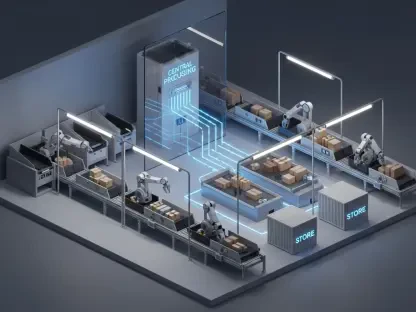
In stark contrast to the fragmented legacy approach, Intelligent Supply Chain Execution represents a unified and intelligent framework. Its core component is a cohesive, AI-powered orchestration layer that connects the OMS, WMS, and TMS. This layer acts as a central nervous system for the supply chain, transforming these platforms from isolated operational tools into an integrated, responsive ecosystem. Instead of merely providing data after the fact, this orchestration layer continuously monitors conditions across the entire value chain—from demand signals and inventory levels to fulfillment capacity and transportation logistics. The “intelligence” in ISCE stems from its use of machine learning and predictive analytics, which enables the system to move beyond static, rule-based decision-making and proactively recommend optimal actions in real time.
Predictive Precision: From Reactive Fixes to Proactive Fulfillment
In an omnichannel world where purchases can originate from countless touchpoints, maintaining product availability is paramount. ISCE provides complete, real-time inventory visibility across an entire network, preventing over-promising on stock that is not available. More importantly, its predictive intelligence can identify nascent demand trends—whether from a viral social media post or a competitor’s stockout—and trigger proactive responses. The system can automatically initiate inventory rebalancing, accelerate replenishment orders, or adjust product allocations to align supply with demand. When confronted with disruptions like unexpected port delays, the platform can instantaneously model alternative sourcing options or shipping routes, allowing the organization to mitigate disruptions before they impact customers.
Building Trust Through Flawless and Reliable Execution
Consistency in execution is a cornerstone of trust, both with consumers and business partners. ISCE helps organizations absorb the pressures of labor constraints and rising service expectations by automating routine decisions and augmenting human expertise. AI agents can be deployed to manage high-volume customer service inquiries, provide automated order status updates, and handle exceptions during peak periods. This ensures a consistent and high-quality customer experience while freeing up skilled employees to focus on more complex, strategic issues. For retail partners, this translates into predictable and dependable fulfillment performance, a critical factor in securing preferential shelf space and maintaining a strong collaborative relationship. Ultimately, reliable execution becomes a tangible expression of a brand’s promise.
The Future Is Autonomous: Evolving Toward Self-Orchestrating Supply Chains
The trajectory of AI in supply chain management points toward increasingly autonomous systems. While current implementations focus on augmenting human decision-making with intelligent recommendations, the next frontier is the self-orchestrating supply chain. These future networks will leverage advanced AI to not only predict disruptions and recommend actions but also execute them automatically within predefined business constraints. For example, a system could autonomously reroute a shipment, reallocate inventory, and notify all relevant stakeholders in response to a weather event, with no human intervention required. This evolution will further reduce latency between insight and action, creating a truly resilient and self-optimizing network capable of navigating complexity at machine speed.
From Strategy to Action: Embracing Intelligent Execution
The major takeaway for business leaders is that possessing supply chain intelligence and analytics is no longer sufficient. The true competitive advantage lies in the ability to translate that insight into immediate, effective, and coordinated action. To begin this journey, organizations must first assess their current operational silos and identify the points of friction between planning and execution. The next step is to invest in a unified platform or orchestration layer that can bridge these gaps, connecting disparate OMS, WMS, and TMS technologies. A phased implementation, starting with a focus on a high-impact area like inventory visibility or fulfillment optimization, can demonstrate early value and build momentum for a broader transformation.
The Final Word: Action Is the New Intelligence
The adoption of Intelligent Supply Chain Execution is not merely a technological upgrade but a fundamental strategic imperative. It closes the critical gap between knowing what to do and having the ability to do it instantly. By unifying systems under an AI-driven orchestration layer, it provides the agility, resilience, and scalability required to thrive in an era of constant disruption. This shift marks the evolution of AI from a passive analytical tool to an active, embedded component of day-to-day execution. For consumer goods leaders, embracing intelligent execution is the defining differentiator that will separate the companies that adapt and lead from those who are left behind.