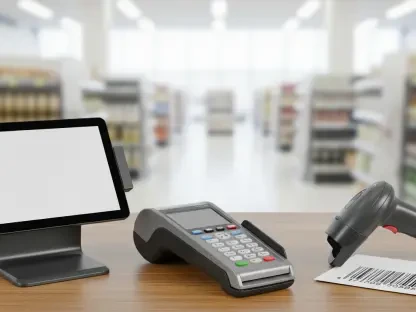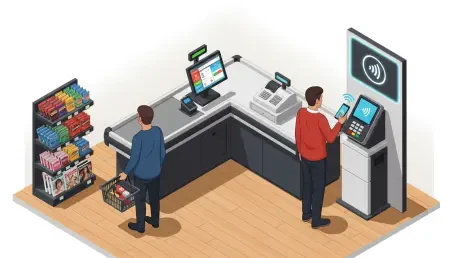

The final few feet of the customer journey have long been retail’s biggest bottleneck. The traditional checkout counter, with its long lines and clunky hardware, represents a point of maximum friction. It is where positive shopping experiences can sour in seconds, leading to abandoned carts and lost revenue. For years, retailers accepted this as a cost of doing business. That era is over.
The rise of Tap to Pay technology is not merely an incremental improvement; it is a fundamental redesign of the in-store transaction. Powered by Near Field Communication, this shift transforms payments from a procedural hurdle into a seamless, almost invisible, interaction. Retailers who view this as just a way to speed up lines are missing the point. Contactless technology is the key that unlocks a more fluid, efficient, and data-rich store environment.
This is about more than just convenience. It is about reallocating labor, redesigning store layouts, and capturing customer data at the point of interaction, not just at a fixed terminal. The tap is the new handshake between a brand and its customer, and it is changing the rules of physical retail.
How Contactless Reshaped Customer Expectations
Tap to Pay allows customers to complete a transaction by holding a payment card, smartphone, or wearable device near a compatible reader. Unlike traditional methods that require swiping a magnetic stripe or inserting a chip, Near Field Communication technology facilitates a secure, wireless data exchange, eliminating physical contact and dramatically reducing transaction time.
While the technology first appeared around 2014, its adoption accelerated dramatically in recent years. The global push for safer, touch-free interactions created a powerful tailwind. In the eurozone, contactless card payments initiated at physical point of sale terminals accounted for 83% of all non-remote card payments in the first half of 2025. This demonstrates near-universal adoption of contactless technology in in-person card transactions across Europe.
This rapid consumer adoption has reset expectations. A slow, friction-filled checkout process is a competitive disadvantage. Each contactless transaction is protected by tokenization, which replaces sensitive card data with a unique, one-time code. This dynamic encryption makes the payment data useless to fraudsters, offering a higher level of security than traditional magnetic stripe cards.
The Strategic Case: Beyond Speed and Convenience
Viewing Tap to Pay solely through the lens of faster checkouts is a strategic misstep. The true business value lies in the operational and experiential opportunities it unlocks.
The most significant impact is the decoupling of payments from a fixed location. With solutions like Tap to Pay on iPhone or Android devices, any employee with a smartphone can become a mobile point of sale. This liberates retailers from the traditional cash wrap counter, enabling powerful new service models:
- Reduced Hardware Costs: It eliminates the need for bulky, dedicated payment terminals, reducing capital expenditure and maintenance costs.
- Enhanced Store Flow: Associates can check out customers anywhere on the sales floor, a practice known as “line busting,” which is critical during peak traffic periods.
- Deeper Customer Engagement: Instead of being tethered to a register, employees can spend more time advising customers, using their mobile device to check inventory and complete the sale in a single interaction.
A major apparel brand equipped its associates with Near Field Communication-enabled handheld devices, allowing them to complete sales and returns from anywhere in the store. The result was a 25% reduction in average customer wait times and a measurable lift in customer satisfaction scores during peak shopping seasons.
New Frontiers in High-Value Retail
Contactless payments are reshaping experiences in luxury and international retail, sectors where service and efficiency are paramount.
Consider the process of tax-free shopping, which allows non-European Union tourists to reclaim Value Added Tax on purchases. Historically, this involved cumbersome paperwork and manual data entry. Modern point of sale systems integrated with contactless paying can streamline this entire workflow. When a tourist pays, the system can securely capture the tokenized card details and automatically link them to the Value Added Tax refund process.
Some solutions can even process the refund directly back to the payment method used. Recently, Christian Dior Couture became the first company in France to enable Tap to Pay on iPhone for seamless tax refunds, working with partners like Global Blue. The global VAT refund for travelers market reached $3.42 billion in 2024 and is projected to reach $6.77 billion by 2033, making frictionless tax refund experiences a powerful differentiator in this rapidly growing segment of global tourism retail.
What Implementation Actually Requires
Transitioning to a fully mobile and contactless payment ecosystem requires addressing three critical challenges.
- System Integration: Many retailers rely on older point of sale and inventory management platforms that may not be compatible with modern Application Programming Interfaces. Success often requires a broader technology overhaul to ensure seamless data flow between the front-end payment device and the back-end commerce engine.
- Security and Compliance: While tokenization provides robust security, retailers must still adhere to Payment Card Industry Data Security Standard requirements. According to Deloitte’s 2023 Connected Consumer Survey, 67% of smartphone users worry about data security and privacy on their phones, representing a 13% point increase from 2022, making visible security measures essential for building consumer trust when introducing new payment methods. Retailers must not only implement strong security protocols but also clearly communicate these protections to customers who are increasingly concerned about how their payment data is collected, stored, and used.
- Employee Enablement: Staff must be comfortable using the new technology and articulating its benefits to customers. The transition from a static to a mobile checkout model requires a shift in mindset, empowering associates to be service advisors first and cashiers second.
The Future Is Fluid
The era of the stationary cash register is ending. Tap to Pay technology is the catalyst for a more agile, customer-focused, and efficient physical store. It breaks down the last major barrier between a customer’s decision to buy and the completion of their purchase.
For retail leaders, three actions matter most:
- Evaluate your technology stack. Assess whether your current point of sale and back-end systems can support a truly mobile and integrated payment environment. If not, the migration timeline starts now.
- Redesign the in-store journey. Move beyond “line busting” and consider how a fully mobile checkout model could change store layouts, staffing models, and the definition of what a sales associate does.
- Connect payment to the rest of the customer experience. Ensure that new payment technologies integrate with your loyalty programs and Customer Relationship Management systems to provide a single, coherent view of the customer across every touchpoint.
The tap is just the beginning. The retailers who recognize this will define what the next decade of physical retail looks like. The ones who treat it as a minor checkout upgrade will spend that decade trying to catch up.