The disconnect between what consumers say they value and how they actually spend their money is one of the most pressing challenges in modern agricultural economics. While there is a global outcry for fairer treatment of small-scale farmers, the reality in our grocery aisles tells a much different story. To understand this friction, we look at recent qualitative research involving 41 primary household shoppers in Badajoz, a city of 150,000 in Spain. These participants engaged in intensive two-and-a-half-hour sessions to dissect their shopping habits, their perceptions of fairness, and their willingness to use digital platforms to buy directly from producers. The findings reveal a complex web of low consumer efficacy, sensory demands, and a deep-seated reliance on the convenience offered by large retail intermediaries.
Many shoppers acknowledge that farmers receive unfair prices due to retail intermediaries, yet they continue to prioritize convenience. How can the gap between moral sympathy and actual purchasing behavior be closed?
The divide is quite stark when you look at the numbers: 100% of the participants in this study agreed that farmers are paid unfairly, yet 60% still admit to buying their produce at supermarkets and hypermarkets purely for convenience. This isn’t just about laziness; it is about the structural way our lives are built around “one-stop” shopping environments where everything is under one roof. To bridge this, we have to move beyond just telling shoppers that farmers are struggling—they already know that and largely blame big retail chains for retaining an excessive share of the final price. The shift will only happen when direct-to-consumer platforms can mimic the ease of a supermarket, perhaps by offering multi-product baskets or involving transport companies as active partners to lower costs. Right now, the emotional desire to support a farmer is being crushed by the logistical weight of visiting multiple sites or driving out to a rural farm, which most people flatly refuse to do.
The study suggests a “low perceived consumer efficacy,” where people feel their individual choices don’t impact the agricultural system. How do we empower a shopper who feels that a boycott is too complicated or that their single purchase is meaningless?
It is a significant psychological barrier when consumers state that “individual actions have no influence at all,” as many did during the focus group sessions. This sense of powerlessness stems from a lack of transparency; shoppers see a vast, opaque supply chain and feel like a tiny gear in a massive machine. To combat this, government policies and regional campaigns need to focus on information and training that specifically highlights the impact of direct purchasing. Only one person in the study truly believed in the theoretical power of the consumer, but even they were deterred by the perceived high costs of acting on that power. We need to replace the “boycott” mentality, which feels negative and difficult, with a “solidarity” model where the act of buying becomes a visible, documented support of a specific family farm.
There is a clear resistance to “food box” systems because people cannot touch or select their produce. In a digital-first world, how can e-marketplaces satisfy the sensory needs of a shopper who wants to “inspect” their fruit?
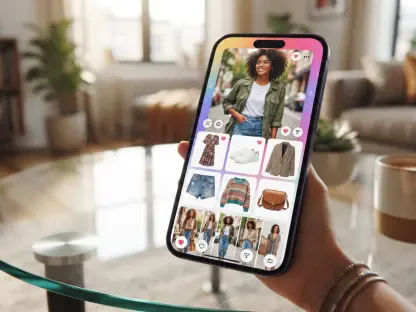
This is perhaps the most human element of the research—the fundamental desire to look at, touch, and pick up a piece of fruit before buying it. For many, a delivered box represents a loss of control, leading to fears about receiving unpredictable contents or low-quality items that might end up as food waste. One participant noted that a tomato from a farmer “is going to taste of tomato,” emphasizing that flavor and quality are the ultimate goals, but the path to getting there is currently blocked by the inability to see the product. Digital platforms can address this by moving away from static images and toward more interactive content, such as live-streaming from the fields or providing detailed videos of the specific harvest. By putting a “face and image” to the farmer and offering customer review sections, we can build a digital version of the “personal service” that 40% of shoppers currently seek out in local neighborhood shops.
When participants were shown actual producer prices on e-marketplaces, their reactions turned negative, with some balking at fruit priced at seven euros a kilo. Is the price of “fairness” simply too high for the average household?
Price is the ultimate deal-breaker, and the study showed that once participants saw the reality of seven euros per kilo or high minimum order quantities, their willingness to participate plummeted. Many participants immediately attributed these high prices to transport costs, concluding that direct-to-consumer digital platforms were a luxury reserved for wealthy families or the “deeply committed” few. To make these platforms viable, the promoters must find ways to reduce the “last mile” delivery costs, which are currently a major deterrent. Suggestions like using geolocation to find the nearest possible producers or creating smaller baskets for single-person households could make the price point feel less like a “premium” and more like a fair exchange. We also have to face the fact that many shoppers equate “organic” simply with “expensive,” with 70% failing to recognize official labels, so the value proposition must be about freshness and flavor rather than just a certification.
Trust emerged as a major theme, yet many dismissed tree-sponsoring or animal adoption as “marketing ploys.” How can smallholders build genuine credibility with a skeptical urban audience?
The skepticism we see is a defense mechanism against what consumers perceive as greenwashing or elaborate marketing tactics. Even though participants appreciated seeing photos and videos of the producers, they were very quick to dismiss more creative schemes as being inauthentic. Building credibility requires a move toward total transparency, where the farmer isn’t just a character in a story but a real partner who provides instant-response chats and return or compensation systems if the quality isn’t met. We found that socio-demographic factors like education didn’t necessarily make people more trusting; in fact, the well-educated participants in this study were some of the most critical. Authenticity will come from consistent quality and “social proof” through user reviews rather than polished marketing campaigns that feel disconnected from the grit of actual farming.
What is your forecast for the evolution of smallholder e-marketplaces?
I believe we are entering a transitional phase where these platforms must pivot toward a B2B2C model—serving restaurants and small local shops alongside individual consumers to create the volume necessary to lower logistics costs. Cultural habits regarding the immediate “seeing and choosing” of fresh food are not going to change overnight, so the platforms that succeed will be the ones that integrate most seamlessly into existing routines. We will see a shift away from high-level environmental messaging, which some consumers currently view as having a larger carbon footprint due to home delivery, and a move toward highlighting personal benefits like peak-season freshness and superior taste. If these platforms can successfully use geolocation to connect neighbors for bulk orders and implement live-streaming to bridge the sensory gap, we will see a slow but steady migration of that 60% of supermarket shoppers toward more direct, equitable food chains.