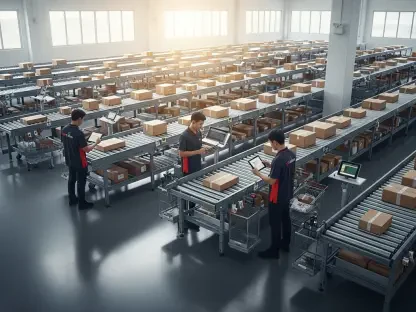

The golden age of the one-day delivery window has reached a definitive turning point as businesses trade their obsession with speed for long-term fiscal health. In a landscape once defined by the race to the customer’s doorstep, the American digital marketplace is now seeing a radical deceleration. Retailers that previously benchmarked their success against Amazon’s lightning-fast fulfillment are pivoting toward a more deliberate logistics model. This shift involves a complex ecosystem where legacy carriers like UPS and FedEx, the U.S. Postal Service, and specialized budget-friendly partners are rewriting the rules of engagement to protect thinning profit margins.
Analyzing the Economic Drivers and Shifting Consumer Priorities
The Temu Effect and the Rise of Value-Conscious Shopping
The dominance of extreme speed is facing a psychological challenge from the global influence of platforms like Shein and Temu. These entities have successfully normalized longer wait times by offering significantly lower price points, proving that the modern shopper is remarkably patient when the financial incentive is high. This trend is particularly visible among Gen Z consumers who view the traditional rush for immediate delivery as an unnecessary luxury.
Furthermore, this demographic shift represents a broader movement toward intentional consumption. Instead of fulfilling an immediate impulse, many shoppers now actively choose no-rush shipping as a way to support environmental sustainability and personal budgeting. This cultural transition suggests that the old standard of instant gratification is losing its status as a competitive necessity, replaced by a preference for value and ecological responsibility.
Quantifying the Financial Pivot Toward Standard Fulfillment
Market data reveals that over 95% of online shoppers now prioritize free standard shipping over expensive expedited options. While major carriers have consistently applied annual rate hikes, many retailers have discovered that extending delivery windows allows them to bypass the most aggressive surcharges. By lengthening the fulfillment cycle, businesses can consolidate orders and optimize labor costs within their warehouses.
Performance indicators also show that slower shipping leads to a measurable reduction in return rates. When customers wait longer for an item, they often do so with higher purchase intent, effectively discouraging the buy-and-return cycle that plagues fast-delivery models. This financial recalibration allows companies to focus on quality and accuracy rather than the frantic pace of rapid fulfillment.
Navigating Logistics Volatility and Operational Obstacles
The escalating cost of last-mile delivery remains the primary hurdle for the industry, especially as fuel surcharges and residential fees remain volatile. Major carriers are increasingly pivoting away from low-margin items to focus on high-value sectors, leaving apparel and household goods retailers to find alternative paths. To overcome these obstacles, businesses are diversifying their carrier networks and relying more heavily on regional providers and the USPS for final-mile logistics.
Strategically utilizing the postal service and localized micro-fulfillment centers allows brands to mitigate the impact of carrier rate hikes. This approach also permits more efficient labor scheduling, as the pressure to ship every order within hours of placement has diminished. Consequently, the logistics chain is becoming more resilient by spreading the workload across a wider variety of partners and timeframes.
The Regulatory Landscape and the Impact of Sustainable Logistics
Regulatory changes are playing an increasingly vital role in how delivery speeds are calculated and executed. New environmental standards regarding carbon emissions are pushing logistics firms to optimize routes for efficiency rather than pure speed. This often necessitates slower, more consolidated schedules that reduce the number of half-empty trucks on the road.
Additionally, internal reforms within the U.S. Postal Service are forcing a massive adaptation of logistics frameworks across the retail sector. Compliance with updated safety and labor standards for long-haul drivers is also contributing to a more measured pace of distribution. These external pressures ensure that the move toward slower shipping is not just a choice, but a requirement of the modern legal and environmental landscape.
Forecasting the Future of Sustainable and Profitable Delivery
The future of e-commerce points toward a matured, diversified ecosystem where rapid speed is treated as a premium service rather than a default expectation. Emerging technologies, including AI-driven inventory placement, will allow retailers to provide reliable delivery windows that prioritize economic pragmatism. As global economic conditions remain unpredictable, the industry will likely cement the 5-to-7-day delivery window as the standard for value-driven commerce.
Green logistics will continue to evolve from a marketing buzzword into a core operational requirement. Companies that can effectively communicate the environmental benefits of slower shipping will gain a competitive edge with ethical consumers. This transition suggests a world where the logistical burden is shared more equitably between the merchant and the buyer, prioritizing the health of the supply chain over the speed of the arrival.
Redefining Success in the New Age of E-Commerce Fulfillment
The shift toward deliberate shipping provided a necessary path for businesses to stabilize their operations and address the hidden costs of the rapid-delivery era. Industry leaders looked beyond the immediate transaction to build systems that reduced waste and lowered the financial barrier to entry for smaller merchants. By moving away from the high-pressure fulfillment cycle, organizations gained the ability to focus on long-term customer retention and the development of more robust regional distribution networks. Moving forward, the most successful enterprises will be those that integrate transparency into their logistics, giving shoppers clear choices between premium speed and sustainable value. The era of the five-day standard has arrived, transforming the delivery window into a strategic tool for both profitability and environmental stewardship.