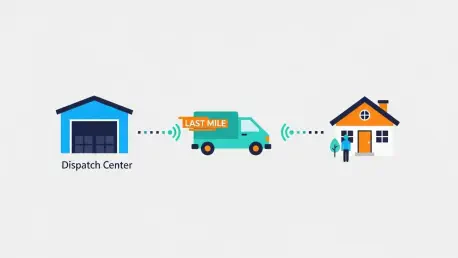

The final, critical journey of a parcel from a warehouse to a customer’s doorstep has become the defining moment in South Africa’s digital economy, a high-stakes arena where brand loyalty is won or lost in a matter of hours. As the nation’s e-commerce market solidifies its position, surpassing the R100 billion threshold, the last-mile delivery sector has evolved from a simple logistical function into a complex ecosystem driven by immense consumer expectations and technological innovation.
The New Battlefield: SA’s E-commerce Boom and the Last-Mile Imperative
South Africa’s retail landscape is undergoing a fundamental transformation, with online commerce now accounting for nearly 10% of total sales. This rapid maturation places unprecedented pressure on courier and logistics networks to deliver services that are not only faster but also more transparent and affordable than ever before. The days of ambiguous delivery windows and passive communication are over; today’s consumers demand real-time visibility and consistent performance.
This new reality has created a fiercely competitive environment where operational excellence is paramount. Key market players are now judged on their ability to integrate seamlessly into a business’s workflow, handle surges in volume without faltering, and provide a customer experience that builds trust. Technology is no longer a peripheral tool but the central nervous system of modern logistics, shaping every aspect of the delivery process from automated sorting to proactive customer notifications.
Decoding 2026: The Five Pivotal Shifts Redefining Delivery
From Competitive Edge to Survival Kit: The Key Industry Transformations
The industry is currently navigating five foundational shifts that have moved from being differentiators to being core requirements for survival. First among these is the widespread adoption of automation. As parcel volumes climb, manual processing is no longer a viable option for scaling operations; it introduces delays and a high risk of error. Automation is now the only path to processing more freight accurately in shorter timeframes, ensuring consistency even during peak demand. Consequently, direct system integration has become the standard for businesses of all sizes, with SMEs demanding the same sophisticated API and SFTP capabilities once reserved for large corporations to streamline their fulfillment processes.
Furthermore, the relentless demand for affordability is being met not through unsustainable price wars but through deep operational efficiency. Couriers are leveraging technology to reduce the cost per parcel internally, from optimizing routes to automating administrative tasks. Parallel to this, the nature of e-commerce has expanded to include higher-value goods, leading to a sharp rise in demand for extended liability cover to protect valuable shipments. Finally, delivery transparency has emerged as the new cornerstone of customer trust. Proactive, multi-channel communication regarding a parcel’s journey is now a non-negotiable element of the customer experience, directly influencing brand perception and loyalty.
By the Numbers: Quantifying the Surge in Last-Mile Demand
The immense pressure on logistics networks is not theoretical but quantifiable. Performance indicators from across the sector illustrate a market experiencing explosive growth. For instance, data from Fastway shows a more than 26% year-over-year increase in parcel volumes during the recent peak season months of November and December, with December alone registering a nearly 40% surge compared to the previous year. These figures paint a clear picture of the operational load couriers must now manage as a baseline.
This sustained surge is transforming seasonal spikes into a new, elevated standard of daily demand. The metrics confirm that the logistics infrastructure is being tested continuously, reinforcing the urgent need for investment in scalable solutions. The forecasts grounded in this data suggest that volume growth will continue its upward trajectory, making adaptation and innovation not just a strategic advantage but a fundamental necessity for any logistics provider aiming to remain relevant and reliable.
Navigating the Hurdles: Overcoming SA’s Unique Logistical Bottlenecks
Meeting this escalating demand is compounded by South Africa’s distinct logistical challenges. The primary obstacle is scaling operations in a way that is both efficient and sustainable. Expanding a network to handle higher volumes requires significant capital investment in infrastructure and technology, yet this must be balanced against the market’s intense pressure to maintain affordable pricing. This economic tightrope walk is a constant for every player in the sector.
Moreover, the risk of manual processing errors remains a significant hurdle for those who have been slow to automate, leading to dispatch delays, incorrect deliveries, and increased customer service overhead. Managing customer expectations is another complex layer. In a market where logistical inconsistencies and infrastructure gaps can impact delivery times, clear and proactive communication becomes critical. The challenge lies in creating a service that is perceived as reliable and transparent, even when unforeseen external factors come into play.
Building Trust Through Accountability: The Evolving Role of Liability and Data Security
As the value of goods moving through courier networks increases, so does the importance of governance and compliance. The demand for robust service agreements and extended liability cover has become a standard expectation. Businesses shipping high-value items, such as electronics or specialist goods, require assurance that their assets are protected against loss or damage. This shift has elevated liability from an optional add-on to a core component of the service offering, reflecting a market that prioritizes security and peace of mind.
Simultaneously, the move toward direct API and SFTP integrations introduces critical considerations around data security and privacy. As logistics providers become more deeply embedded in their clients’ technological ecosystems, they gain access to sensitive business and customer information. This necessitates the implementation of secure, reliable, and compliant technological frameworks. Maintaining client trust is therefore contingent not only on physical delivery performance but also on the digital integrity and security of the integrated systems.
The Road Ahead: Blueprint for a Smarter, More Responsive Delivery Network
The future of last-mile delivery in South Africa is being built on a foundation of intelligent and frictionless logistics. Emerging technologies in automation and advanced route optimization are no longer aspirational concepts but practical tools being deployed to create highly efficient and responsive delivery networks. These systems are designed to process parcels with greater speed and accuracy, predict logistical bottlenecks, and optimize delivery routes in real time to reduce costs and shorten delivery windows.
This technological evolution is coupled with a strategic focus on seamless system integrations and proactive communication. By allowing businesses to “plug in” their own platforms directly, couriers are removing administrative friction and empowering their clients to scale more confidently. The end goal is a cohesive ecosystem where information flows as freely as the parcels themselves, creating a transparent and predictable experience for both the sender and the recipient. These innovations are fundamental for any business looking to thrive in an increasingly competitive e-commerce market.
Final Mile, First Priority: Concluding Insights and Strategic Recommendations
This analysis has revealed that the last-mile sector’s ongoing transformation is a direct response to a maturing digital marketplace. The critical findings underscored that sustainable success no longer hinges on a single capability but on a holistic evolution of technology, operational strategy, and customer-centric service. The industry’s trajectory is firmly set toward greater intelligence, integration, and transparency.
It is clear that the final mile must be the first priority for any business competing in the e-commerce space. Strategic recommendations for businesses and couriers alike center on investing in efficiency-driven technologies and robust service frameworks. Thriving in this new landscape requires a commitment to building transparent, accountable, and highly responsive logistics systems that can meet the demands of today while scaling for the growth of tomorrow.