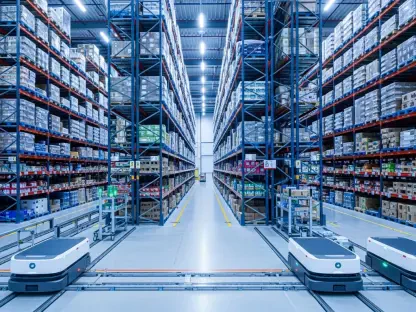

The complex puzzle of e-commerce logistics is prompting a fundamental rethinking of how merchants manage everything from warehousing to the final delivery, forcing providers to decide whether to master a single piece or own the entire board. This strategic crossroads is reshaping the industry, pushing a clear trend toward consolidation and all-in-one solutions designed to simplify an increasingly demanding supply chain.
Introduction: The Strategic Shift in E-commerce Logistics
The modern e-commerce landscape is defined by a relentless demand for speed, flexibility, and efficiency. To meet these expectations, logistics providers are moving away from siloed offerings and toward comprehensive, end-to-end solutions. A prime example of this strategic pivot is the recent acquisition of Warehowz, a North American on-demand warehousing marketplace, by ShipTime Canada, an e-commerce shipping technology platform. This move illustrates a broader industry trend where smaller, specialized players are combining forces to build integrated ecosystems capable of competing with established giants.
This consolidation is not an isolated event. ShipTime Canada, a subsidiary of Paid Inc., is actively building a unified logistics ecosystem that combines its multi-carrier shipping network—featuring major couriers like FedEx, UPS, and DHL—with the extensive warehousing capabilities of Warehowz. With a network of over 2,500 affiliated warehouses, this acquisition is a critical step in providing merchants with a seamless solution. This strategy mirrors actions taken by other industry players, such as fulfillment specialist Stord, which has also expanded its services through acquisitions, signaling a market-wide recognition that integrated platforms are the future of e-commerce logistics.
A Head-to-Head Comparison: Key Differentiators
Service Scope and End-to-End Capabilities
A specialized service provider carves out its market share by focusing intensely on one segment of the logistics chain. Before its acquisition, Warehowz was a quintessential example, excelling in on-demand warehousing and fulfillment. Merchants using its platform gained access to a vast network of storage facilities but still needed to procure and manage shipping and last-mile delivery services separately. This model offers deep expertise in a single vertical but requires the merchant to act as the integrator, piecing together different services from multiple vendors.
In contrast, an integrated ecosystem like the one ShipTime is building aims to eliminate that complexity by offering a single, unified solution. By absorbing Warehowz’s capabilities, ShipTime now provides a continuous service that covers the journey from initial storage to the customer’s doorstep. This end-to-end model combines warehousing, fulfillment, and multi-carrier shipping through partners like FedEx, UPS, and DHL under one technological umbrella. For a merchant, this translates into a single point of contact and a more streamlined operational flow, removing the friction between different stages of the supply chain.
Operational Flexibility and Scalability
Flexibility and scalability are critical in the fluctuating world of e-commerce, and both models address these needs differently. A specialized provider like Warehowz offered targeted flexibility, allowing merchants to quickly scale their warehousing capacity up or down to manage seasonal surges or unexpected inventory influxes. This on-demand model is highly effective for managing inventory levels without committing to long-term leases, providing a nimble solution for a specific operational challenge.
However, an integrated ecosystem leverages that same flexibility on a much broader, more strategic scale. The enhanced ShipTime platform uses the Warehowz network not just for overflow storage but to enable holistic scalability. Merchants can now position their products in multiple warehouses across North America, placing inventory closer to consumer hubs. This strategy allows them to manage inventory surges while simultaneously optimizing for faster, more cost-effective last-mile delivery, creating a dual advantage that a specialized warehousing service alone cannot offer.
Market Competitiveness and Growth Strategy
The competitive strategies of these two models are fundamentally different. Specialized services compete by striving to be the undisputed best in their niche. Their brand and value proposition are built on deep expertise and superior performance in a single area, attracting customers who prioritize best-in-class service for a specific need. This approach can be highly successful but also leaves them vulnerable to shifts in market demand toward more convenient, all-in-one solutions.
Integrated ecosystems, conversely, compete on the power of convenience and synergy. ShipTime’s acquisition of Warehowz is a textbook strategic move to bolster its market competitiveness by creating a comprehensive and simplified offering. This follows an industry trend, exemplified by Stord, where consolidation is the primary vehicle for growth. By bundling services, these platforms aim to become indispensable partners for modern e–commerce brands, simplifying logistics and enabling them to focus on their core business rather than managing a complex web of suppliers.
Inherent Challenges and Strategic Considerations
Despite their strengths, both models face significant challenges. For businesses relying on a collection of specialized services, the primary drawback is fragmentation. Managing separate vendors for warehousing, fulfillment, and shipping creates operational complexity and introduces potential points of failure. Coordinating between different platforms can lead to data silos, communication gaps, and inefficiencies, ultimately impacting the customer experience and consuming valuable internal resources that could be better spent on growth initiatives.
On the other hand, for an emerging integrated ecosystem like ShipTime, the central challenge lies in the execution of its vision. Seamlessly merging disparate platforms, cultures, and technologies—such as integrating Warehowz’s marketplace into its existing shipping platform—is a monumental task. The risk is that in the process of creating a unified system, the quality or agility of the individual components may be compromised. Achieving true synergy without creating a clunky, inefficient monolith is the critical test these consolidated entities must pass to deliver on their promise.
Final Verdict: Choosing the Right Logistics Model
The analysis of specialized services versus integrated ecosystems reveals a market in transition, with momentum clearly favoring unification. The acquisition of Warehowz by ShipTime is not merely a corporate transaction; it is a clear indicator of the industry’s trajectory toward comprehensive, single-platform solutions. This shift directly addresses the evolving needs of e-commerce merchants who require simplicity and agility to thrive.
For merchants managing lean inventory or those poised for rapid expansion, an integrated ecosystem presents a streamlined and efficient path to growth. It offers the flexibility to scale both storage and delivery capabilities in tandem, providing a robust foundation for building a competitive advantage. While a specialized service may still be the right fit for a business with a very specific, isolated logistics need, the overarching trend suggests that a unified platform offered a more durable and strategic solution for long-term success in the dynamic e-commerce arena.