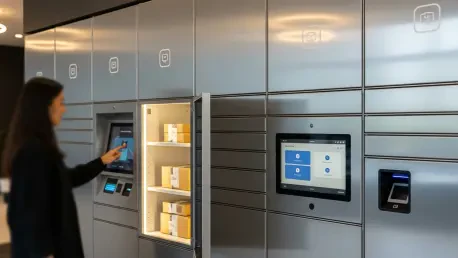

The final, most critical mile of the e-commerce journey is undergoing a profound transformation, moving away from the traditional doorstep drop-off toward a highly automated, secure, and on-demand future powered by intelligent technology. As parcel volumes surge to unprecedented levels, the logistics industry is rapidly adopting smart parcel lockers as a cornerstone solution to the mounting challenges of urban delivery. These systems are no longer a niche convenience but are fast becoming an essential piece of infrastructure in the global flow of goods, poised for explosive growth as consumers and businesses alike demand greater efficiency, security, and flexibility.
The Smart Locker Revolution A Snapshot of the Modern Delivery Landscape
At its core, the smart parcel locker ecosystem is an automated, self-service delivery solution designed to streamline the last step of the supply chain. These secure, electronically controlled compartments provide a centralized drop-off and pickup point, eliminating the need for face-to-face handoffs and mitigating the risks of package theft and missed deliveries. Functioning as a critical intermediary, the ecosystem connects logistics carriers, e-commerce retailers, and end consumers through a network of accessible, technologically advanced hubs that operate around the clock.
The market is distinctly segmented, catering to a wide range of environments and needs. A primary distinction exists between indoor lockers, commonly found in apartment buildings, corporate offices, and university campuses, and their more robust outdoor counterparts, which are strategically placed in public spaces like retail centers and transit stations. Functionally, the market comprises both hardware components, the physical steel structures and locking mechanisms, and the sophisticated software that powers them. This software platform is the brain of the operation, integrating Internet of Things (IoT) sensors, cloud-based management systems, and mobile applications to provide real-time tracking, secure access codes, and seamless user notifications. Major industry players like Quadient, Pitney Bowes, and TZ Limited lead a competitive field, each striving to expand their network footprint and technological capabilities.
Decoding the Markets Meteoric Rise
Riding the E Commerce Wave Key Drivers and Catalysts
The relentless expansion of global e-commerce is the principal engine propelling the smart locker market forward. As online shopping transitions from a convenience to a default mode of consumption for everything from groceries to electronics, the sheer volume of parcels flooding logistical networks has created a bottleneck in the final mile. This surge has been met with a parallel evolution in consumer expectations; today’s buyers demand not only speed but also unparalleled convenience and ironclad security for their purchases. They expect to retrieve their packages on their own schedule, without being tethered to delivery windows or worrying about porch pirates.
This demand for flexibility is amplified by powerful urbanization trends. In densely populated cities, couriers face a daily battle with traffic congestion, limited parking, and difficult access to multi-unit buildings, all of which drive up operational costs and lead to a high rate of failed deliveries. Smart lockers offer a compelling solution to these logistical headaches. For logistics providers, they represent a powerful tool for cost reduction, enabling drivers to consolidate dozens of deliveries into a single stop. This optimization drastically improves route efficiency, lowers fuel consumption, and ultimately boosts profitability, making the investment in locker networks a clear strategic imperative.
A Look at the Numbers Market Projections Through 2031
The financial trajectory of the smart parcel locker market underscores the industry’s vibrant health and promising future. With a solid valuation of US$ 1.4 billion in 2024, the market is on a clear path of accelerated expansion. Analysts project a formidable Compound Annual Growth Rate (CAGR) of 16.8% over the forecast period, a figure that reflects strong investor confidence and sustained demand from a diverse range of end-users.
This impressive growth rate is expected to drive the market’s value to an estimated US$ 4.2 billion by 2031, effectively tripling its size in just seven years. While North America and Europe currently represent the most mature markets due to their advanced e-commerce ecosystems and early adoption of smart city technologies, the Asia Pacific region is emerging as the frontier of growth. Fueled by rapid digitalization, a burgeoning middle class, and massive urban populations in countries like China and India, the region is poised to become the market’s most dynamic theater of operations as local logistics firms and retailers race to build out their delivery infrastructure.
Navigating the Hurdles on the Path to Expansion
Despite the overwhelmingly positive outlook, the path to widespread adoption is not without its obstacles. The most significant barrier to entry remains the high initial capital investment required. The cost of manufacturing, installing, and networking the physical locker units can be substantial, representing a considerable financial commitment for property managers, retailers, or logistics companies looking to build out a network.
Beyond the initial outlay, logistical complexities present another layer of challenges. The strategic selection of locker sites is paramount to success; locations must offer high visibility, easy access, and sufficient foot traffic to ensure high utilization rates and a return on investment. Furthermore, achieving the right network density to provide genuine convenience to a broad user base is a complex balancing act. On the technical front, ensuring a seamless user experience is crucial for driving adoption, as a clunky or unreliable interface can easily deter potential users. The back-end complexity of integrating a single locker system with the myriad of software platforms used by different carriers and retailers also presents a significant and ongoing integration hurdle.
The Regulatory Compass Compliance and Security in a Connected World
Operating a network of smart lockers requires careful navigation of a complex regulatory environment, particularly concerning data privacy. Because these systems collect user information, including names, contact details, and delivery data, they fall under the purview of regulations like the GDPR in Europe and various state-level privacy laws in the United States. Providers must ensure their data management practices are transparent and secure to maintain user trust and avoid significant penalties.
Furthermore, physical security and accessibility are key compliance areas. The lockers themselves must be built to withstand tampering and adverse weather conditions to protect the valuable goods stored within. Simultaneously, operators must adhere to accessibility standards, such as the Americans with Disabilities Act (ADA), ensuring that the lockers can be used by individuals with physical limitations. A growing focus is also being placed on interoperability, with industry stakeholders pushing for unified standards that would allow any carrier to deliver to any locker network. Such a carrier-agnostic approach would maximize the utility of the infrastructure and create a more efficient, interconnected delivery ecosystem for everyone.
Beyond the Box The Future of Automated Parcel Delivery
The evolution of the smart locker is far from over, with ongoing innovations poised to expand its capabilities significantly. The next generation of locker technology includes temperature-controlled units designed to handle groceries, pharmaceuticals, and other perishable goods, opening up vast new market segments. Modular designs that allow for easy expansion and customization are also becoming more common, while enhanced security features like biometric scanners are being explored to offer an even higher level of protection.
The integration of artificial intelligence and machine learning is set to revolutionize network management. These technologies will enable predictive maintenance, alerting operators to potential hardware issues before they cause downtime. AI will also be used to analyze usage patterns to optimize locker availability, dynamically guiding couriers to units with sufficient space and predicting future demand in specific locations.
This technological advancement is paving the way for smart lockers to become multi-functional urban hubs. In the near future, these units will not only handle deliveries but also manage product returns, serve as pickup points for rental items, and offer other localized services. Looking further ahead, lockers are being envisioned as the critical interface for futuristic delivery methods. They could serve as secure landing and handover points for autonomous delivery drones and as convenient drop-off locations for self-driving robotic vehicles, cementing their role as a permanent fixture in the automated logistics landscape of tomorrow.
The Final Verdict Strategic Insights and Investment Outlook
The analysis concluded that the smart parcel locker market was propelled by a powerful convergence of e-commerce proliferation, consumer demand for convenience, and the logistical imperatives of urbanization. Its rapid growth was not a fleeting trend but a fundamental shift in how the last mile of delivery was managed. These systems proved to be an indispensable tool for creating a more efficient, secure, and customer-centric logistics network, establishing their position as a critical component of modern commercial infrastructure.
For stakeholders, the strategic takeaways were clear. Retailers viewed the adoption of locker networks as a vital way to enhance the customer experience and build loyalty. Logistics firms, on the other hand, focused on the significant operational efficiencies and cost savings that consolidated deliveries provided. For property managers in both residential and commercial sectors, installing smart lockers became a high-value amenity that attracted and retained tenants in a competitive market.
Ultimately, the most promising areas for future investment and strategic development were identified. The creation of open, interoperable software platforms that could seamlessly connect multiple carriers and retailers to a single network was seen as a key to unlocking maximum value. Continued innovation in sustainable hardware design and the development of specialized locker types, such as refrigerated units, presented significant growth opportunities. Above all, the formation of strategic partnerships between technology providers, logistics giants, retailers, and property owners was highlighted as the essential catalyst for building the comprehensive, ubiquitous locker networks that will define the future of commerce.