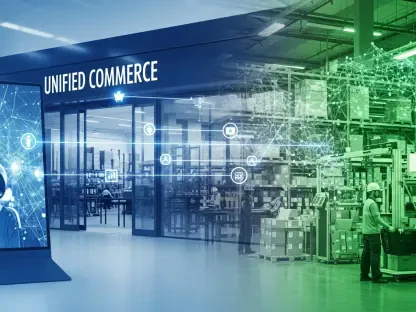

While the pervasive glow of smartphone screens might suggest that traditional commerce has been relegated to the history books, the empirical reality of the current American market tells a far more nuanced story of endurance and integration. Digital platforms have undoubtedly transformed how consumers discover products, yet the physical storefront remains the undisputed heavyweight of the retail sector, accounting for more than 83% of total market share. This enduring presence is not a sign of stagnation but rather a testament to the specialized roles that tangible environments play in an increasingly automated world. Understanding the current equilibrium requires a deep dive into the data provided by the U.S. Census Bureau and Adobe Analytics, which highlight the specific strengths of both digital and physical channels in this blended economic ecosystem.
The Evolving Landscape of American Retail in 2026
The transition from traditional commerce to the current hybrid model has been defined by a shift in how value is perceived and delivered. In this modern environment, the distinction between a website and a brick-and-mortar location is no longer a binary choice for the consumer but a fluid spectrum of interactions. Organizations like the U.S. Census Bureau serve as the primary guardians of this data, providing the e-commerce benchmarks and quarterly reports that ground industry narratives in statistical fact. Without these objective measures, it would be easy to succumb to the “perception gap” where the rapid growth of digital apps overshadows the massive, steady volume of in-person transactions.
The tools used to track this evolution have become as sophisticated as the retail models themselves. Adobe Analytics provides a microscopic view of high-volume digital events, such as Cyber Monday, where spending often hits record-breaking peaks in short windows. Meanwhile, Mastercard SpendingPulse offers a broader perspective by monitoring real-world consumer spending across all payment types, ensuring that cash and card transactions in physical aisles are not overlooked. Complementing these is the Bureau of Economic Analysis (BEA), which tracks the macroeconomic shift from goods-based spending toward service-oriented consumption. Together, these entities help retailers navigate a world where the “online versus offline” debate has been replaced by a quest for total channel synergy.
Evaluating Performance: Digital vs. Tangible Commerce
Market Share and Statistical Growth Patterns
When comparing the two formats based on their contribution to total U.S. retail sales, the gap remains significant despite the steady climb of digital platforms. As of late 2025, online retail captured approximately 16.4% of the market, leaving a staggering 83.6% to physical storefronts. This distribution highlights that while e-commerce is the primary driver of growth headlines, the foundational bulk of American commerce still happens in person. The incremental nature of this shift is visible in the quarterly data from the past year, where the online share moved from 16.1% in the first quarter to 16.4% by the third, reflecting a controlled expansion rather than an explosive takeover.
In contrast, the brick-and-mortar sector maintains a stable baseline that provides the necessary infrastructure for the entire economy. While digital growth is often measured in double-digit percentages during holiday surges, physical stores provide the daily consistency that sustains local economies. The total retail backdrop, which sits at roughly $1,893.6 billion, proves that the scale of physical commerce is difficult to replicate through digital means alone. This suggests that the two formats are not competing for the same dollar in a zero-sum game but are instead catering to different consumer needs and shopping frequencies.
Consumer Interaction and Product Category Suitability
The suitability of a product for a specific channel is largely determined by the necessity of a tactile experience. High-penetration online categories, such as consumer electronics, books, and hobby equipment, thrive in the digital space because they are standardized goods with predictable specifications. A consumer buying a specific model of a tablet or a popular novel does not need to touch the item to know what they are receiving. For these items, the convenience of digital comparison tools and home delivery outweighs the benefits of visiting a physical location.
Conversely, low-penetration categories like groceries, large furniture, and building materials remain firmly anchored in the physical world. The need to inspect the freshness of produce, test the comfort of a sofa, or verify the dimensions and weight of construction supplies creates a barrier to full digitization. Furthermore, the “fit and feel” requirement in sectors like cosmetics and high-end apparel ensures that showrooms and boutiques remain essential. For these products, the physical storefront acts as a sensory validation point that digital interfaces, despite advancements in augmented reality, cannot yet fully replace.
Fulfillment Logistics and Infrastructure Utility
The operational roles of websites and physical locations have merged to form a more efficient supply chain. Rather than acting purely as sales floors, many modern storefronts now function as local fulfillment hubs. This evolution has birthed the “Buy Online, Pick Up In-Store” (BOPIS) model, which leverages the physical proximity of shops to reduce shipping distances and costs. By allowing a customer to secure an item online and collect it minutes later, retailers combine the speed of digital search with the immediacy of physical possession, effectively neutralizing the shipping delays that often plague pure-play e-commerce.
Furthermore, physical stores provide a critical solution to the “last mile” delivery problem, which remains one of the most expensive aspects of the retail journey. Using stores as distributed warehouses allows for “ship-from-store” capabilities, where local inventory is used to fulfill nearby digital orders. This reduces the strain on centralized distribution centers and lowers the carbon footprint of individual deliveries. In this context, the physical storefront is not a relic of the past but a high-utility asset that enables the digital side of the business to remain profitable and responsive.
Challenges and Strategic Considerations in 2026
The financial hurdles facing both sectors are distinct and demanding. E-commerce platforms grapple with the escalating costs of packaging, shipping, and the high rate of returns, which can significantly erode margins for lower-priced goods. In contrast, physical storefronts must manage the rising burdens of rent, utilities, and on-site labor. These cost structures dictate which products are viable for each channel; for instance, shipping a single heavy bag of garden mulch is often economically unfeasible compared to selling it in a local hardware store. Retailers are now forced to calculate “all-in” profitability for every transaction to determine which channel provides the best return.
Technical difficulties in tracking market share have also complicated the strategic landscape. A 2025 revision by the U.S. Census Bureau, which removed “nonemployer businesses” from certain retail datasets, serves as a reminder that data methodology can shift the perceived reality of the market. This change requires analysts to be more rigorous in their interpretations, ensuring that a sudden fluctuation in e-commerce percentage is not merely a byproduct of a new reporting standard. Accurate sales attribution is further muddied by “digital influence,” where a consumer’s journey begins with a mobile search but concludes with a swipe of a physical card in a store, making it difficult to credit a single touchpoint for the conversion.
Macroeconomic pressures add another layer of complexity to these strategic decisions. Reports from the Bureau of Economic Analysis indicate a clear shift in consumer interest away from physical goods and toward services like travel and dining. When discretionary income flows toward experiences, both online and physical retail growth may appear to decelerate. This shift forces brands to rethink their value proposition, perhaps by incorporating service-based elements into their retail environments. Success in this climate depends on recognizing that the competition is no longer just between two retail formats but between the purchase of a product and the purchase of an experience.
Strategic Recommendations for a Unified Retail Approach
The core findings of this analysis suggest that the most successful brands have moved beyond the “online versus offline” mentality. While Adobe Analytics reported that Cyber Monday generated a staggering $14.25 billion in a single day, these spikes are seasonal anomalies that do not replace the daily necessity of local physical availability. A unified retail approach recognizes that digital excellence and physical presence are two sides of the same coin. The goal is to create a seamless experience where the consumer feels no friction when moving from a mobile app to a physical aisle, ensuring that the brand remains relevant regardless of the chosen touchpoint.
Adopting an omnichannel strategy involves using the unique strengths of each platform to build a stronger overall brand. Physical stores should be viewed as high-touch showrooms where brand stories are told and customer loyalty is forged through expert service. Meanwhile, digital platforms should handle the heavy lifting of data collection, personalized recommendations, and standardized replenishment. By integrating these functions, a retailer can offer the convenience of the internet alongside the emotional and sensory satisfaction of a physical visit. This integration is no longer a luxury but a requirement for survival in a market where 83% of sales are still tied to a physical location.
For brands looking to implement these strategies, practical selection criteria are essential. Priority must be given to digital attribution tools that can track how an online advertisement directly leads to a person walking through a store door. On the logistics front, implementing “ship-from-store” models is a vital step toward maintaining profitability against rising courier fees. Finally, during a product launch, it is wise to use digital channels for standardized goods while reserving physical storefronts for items that require a “fit and feel” experience, such as cosmetics or premium apparel.
The retail landscape has moved into a phase where the digital and physical realms function as a single, continuous experience. The “retail apocalypse” narrative proved to be an exaggeration, replaced by a sophisticated evolution of the brick-and-mortar model. Businesses that invested in localized fulfillment and digital-to-store attribution found themselves better positioned to handle the shift toward service-based spending. Moving forward, the industry must focus on refining these hybrid models, as the boundaries between clicking and browsing continue to blur into a singular act of modern consumption.