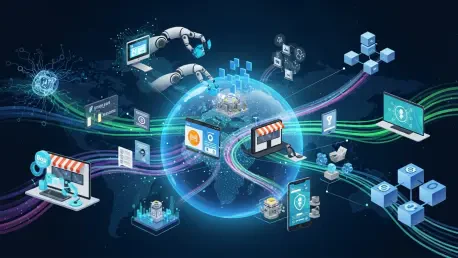

The global financial architecture is undergoing a profound metamorphosis as the invisible threads of merchant service technologies weave together disparate economies into a single, cohesive digital marketplace. In this landscape, the ability to process a transaction is no longer a mere utility but a sophisticated orchestrator of data, security, and consumer trust. As the world moves toward a total non-cash standard, with global transaction volumes poised to hit 3.54 trillion by the end of the decade, the merchant services industry has transitioned from the periphery of business operations to the very center of strategic growth. This review explores the technical maturation of payment ecosystems, evaluating how these platforms have evolved to meet the demands of a high-velocity, digital-first economy where the distinction between online and offline commerce has essentially evaporated.
Modern Merchant Services: An Evolutionary Overview
Merchant services essentially represent the comprehensive ecosystem of hardware, software, and financial plumbing required to accept and manage electronic payments in a high-speed environment. This ecosystem has transitioned from a fragmented collection of separate services into a unified infrastructure that allows a business to function as a singular entity across various sales channels. At its core, the modern merchant service provider acts as the central nervous system for commercial activity, ensuring that every swipe, tap, or click results in a secure and verified transfer of value. The evolution of this technology has been driven by the necessity for businesses to keep pace with a consumer base that demands frictionless, instantaneous payment experiences regardless of their physical location or the device they are using.
The architecture of these services relies on the payment trifecta, a tripartite structure consisting of the merchant account, the payment processor, and the payment gateway. The merchant account serves as the settlement point, a specialized financial holding area where funds reside after authorization but before they are moved to a business’s primary operating bank. The payment processor functions as the routing engine, navigating the complex web of card networks and issuing banks to confirm that funds are available and that the transaction is legitimate. Finally, the payment gateway acts as the digital interface, capturing and encrypting data at the point of sale to initiate the entire sequence. This structural synergy ensures that the movement of money is not only fast but also fundamentally secure, bridging the gap between a buyer’s intent and a seller’s fulfillment.
The current relevance of these services is most visible in the shift toward unified commerce, a paradigm where online and offline sales data are synchronized in real-time. In previous iterations of commerce technology, a retail store often operated with separate databases for its physical storefront and its website, leading to inventory discrepancies and fragmented customer records. Modern merchant services have dismantled these silos, creating a single source of truth for all transactional data. This synchronization allows for a holistic view of the business, enabling advanced analytics and a more consistent customer experience. As digital wallets and contactless payments continue to dominate, the ability to integrate these various payment methods into a single, manageable stream has become the defining characteristic of a successful commercial enterprise.
Core Components and Technical Functionalities
Payment Gateways and API Integration
Cloud-based gateways represent the front line of payment security, utilizing sophisticated encryption and tokenization to protect sensitive card data from the moment it is entered. Unlike the static systems of the past, contemporary gateways function as dynamic software layers that can adapt to various transaction types and environments. When a customer initiates a payment, the gateway immediately replaces the primary account number with a unique token. This token allows the transaction to proceed through the card networks without ever exposing the actual financial details to potential interceptors. This layer of abstraction is critical because it ensures that even if a data breach occurs at the merchant level, the information stolen is useless to unauthorized parties, as the tokens are only valid within a specific transactional context.
The flexibility of Application Programming Interfaces, or APIs, has further revolutionized how businesses interact with these gateways. Developers can now use these APIs to build highly customized checkout experiences that feel like a native part of the brand’s digital environment. This technical agility is particularly important for businesses operating in international markets, where regional payment methods like iDEAL in the Netherlands or AliPay in China are preferred over traditional credit cards. By integrating these diverse payment options through a single API, merchant service providers allow businesses to localize their offering without needing to manage multiple, disparate technical integrations. This capability not only improves conversion rates by catering to local preferences but also simplifies the back-end reconciliation process for the merchant.
Integrated POS Hardware and Software
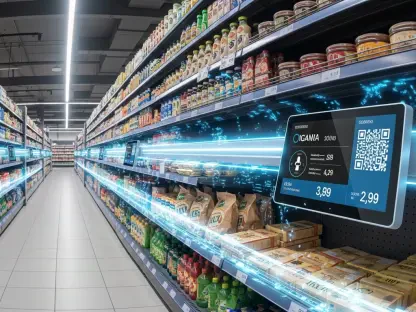
In the physical retail space, the technical synergy between modern Point of Sale hardware and back-end software has transformed simple cash registers into powerful data hubs. Modern terminals are equipped with EMV chip technology and Near Field Communication sensors, allowing them to communicate with both physical cards and mobile digital wallets through encrypted radio frequencies. These devices are no longer standalone units; they are edge-computing tools that sync every transaction with a centralized cloud database. This real-time connection ensures that when an item is sold in a physical store, the inventory levels are instantly updated on the ecommerce website, preventing the common frustration of overselling products that are no longer in stock.
Beyond inventory management, the software integrated into these POS systems functions as a comprehensive business management suite. It can automatically calculate complex tax obligations across different jurisdictions, track employee performance through individual login codes, and manage customer loyalty programs by linking purchase history to specific profiles. This level of integration turns the payment terminal into a CRM tool, providing merchants with deep insights into customer behavior and purchasing patterns. The hardware itself has also become more versatile, with mobile POS units allowing staff to process transactions anywhere on the sales floor or even at off-site events, effectively removing the traditional checkout counter as a bottleneck in the customer journey.
Security Frameworks and PCI Compliance
Security is the cornerstone of any merchant service platform, and the technical standards governing this space have become increasingly rigorous. The implementation of PCI-DSS v4.0 standards has introduced more stringent requirements for multi-factor authentication, deeper encryption protocols, and continuous security monitoring. Modern providers meet these challenges by employing automated compliance tools that scan the merchant’s environment for vulnerabilities, ensuring that the system remains hardened against evolving cyber threats. This proactive approach to security is essential in an era where data breaches can result in devastating financial losses and a permanent loss of consumer confidence.
Artificial intelligence has also taken a central role in fraud detection within these security frameworks. Machine learning algorithms analyze millions of transactions in real-time to identify patterns associated with fraudulent activity, such as unusual spending locations, rapid-fire purchases, or mismatches between shipping and billing addresses. These AI systems can assign a risk score to every transaction in milliseconds, either approving the sale, flagging it for review, or blocking it entirely. This technical capability drastically reduces the number of false positives—where legitimate customers are incorrectly blocked—while simultaneously catching more sophisticated fraud attempts that would bypass traditional, rule-based systems. By combining tokenization with AI-driven monitoring, merchant services provide a multi-layered defense that protects both the business and the consumer.
Current Trends and Industry Innovations
The merchant services sector is currently being reshaped by the overwhelming dominance of digital wallets, which are projected to account for 65% of all ecommerce transaction value by 2030. This shift is not merely a change in consumer preference but a technical transition toward biometric authentication and device-based security. Digital wallets like Apple Pay or Google Pay utilize the secure enclave within a smartphone to store payment credentials, requiring a fingerprint or facial recognition to authorize a payment. This adds a layer of physical security that traditional plastic cards cannot match. Merchant service providers have had to rapidly update their infrastructure to support these methods, ensuring that their gateways and terminals can seamlessly handle the specific encryption protocols used by various wallet providers.
In response to merchant demand for more predictable overhead, the industry has seen a significant move toward “Interchange Plus” and “Flat Rate” pricing transparency. Historically, payment processing fees were often shrouded in complex, tiered structures that made it nearly impossible for a business to calculate its true costs. Modern providers are increasingly opting for transparent models where the merchant pays the base interchange fee set by the card networks plus a clearly defined markup. This shift allows for better financial planning and reduces the likelihood of hidden “junk fees” that used to plague the industry. For smaller businesses, flat-rate pricing provides simplicity, while larger enterprises benefit from the granular detail of interchange-plus models, which can reveal opportunities for cost savings on high-volume transaction types.
Another transformative trend is the rise of embedded finance, where payment processing and other financial services are integrated directly into non-financial business management platforms. Instead of a merchant seeking a separate bank for a merchant account and a different vendor for their POS software, these services are now bundled into a single platform that handles everything from website hosting to payroll. This integration allows for a more fluid movement of capital, as the provider has a full view of the business’s financial health. This data-driven relationship enables value-added services like instant capital advances based on future sales volume, which can be approved and funded in hours rather than weeks. This convergence of software and finance is creating a more streamlined operational environment for entrepreneurs, allowing them to focus on product development rather than administrative complexity.
Real-World Applications and Industry Use Cases
The practical application of modern merchant services is perhaps most evident in the rise of omnichannel retail strategies, particularly through workflows like “Buy Online, Pick Up In-Store,” or BOPIS. This model requires a seamless technical handshake between a customer’s online account and the physical store’s inventory and fulfillment systems. When a customer makes a purchase on their mobile device, the merchant service provider must authorize the payment, update the online stock levels, and send an immediate notification to the store’s POS system so that staff can set the item aside. This level of coordination was technically difficult just a few years ago but is now a standard expectation for consumers who value the convenience of digital browsing combined with the immediacy of physical pickup.
In the service and professional industries, the application of these technologies has moved beyond the traditional checkout counter. Professionals such as contractors, consultants, and mobile service providers now use virtual terminals and mobile POS systems to accept payments on-site. For instance, a technician can complete a repair at a residential location, generate an invoice on a tablet, and accept a credit card or ACH transfer immediately through a secure mobile reader. This eliminates the traditional “billing cycle” where a business would wait weeks for a check to arrive in the mail and then more days for it to clear. By accelerating the velocity of cash flow, merchant services provide these smaller operations with the liquidity needed to reinvest in their business and manage daily expenses more effectively.
Global trade has also been democratized by merchant services that offer automatic currency conversion and localized payment routing. A small artisan business in one country can now sell to a customer in another with the transaction occurring in the customer’s local currency. The merchant service provider handles the real-time exchange rate calculations and routes the payment through the most efficient local channels to minimize cross-border fees. This capability allows small businesses to compete on a global stage without needing the complex treasury departments typically associated with international corporations. The ability to present prices and accept payments in a customer’s native currency significantly lowers the psychological barrier to entry for international shoppers, leading to higher conversion rates and expanded market reach.
Technical Hurdles and Market Challenges
Despite the rapid advancements in payment technology, the industry faces significant hurdles, most notably the rising cost and complexity of chargebacks. A chargeback occurs when a consumer disputes a transaction through their bank, often leading to a forced reversal of funds from the merchant’s account. While designed as a consumer protection mechanism, chargebacks are increasingly used in “friendly fraud,” where customers claim they never received an item that was actually delivered. For merchants, this results in not only the loss of the sale and the physical product but also an additional administrative fee from the processor. Managing this risk requires sophisticated evidence-collection tools that link shipping data, customer communication, and digital fingerprints to the original transaction, creating a substantial technical burden for businesses.
Regulatory hurdles also present a major challenge, as providers must navigate a labyrinth of multi-jurisdictional compliance requirements. As privacy laws like the GDPR and various regional data protection acts evolve, the way payment data is stored and transmitted must be constantly audited. For a global merchant service provider, this means maintaining different technical architectures for different regions to ensure that data does not cross borders in violation of local laws. This regulatory friction can slow down the deployment of new features and increase the operational costs of maintaining a global payment network. Merchants often find themselves caught in the middle, needing to ensure their own business practices align with these shifting standards while relying on their providers to handle the heavy lifting of technical compliance.
Furthermore, the issue of settlement “float” times continues to be a point of contention in the market. While the authorization of a payment happens in milliseconds, the actual movement of funds into a merchant’s bank account often takes one to three business days. This delay is a relic of the traditional banking system’s batch-processing cycles and the need for risk mitigation periods to account for potential fraud. For high-growth businesses or those with thin margins, this delay in accessing their own capital can hinder operations. While instant payout options are beginning to emerge, they often come with additional fees and require the merchant to use specific financial accounts, creating a trade-off between liquidity and cost. Overcoming these legacy banking delays remains one of the primary technical frontiers for the next generation of payment infrastructure.
Future Outlook and Technological Trajectory
The trajectory of merchant services is pointing toward a future where Machine Learning becomes even more deeply integrated into the authorization process. We are moving toward a state where authorization rates are optimized through predictive modeling that goes beyond simple fraud detection. These systems will analyze the specific characteristics of an issuing bank, the time of day, and the device used to determine the optimal way to route a transaction to ensure success. This will drastically reduce “false declines,” which currently cost the retail industry billions in lost revenue every year. As these algorithms become more refined, the payment process will become essentially invisible, with the technology working silently in the background to ensure that legitimate commerce is never interrupted by technical friction.
The long-term impact of blockchain and central bank digital currencies, or CBDCs, could represent the most radical shift in the merchant services model. If governments move toward issuing digital versions of their national currencies, the need for traditional credit card networks and their associated interchange fees could diminish. Transactions could potentially happen directly between a consumer’s digital wallet and a merchant’s account on a distributed ledger, providing the immediacy of cash with the convenience of digital processing. While this would require a massive overhaul of the current financial infrastructure, the potential for lower fees and near-instant settlement is a powerful incentive for the industry to adapt. Merchant service providers are already beginning to explore how to bridge the gap between traditional fiat currencies and these emerging digital assets.
Looking even further ahead, the concept of “invisible payments” and biometric authentication could replace physical cards and mobile devices entirely. We are already seeing the early stages of this with palm-scanning and facial recognition payments in certain high-tech retail environments. In this future, the customer’s identity is their payment method. The merchant service provider would manage a secure biometric database that links a person’s physical traits to their financial accounts, allowing them to walk into a store, pick up an item, and walk out without ever stopping at a checkout counter. This “just walk out” technology relies on a complex web of sensors, computer vision, and high-speed data processing, representing the ultimate convergence of physical and digital commerce.
Final Assessment of Merchant Services Technology
The transformation of merchant services from a basic payment utility into a comprehensive engine for business intelligence and global trade was a defining development of the early 21st century. The industry successfully navigated the transition from physical cards to digital wallets, while simultaneously hardening its security frameworks to meet the sophisticated threats of the modern era. The shift toward unified commerce provided businesses with the tools needed to operate in a multi-channel environment without the friction of data silos. This integration allowed for a more holistic approach to retail, where inventory, customer data, and financial reporting were finally brought under a single technical umbrella.
Selecting the right provider in the current market requires a careful balance of scalability, security, and cost-effectiveness. The best platforms are those that do not just process money but offer a suite of integrated tools that allow a business to grow into new markets and sales channels with minimal friction. While challenges such as chargeback costs and regulatory complexity remain, the overall technical foundation of the industry is more robust than ever. The move toward transparent pricing and faster payout options indicated a market that was becoming more responsive to the needs of the merchant, rather than just the interests of the banks and card networks.
Ultimately, merchant services technology acted as the critical backbone of the digital economy, enabling the trust and efficiency required for modern commerce to function. The evolution toward more automated, AI-driven, and biometric systems suggested that the payment process would continue to move toward total invisibility. This trajectory promised a world where the act of transaction was so seamless that it no longer existed as a separate step in the consumer journey. For businesses, the technology moved beyond a simple cost of doing business to become a vital strategic asset that influenced everything from cash flow management to customer loyalty. The industry proved itself to be remarkably resilient and adaptive, constantly reinventing its technical infrastructure to keep pace with the ever-changing demands of a globalized, digital-first world. In summary, the state of merchant services in 2026 was one of maturity and high performance, providing a stable yet innovative platform for the next decade of commercial growth.