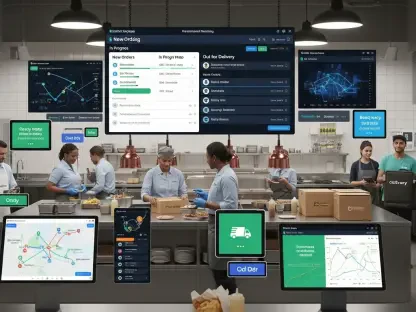

The seemingly simple act of an online package crossing a border masks a complex, often archaic system of paper trails and logistical hurdles that one Middle Eastern hub is determined to completely rewrite. For decades, international trade has been defined by its physical and administrative friction, a landscape of shipping containers, customs declarations, and manual inspections. However, the explosive growth of e-commerce has stretched this traditional model to its breaking point, creating a demand for speed and transparency that legacy systems simply cannot meet. In response to this challenge, Dubai has engineered a digital-first solution that rethinks the very nature of customs.
The Global Trade Bottleneck a System Ripe for Disruption
Traditional customs procedures have long been characterized by cumbersome, paper-based processes that introduce significant delays and operational inefficiencies. This landscape, filled with physical documentation and manual verifications, creates logistical hurdles that slow down the movement of goods, increase costs, and open the door to errors and fraud. For businesses, navigating this complex web of regulations can be a major barrier to entry into global markets, while consumers experience the consequences through longer delivery times and higher prices.
The modern economy, particularly with the relentless rise of e-commerce, is placing unprecedented pressure on this outdated system. The sheer volume of small, low-value parcels flooding international borders daily overwhelms traditional clearance methods. In this context, Dubai’s Cross-Border E-Commerce Platform emerges not just as an upgrade but as a fundamental redesign. It is a digital-first solution crafted to meet the demands of a fast-paced, interconnected world, aiming to replace friction with flow.
This new ecosystem orchestrates a complex dance between previously siloed stakeholders. Government bodies, logistics firms, and online retailers are brought together onto a single, unified platform. By creating a shared digital space, the system fosters a level of collaboration and data sharing that was previously unattainable, transforming disparate actors into an integrated network focused on efficiency and security.
Dubai’s Digital Ascent Analyzing the E-Commerce Catalyst
Riding the Digital Wave How Technology Is Reshaping Trade Flows
At the heart of Dubai’s platform is a sophisticated technological backbone designed for the modern era. It leverages blockchain to create an immutable and transparent ledger of all transactions and shipments, building a foundation of trust among all participants. Complementing this is the strategic use of artificial intelligence for advanced trade analytics, providing deep insights into cargo movements and trading patterns that enable smarter, more proactive customs management.
This technological fusion allows for a seamless integration of the entire supply chain. Customs clearance, international shipping, and last-mile delivery are no longer sequential, often disconnected steps. Instead, they are woven together into a continuous, data-driven process. This integration enables businesses to meet customs requirements more efficiently while providing end-to-end visibility, a critical advantage in today’s competitive logistics environment.
The ripple effects of this digitalization are profound, influencing both consumer behavior and business efficiency. For customers, the platform translates into faster deliveries and a more reliable shopping experience, setting a new standard for international e-commerce. For businesses, the streamlined processes reduce administrative burdens, lower operational costs, and unlock new opportunities for growth by making cross-border trade more accessible and predictable.
By the Numbers The Economic Impact of a Smart Border
The economic dividends of this digital transformation are already clear. The UAE’s e-commerce market, valued at $8.8 billion in 2024, is on a powerful growth trajectory, with projections expecting it to reach $13.8 billion by 2029. Dubai’s platform acts as a powerful catalyst for this expansion, making the emirate an increasingly attractive hub for online retailers looking to serve the wider region.
This growth is not confined to the digital marketplace alone. The efficiency of the smart border stimulates ancillary sectors crucial to the logistics ecosystem. Increased trade volumes drive demand for state-of-the-art warehousing, sophisticated transportation networks, and innovative last-mile delivery solutions. This creates a virtuous cycle of investment and development that strengthens Dubai’s overall economic infrastructure.
Ultimately, the platform is a cornerstone of the ambitious Dubai Economic Agenda D33. This strategic plan aims to double the city’s economy and establish it as one of the world’s top three economic centers and top five logistics hubs. By enhancing trade flows and reinforcing Dubai’s position as a critical logistics gateway, the digital customs initiative directly contributes to these long-term goals, turning a vision for the future into a tangible economic reality.
Decoding the Success Overcoming the Hurdles of Global Logistics
The platform directly confronts the classic challenges that have plagued traditional customs for years: fraud, costly delays, and a fundamental lack of transparency. By replacing opaque paper trails with a shared digital ledger, it becomes significantly harder to manipulate documentation or misrepresent goods, while automated processes drastically reduce the time parcels spend waiting for clearance. This addresses the core pain points that have long hindered the smooth flow of global commerce.
Through the use of blockchain and integrated data systems, the platform cultivates a trusted environment for all participants. Every action, from the initial online purchase to the final delivery, is recorded and verifiable, ensuring accountability across the supply chain. This transparency builds confidence among government agencies, logistics providers, and retailers, fostering a collaborative ecosystem where security and efficiency are mutually reinforcing.
The strategic advantage of this unified digital system cannot be overstated. For complex cross-border transactions involving multiple parties and regulatory checkpoints, a single source of truth is transformative. It simplifies compliance, reduces the risk of miscommunication, and provides a comprehensive overview of the entire trade lifecycle. This holistic approach gives Dubai a distinct competitive edge in the global logistics arena.
The WCO Endorsement Setting a New Global Standard for Customs
The platform’s success has not gone unnoticed on the world stage. The World Customs Organisation (WCO), the global body for customs administrations, has officially recognized Dubai’s model and published a dedicated case study on it. This endorsement serves as a powerful validation, signaling to the international community that Dubai’s approach represents a leading standard in digital customs innovation.
In its analysis, the WCO highlighted several core pillars of success that underpin the platform’s effectiveness. These include a clear and forward-thinking government policy, robust collaboration between public and private sector partners, and the intelligent deployment of advanced digital tools. It is this combination of strategic vision and practical execution that has set the initiative apart.
As a result, Dubai’s model now provides a tangible blueprint for other nations seeking to modernize their customs operations. The case study outlines a path toward achieving greater compliance, security, and operational excellence in an increasingly digital world. For global trade hubs looking to adapt to the demands of e-commerce, Dubai has offered a proven framework for success.
Forging the Future Dubai’s Ambitions and the Next Frontier
Dubai Customs is not resting on its laurels. The strategic goals for the platform involve deepening partnerships with major international online marketplaces and leading logistics operators. By integrating more closely with the world’s e-commerce giants, Dubai aims to further embed its digital customs system into the fabric of global trade, making it the preferred gateway for online retail shipments into the region.
A key objective in this expansion plan is the ambitious target to capture 20 to 30 percent of all low-value e-commerce mail shipments flowing through the region. This specific, measurable goal underscores a clear strategy to dominate a rapidly growing segment of the market, leveraging the platform’s efficiency and scalability to attract high-volume traffic from around the world.
The long-term vision extends beyond the UAE’s borders, aiming for regional leadership. There are concrete plans to extend the platform’s reach across Gulf Cooperation Council trade corridors, creating a more integrated and streamlined customs network for the entire Gulf region. This would position Dubai not just as a national leader but as the central node in a digitally connected regional trade ecosystem.
The Verdict Is Dubai’s Model the Definitive Blueprint for Tomorrow’s Trade?
The Cross-Border E-Commerce Platform had a transformative impact on Dubai’s trade landscape, dramatically improving speed and security while fueling significant economic growth. It successfully demonstrated that a digital-first approach could resolve long-standing logistical bottlenecks, creating a more fluid and predictable environment for international commerce. The integration of technology and public-private partnership became its defining strength.
Assessing the replicability of this model in other global trade hubs revealed both opportunities and challenges. While the technological framework was adaptable, the success in Dubai was heavily dependent on its unique combination of centralized policymaking, strategic investment, and a pre-existing ambition to be a global logistics leader. Other hubs found that political will and stakeholder alignment were critical prerequisites that were not always easy to achieve.
Ultimately, Dubai’s platform established itself as more than just a successful local initiative; it became a powerful case study that shaped the global conversation on the future of customs. Its influence was seen in how other nations approached their own digital transformation projects, proving that a well-executed smart border was not a futuristic concept but an achievable reality that set a new benchmark for international trade.