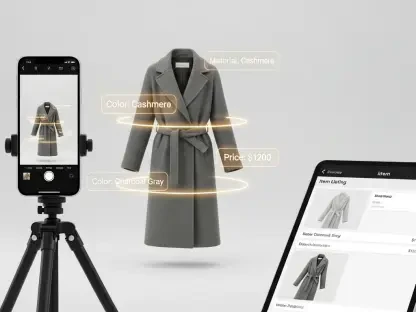

The endless scroll through countless browser tabs and the persistent hunt for coupon codes that once defined online shopping are rapidly being replaced by a far more streamlined and intelligent interaction. This is not a gradual evolution; it is a fundamental restructuring of consumer behavior, giving rise to what experts call the “Concierge Economy.” Driven by a collective exhaustion with information overload, shoppers are delegating the initial, often tedious, stages of their purchasing journey to artificial intelligence, forever changing the relationship between consumers, brands, and the very concept of a storefront.
From Endless Tabs to a Single Smart Conversation
The modern consumer is navigating an overwhelming digital marketplace, leading to a phenomenon known as “deal-hunting fatigue.” The time spent comparing prices, reading reviews, and sifting through promotions often overshadows the satisfaction of the purchase itself. This exhaustion has created a clear demand for a more efficient solution.
Artificial intelligence has emerged as the definitive answer to this challenge. A significant majority of consumers, 59%, are now leveraging AI platforms specifically to find the best prices and promotions. This act of outsourcing the bargain-hunting process to a digital assistant marks a crucial turning point, freeing up consumers to focus on the value and enjoyment of their products rather than the labor of acquiring them.
The Rise of the Concierge Economy
This shift establishes a new commercial paradigm: the “Concierge Economy,” where AI serves as the personalized front door to commerce. With awareness of platforms like ChatGPT and Gemini now exceeding 80% among most shoppers, their integration into daily life is no longer a niche behavior. These tools have become the primary starting point for countless purchasing decisions.
The adoption has been swift and decisive, with nearly 70% of consumers using these platforms on a regular basis. This widespread habit formation cements AI’s role not as a temporary trend but as a permanent and powerful fixture in the modern shopping experience. It has fundamentally altered expectations, creating a new standard for instant, personalized, and efficient product discovery.
Rewiring the Modern Shopping Journey
AI is systematically reconfiguring the path to purchase from its very beginning. For initial research, generative AI is now the go-to resource, effectively replacing the traditional search bar for many. Over half of consumers already use it to get product ideas (55%), compare different options (57%), and investigate specific items from brands (55%), demonstrating its dominance in the discovery phase.
However, while AI excels as a guide, it is not the final destination. The data reveals that brands and retailers overwhelmingly own the final moment of conversion. A massive 77% of shoppers, after receiving a recommendation from an AI, click through to a brand or retailer’s website to verify details and complete the transaction. This positions AI as a highly effective generator of qualified, high-intent referral traffic rather than a direct sales channel.
Perhaps the most significant disruption is being felt in physical retail. Among shoppers who utilize AI, 40% report that they intend to visit brick-and-mortar stores less often. This is a substantial figure that signals a major redirection of foot traffic from real-world aisles to digital shelves, underscoring the urgent need for physical retailers to innovate and redefine the value of the in-store experience.
Data Confirms a Permanent Shift in Consumer Behavior
This transformation is not based on speculation but is supported by extensive research. A landmark report analyzing the behavior of over 2,000 U.S. consumers has confirmed that AI has firmly established itself within the modern shopping journey. The findings pinpoint a clear and consistent pattern of behavior that defines this new era.
The research validates a distinct division of labor in the consumer’s mind: shoppers embrace AI for its intelligence and efficiency at the beginning of their journey, but they still rely on the authority and security of trusted brands for the final conversion. This dynamic highlights a symbiotic relationship where AI serves as a powerful discovery engine that ultimately funnels engaged customers directly to brand-owned properties.
How to Adapt and Thrive in the Age of AI Shopping
To navigate this new landscape effectively, consumers must master the art of the prompt. Instead of a simple search like “best running shoes,” a more powerful approach is a detailed request, such as, “Find me the best-rated running shoes for a neutral gait under $150, and compare the top three options for durability and price.” The specificity of the request directly correlates with the quality and relevance of the results.
It is crucial to treat AI recommendations as a highly qualified shortlist, not an absolute directive. Best practices now involve using AI for inspiration and comparison but always clicking through to the brand’s official website. This final step is essential for confirming product specifications, checking return policies, and ensuring the purchase is being made from a legitimate and secure source.
Consequently, the role of physical stores has been redefined. With initial research and price comparisons handled by AI, in-store visits have become more intentional. Consumers can now use brick-and-mortar locations for what they do best: experiencing a product firsthand, receiving expert human advice, and enjoying the benefit of immediate ownership, transforming shopping trips from exploratory missions into purposeful actions.
The shopping landscape was reshaped not by a single technology but by a widespread consumer demand for greater efficiency and intelligence. A new and durable division of labor became clear: AI took on the role of the tireless researcher and deal-hunter, while brands retained their essential status as the ultimate arbiters of trust and the final point of transaction. This paradigm solidified a more intentional consumer journey, where the initial phase of discovery was effectively outsourced and the final click remained a deliberate, brand-focused decision.