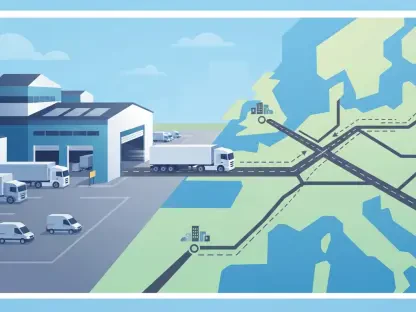

Success in the global marketplace no longer depends solely on a catchy digital storefront or a viral marketing campaign that reaches millions across several continents. In the current environment, the true measure of a brand is its ability to move physical goods across a fragmented world with speed and precision.
The End of the “Border-Blind” Shipping Era
The time of effortless international expansion has transitioned into a landscape defined by volatile tariffs, shifting customs regulations, and persistent supply chain bottlenecks. While the digital storefront makes global reach look easy, the physical journey of a product from a warehouse to an international doorstep has never been more complex.
For modern brands, the question is no longer just about finding new customers abroad, but about building a delivery infrastructure that remains stable when trade policies change overnight. This reality forces a departure from the “border-blind” mindset that once dominated the industry, requiring a more calculated approach to every international shipment.
Why Logistics Is the New Frontline of Brand Longevity
In a hyper-competitive global market, a brand’s reputation is only as strong as its last mile of delivery. Recent data indicates that shipping delays and unexpected customs fees are the primary drivers of international cart abandonment. When a customer is hit with a surprise tax at the door, the trust in the brand evaporates instantly.
As businesses seek to scale, they are discovering that traditional, fragmented logistics models are too rigid for today’s geopolitical climate. Establishing a resilient global presence now requires moving beyond simple shipping transactions and toward a model of operational agility that treats logistics as a core strategic asset.
De-risking International Expansion Through Strategic Synergy
Achieving cross-border growth requires a fundamental shift in how brands view fulfillment and distribution. By integrating multichannel fulfillment expertise with specialized international shipping solutions, companies can bypass the massive capital expenditures usually required for overseas warehousing.
This collaborative approach, exemplified by the partnership between QuickBox and ePost Global, allows brands to remain nimble. The focus has moved toward creating a unified process where the warehouse floor and the final international destination are digitally linked, ensuring that products move through customs without friction or unnecessary delays.
Expert Perspectives on the “Resilience Layer”
Industry leaders, such as Kathy Krum of ePost Global and Peter Hunnewell of QuickBox, emphasize that the most successful brands implement a “resilience layer” within their supply chain. This concept involves using expert partnerships to absorb the shocks of international trade, such as sudden changes in documentation requirements.
Expert consensus indicates that treating global expansion as an operational discipline allows brands to maintain a consistent customer experience. This synchronization between logistics and fulfillment ensures that products move through customs smoothly, regardless of the destination or the current regulatory climate.
Practical Strategies for Scaling Across Borders
To build a resilient global e-commerce framework, brands should optimize packaging and dimensional weight at the fulfillment stage. This mitigation technique addresses rising international shipping costs while improving the sustainability profile of every delivery. Leveraging asset-light distribution models that utilize established partner networks instead of proprietary infrastructure provides further flexibility.
Businesses that achieved stability prioritized operational synchronization and proactive data management. They replaced rigid, isolated shipping models with flexible partnerships that allowed for real-time adjustments to global trade shifts. These organizations demonstrated that long-term growth was not merely a result of product quality, but of a commitment to a resilient and invisible logistics backbone.