
Introduction
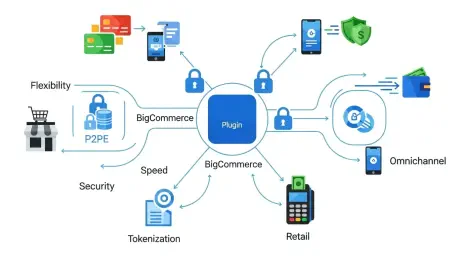
Checkout used to force a painful trade between speed, security, and flexibility, and that stalemate bled revenue every day for merchants who could not certify fast enough or adapt payment choices quickly. FreedomPay’s new BigCommerce plugin lands precisely on that fault line, promising a pre-certified checkout that slashes PCI scope while keeping design and orchestration options open.
The context matters because modern commerce has shifted from single-vendor stacks to composable architectures. BigCommerce leans into that shift, and this app sits as a turnkey node in the stack: install from the Marketplace, configure payment methods, pick hosted or embedded checkout, and go live without a months-long certification grind. The review question is whether this abstraction genuinely reduces time to market and risk, or simply relocates complexity.
Features and Performance
The plugin centers on two checkout modes. Hosted fields move card data capture to FreedomPay’s environment via iframes, shrinking PCI scope to SAQ A or A-EP levels and speeding audits; embedded flows offer tighter UI control while still keeping sensitive entry isolated from the merchant server. In practice, this means design can be preserved without pulling card numbers through the storefront, and implementation compresses to configuration plus styling rather than a net-new compliance project.
Performance depends on the gateway’s edge presence and token lifecycle. FreedomPay’s approach caches network handshakes and uses vaulted tokens to skip re-entry on returns and subscriptions, reducing friction that often shows up as cart abandonment. The net effect is faster first paint to pay and fewer retries, which usually correlates with better conversion under load.
Security and Compliance Analysis
The security posture rests on PCI-validated point-to-point encryption (P2PE) in North America, tokenization, and strict data minimization. P2PE moves the attack surface off the merchant stack by encrypting at capture and decrypting in a certified environment, which compresses audit scope and incident response complexity. Tokens replace primary account numbers in storage and routing, enabling refunds and recurring charges without handling raw card data.
Crucially, FreedomPay operates as an independent gateway, not just a processor front end. That distinction allows routing strategy, acquirer choice, and omnichannel token portability, which lowers vendor lock-in risk. For merchants under board-level scrutiny on compliance, this architecture means fewer compensating controls to document and a simpler pathway through annual assessments.
Implementation and Developer Experience
Installation begins in the BigCommerce Marketplace, where the app negotiates API permissions, exposes configuration paths for payment methods, and activates sandbox or production keys. Developers can test flows end to end before toggling live, with logs and transaction metadata available through FreedomPay’s portal for debugging.
The extensibility story is measured. For most use cases, marketplace configuration suffices; for advanced orchestration, APIs allow custom routing, webhooks for events, and enriched metadata for reconciliation. The trade-off is clear: merchants get a ready-to-run baseline with room to extend, but the deepest customizations still require coordination with FreedomPay’s gateway services.
Payment Coverage and Omnichannel Fit
Support includes major cards and a growing list of alternative payment methods, with regional enablement to match demand. That matters because “choice at checkout” is no longer a perk; it is a conversion lever. The ability to standardize methods across sites and, where applicable, connect to in-store acceptance through shared tokens closes gaps in customer journeys like buy online, return in store.
Omnichannel consistency is more than branding. When the same token format powers refunds and loyalty across channels, operational costs drop and risk windows narrow. The plugin’s alignment with that model is pragmatic: start online with BigCommerce, extend later without re-architecting payments.
Differentiation and Market Context
Most alternatives force a compromise: fast but opinionated processor plugins, or flexible but slow custom builds. FreedomPay’s edge is the combination of pre-certification, independence from a single acquirer, and a compliance-first design that still leaves room for UI control. Against monolithic gateways tied to processing, the option to change acquirers or mix methods without rewriting checkout is a strategic hedge.
The broader trend is agentic, composable commerce where best-of-breed services interoperate through certified touchpoints. This plugin fits that zeitgeist by packaging the brittle parts—security, certification, and reporting—while letting merchants orchestrate the rest.
Business Impact and Who Benefits
Fast-growing DTC brands gain speed to launch and less compliance toil, especially during seasonal spikes when cart conversion swings matter. Omnichannel retailers benefit from consistent refunds, unified reporting, and fewer exceptions during returns. B2B sellers on BigCommerce get vaulted payments, predictable invoicing flows, and reduced audit overhead.
Replatforming becomes less risky. Instead of a payment rebuild on day one, teams can port methods, flip traffic in phases, and rely on centralized dispute and refund tooling to keep finance operations stable through the changeover.
Limitations and Buyer Notes
Design freedom still has boundaries: embedded flows keep sensitive inputs isolated, which can limit pixel-perfect control. Costs may include gateway, acquirer, and method fees; settlement terms depend on chosen processing partners rather than the plugin itself. Regional availability for some APMs can lag market demand, and fraud tooling must be aligned across FreedomPay, BigCommerce, and any third-party risk services.
Migration requires planning for token portability and historical data mapping. Reconciliation disciplines—order IDs, descriptors, and payout timing—need a joint runbook so finance is not chasing mismatched records at month end.
Outlook and Verdict
Taken as a whole, the FreedomPay BigCommerce plugin delivered a credible answer to the long-standing speed–security–flexibility trade-off. It compressed compliance work, preserved front-end optionality, and created a cleaner path to omnichannel standardization without wedging merchants into a processor silo. Teams evaluating next steps should have scoped APM priorities, acquirer strategy, and fraud integration early, then piloted hosted checkout to minimize scope while validating performance under load. For merchants needing enterprise-grade reliability with room to orchestrate, the plugin read as the pragmatic choice; for edge-case UI control or exotic routing, a deeper custom build remained warranted.