
The sheer scale of India’s retail sector is best visualized as a massive, intricate tapestry where ninety million traditional shopkeepers are now forced to share space with highly optimized digital conglomerates. This trillion-dollar economy operates on a dual-track system that presents a unique challenge for policymakers and investors alike. On one side, the ubiquitous neighborhood “Kirana” stores represent the cultural and economic heartbeat of local communities, providing essential goods and informal credit to millions. On the other side, an aggressive expansion of foreign-funded e-commerce entities is rewriting the rules of engagement, utilizing vast capital reserves to capture market share at an unprecedented pace.
The current market landscape is dominated by a fierce rivalry between global leaders like Amazon and Walmart-owned Flipkart and domestic heavyweights like Reliance Retail. This competition is not merely about price; it is about who controls the primary driver of national employment and the backbone of the domestic supply chain. As these giants expand their reach into smaller towns, the survival of the traditional merchant hangs in the balance, creating a structural tension that defines the modern Indian marketplace.
Dynamics of the Digital Shift and Market Projections
The Rise of Quick Commerce and Shifting Consumer Habits
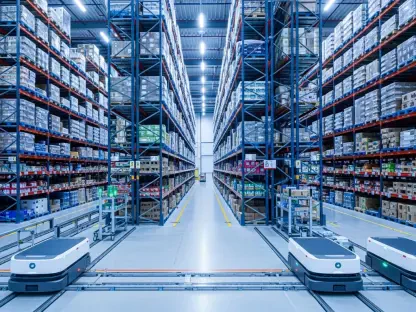
The evolution of digital commerce has moved beyond the convenience of two-day shipping toward the immediate gratification of quick commerce. Urban centers are now dotted with dark stores—highly efficient, micro-fulfillment centers designed to facilitate deliveries within minutes rather than days. This shift is fueled by a mobile-first population that has embraced digital payments as a standard way of life. The resulting demand for ultra-fast delivery is fundamentally changing consumer psychology, making speed the primary differentiator in the retail race.
However, this transition is not without its controversies, as critics point to the use of algorithmic pricing and dark patterns that nudge shoppers into making impulsive decisions. These digital tactics often prioritize platform growth over transparency, creating a environment where the digital experience is meticulously engineered to maximize consumption. As consumers become more accustomed to these high-speed interactions, the gap between the digital storefront and the physical shop around the corner continues to widen.
Quantifying the Growth: Market Metrics and Future Trajectories
Current projections suggest a significant transformation in market share from 2026 to 2030, with digital platforms expected to capture a larger slice of the retail pie. While brick-and-mortar stores still command the majority of total sales, the growth rate of online transactions is nearly triple that of traditional retail. This does not necessarily signal the end of the physical store but rather its evolution. Data indicates a move toward a phygital model, where physical presence is augmented by digital tools to offer a more integrated shopping experience.
Increased internet penetration into rural areas is the next major frontier, as the next hundred million shoppers come online. These new entrants are expected to drive a surge in demand for affordable, localized goods. Success in this segment will likely depend on the ability of platforms to bridge the gap between global logistics and local preferences, suggesting that the long-term winners will be those who can blend digital efficiency with the personal touch of traditional trade.
Systemic Friction and the Struggle for Market Equity
The rapid ascent of e-commerce has brought long-standing grievances from traditional traders to the forefront of national debate. Small merchants frequently cite predatory pricing and unsustainable deep discounting as the primary threats to their existence. These traders argue that foreign-funded platforms often bypass marketplace regulations by utilizing complex inventory-led models, allowing them to control stock and influence prices in a way that independent sellers cannot match. This creates a market distortion where capital strength, rather than operational merit, determines success.
Furthermore, local merchants face significant operational hurdles when attempting to modernize. While the desire to integrate into the digital economy exists, the costs of technology adoption and the fees associated with major platforms can be prohibitive. Strategies for modernization are often fragmented, leaving small business owners to compete with the massive data-processing capabilities and logistics networks of global conglomerates without equivalent support or resources.
Establishing a Fair Playing Field through Regulatory Oversight
To mitigate these imbalances, there is a growing push for the establishment of a National Retail Development Council. This body is envisioned as a mechanism to integrate the interests of traditional traders into the core of national economic policy. By providing a formal platform for merchant advocacy, the council could ensure that legislative efforts like the Jan Vishwas Bill prioritize the ease of doing business for small entities just as much as for large corporations. The goal is to move toward a more disciplined regulatory environment where merchant protections are strictly enforced.
Enforcement of Foreign Direct Investment rules remains a critical point of focus for regulators seeking to prevent monopolistic practices. There is an increasing emphasis on data localization and transparency in how algorithms rank sellers and set prices. By implementing standards for consumer protection and fair play, the government aims to ensure that the digital space remains competitive and that no single player can exercise undue influence over the entire retail ecosystem.
The Road Ahead: Innovation and Inclusive Growth
The future of Indian retail is trending toward a more regulated and transparent landscape where technology serves as an equalizer rather than a barrier. Emerging technologies like decentralized commerce and artificial intelligence offer the potential to empower small-scale sellers by providing them with the same tools once reserved for large enterprises. These innovations could allow a small-town artisan to reach a global audience without being tethered to a single dominant platform, fostering a more diverse and resilient market.
As the nation navigates global economic conditions, the push for economic sovereignty will likely influence future retail legislation. Domestic players are positioned to act as a vital bridge, connecting traditional supply chains with modern fulfillment needs. This synergy could lead to a uniquely Indian retail model—one that respects the heritage of the Kirana store while embracing the efficiency of the digital age, ensuring that growth is shared across all levels of society.
Orchestrating a Unified Ecosystem for Sustainable Progress
The successful integration of high-tech innovation with traditional livelihoods was the cornerstone of maintaining social stability during this period of rapid transition. Policymakers recognized that an inclusive framework was the only viable path to long-term economic health. It became clear that the retail sector could not thrive if it became a winner-take-all arena, so the focus shifted toward building infrastructure that supported both the neighborhood shop and the digital marketplace. This approach ensured that the diversity of the Indian market remained its greatest strength.
Investment strategies eventually prioritized firms that demonstrated a commitment to fair competition and local integration. The development of decentralized digital networks allowed small merchants to reclaim their agency, proving that technology could indeed be democratized. As the industry moved forward, the emphasis on transparency and regulatory compliance created a more predictable environment for all stakeholders. This evolution ultimately provided a blueprint for other emerging economies looking to modernize their retail sectors without sacrificing their social fabric.