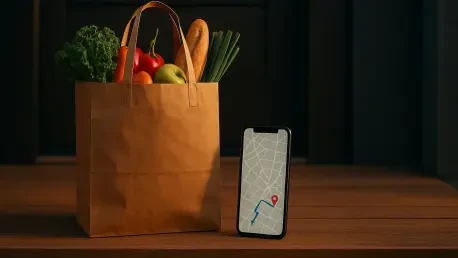

The Shift Toward a Service-Driven Lifestyle
The current economic landscape reveals that an astonishing ninety-seven percent of households have integrated at least one convenience service into their routine during the past month. In an era where time has become a more valuable currency than ever, Americans are fundamentally reshaping their daily routines by outsourcing traditional chores. This shift defines a move from luxury to a baseline expectation, marking the modern transition toward a service-driven existence. Examining these choices reveals the specific trade-offs consumers make to reclaim their personal hours.
From Luxury to Necessity: The Evolution of Convenience
Historically, services like grocery delivery were reserved for the affluent, but technological advancement and shifting labor dynamics have democratized access to this concierge lifestyle. The expansion of gig-economy platforms has transformed how households function on a weekly basis. Today, over half of the population reports spending significantly more on ease than in the previous half-decade. This evolution suggests that what was once an occasional indulgence has now become a foundational component of the standard American schedule.
The Psychological and Financial Landscape of Ease
Time Poverty and the Rejection of Traditional Chores
The primary catalyst for this boom is not a lack of domestic ability but rather a lack of mental bandwidth among the working class. Interestingly, only eight percent of consumers cite a lack of skill as the reason they order out or hire help for basic tasks. Instead, thirty-eight percent point to a lack of time, while thirty-five percent admit to a lack of energy following a standard workday. This suggests that time poverty is the driving force where rest outweighs the monetary cost of a delivery fee.
The True Cost of Membership and Subscriptions
Convenience is no longer just a series of one-off transactions; it has become a pervasive, subscription-based financial model. Approximately eighty-five percent of residents now pay for at least one membership to lock in these services for the long term. On average, households commit two hundred and sixty-four dollars annually just for the privilege of accessing lower friction retail and dining options. However, there is a clear limit to this spending, as nearly seventy percent of shoppers have abandoned a digital cart when service fees became too high.
Generational Disparities and the Shame Factor
While the adoption of convenience is widespread, the emotional response to it varies significantly across the demographic spectrum. Gen Z is the most prolific user of delivery apps, with seventy-two percent ordering food monthly, yet they also carry the highest burden of spending shame. Nearly forty-five percent of younger adults feel embarrassed by their reliance on these services, contrasted with just sixteen percent of older generations. This group struggles to balance the desire for a frictionless life with the financial guilt of paying premium prices.
Innovations and Economic Shifts Shaping the Future
The convenience economy is poised for further transformation as labor costs and technological capabilities continue to evolve. Analysts observe a move toward more integrated grocery solutions where pickup and delivery fees are being recalibrated to find the sweet spot of consumer tolerance. Looking ahead from 2026 to 2028, the integration of AI-driven logistics and autonomous delivery may further lower the barrier to entry. As the market matures, the focus will likely shift toward personalized efficiency tailored to specific dietary and scheduling needs.
Strategies for Balancing Ease and Budget
Navigating this economy requires a strategic approach for both consumers and businesses to ensure long-term sustainability. Individuals should optimize their spending by auditing monthly subscriptions and prioritizing services that provide the greatest return on invested time. For businesses, transparency in pricing remains paramount, as hidden fees are the leading cause of customer churn. To maintain loyalty, providers must ensure that the time saved by the consumer is worth the premium paid, often utilizing hybrid models like grocery pickup to reduce overhead.
The Future of the Frictionless Life
The rise of this movement reflected a permanent shift in values where the preservation of energy was prioritized over a DIY spirit. Stakeholders identified that financial constraints acted only as temporary brakes on an otherwise accelerating trend. Businesses moved to integrate more transparent fee structures while consumers curated their subscriptions to maximize utility. Ultimately, the ability to buy back time became a defining feature of the middle-class experience, preparing society for a landscape where technology served as the primary bridge between fatigue and necessity.