
In a move that sent ripples through the retail industry, a tech behemoth once defined by relentless expansion has abruptly halted one of its most ambitious physical-world projects, signaling a profound recalibration of its long-held grocery ambitions. The January 27 announcement that Amazon would shutter its Amazon Go and Fresh-branded physical stores marks a rare public retreat for the company, ending a multi-year experiment in reinventing the supermarket. This pivot is not a surrender but a calculated consolidation, shifting billions in investment away from its homegrown concepts and channeling that capital toward its proven, high-performing asset: Whole Foods Market. This strategic realignment reveals a crucial lesson in corporate discipline, demonstrating a willingness to prune underperforming ventures to aggressively nourish a more promising path to market dominance. The decision re-frames Amazon’s approach to the $1.5 trillion U.S. grocery sector, prioritizing profitability and established brand power over the costly and challenging endeavor of building a mass-market retail identity from scratch.
The Empty Aisle: What Happens When a Retail Giant Abandons Its Own Stores
The shuttering of all Amazon Go and Amazon Fresh physical stores raises a fundamental question for a company synonymous with growth: why retreat now? The January 27, 2026, announcement caught many industry observers by surprise, representing a significant reversal of a strategy intended to disrupt the American grocery landscape. For years, these stores, with their high-tech, checkout-free promise, were positioned as the future of convenience. Their closure suggests that even for a company with seemingly limitless resources, the code for cracking mass-market physical grocery retail proved far more complex and costly than anticipated.
This move is best understood within the context of Amazon’s long and arduous quest to conquer the grocery sector, a critical frontier beyond its e-commerce empire. The core challenge has always been the immense difficulty for a digital-native company to create a compelling and economically viable physical store identity that could compete with entrenched giants like Kroger and Albertsons. The pivot away from its own branded stores reveals a critical lesson in corporate strategy: recognizing when an experiment has yielded its necessary data but failed to deliver a scalable business model. This decision is not just about closing stores; it is about choosing to prune a struggling branch to pour resources into one that is already thriving.
More Than a Store Closure: Understanding Amazon’s High Stakes Grocery Gambit
Amazon’s strategic realignment follows a two-pronged approach of deliberate contraction and focused acceleration, designed to streamline operations and concentrate resources on proven growth engines. The first prong involves the complete sunsetting of the Amazon Go and Amazon Fresh physical store experiments. The company’s official rationale pointed to a failure to achieve a “truly distinctive customer experience” that was paired with a sustainable “economic model” necessary for large-scale expansion. However, the company is strategically repurposing select defunct locations, converting them into new Whole Foods stores to leverage existing real estate assets and expedite its new expansionary goals. Importantly, this move clarifies the future of the Amazon Fresh brand; while its physical presence is ending, the online Amazon Fresh delivery service remains a core digital asset and will continue to serve customers in available areas.
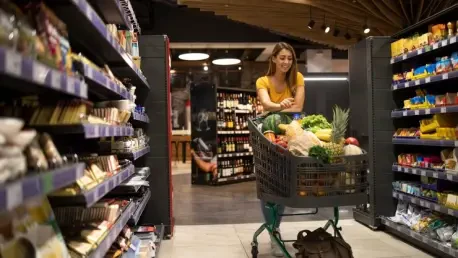
The second and more aggressive prong of the strategy is the Whole Foods offensive, which involves channeling significant investment into a proven winner. Since its acquisition in 2017, Whole Foods has demonstrated remarkable performance, with sales growing by over 40% and record customer traffic driving industry-leading comparable store growth. Building on this momentum, Amazon has unveiled an ambitious roadmap to open more than 100 new Whole Foods stores. A key part of this expansion is the introduction and growth of the “Whole Foods Market Daily Shop,” a smaller, convenience-focused urban concept designed for quick trips. Following a successful pilot, this new format is set for a broader rollout, underscoring Amazon’s commitment to innovating within its successful premium grocery brand.
Deconstructing the Pivot: A Two Pronged Strategy of Consolidation and Acceleration
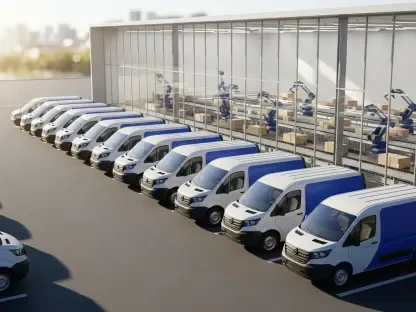
A central pillar of this new strategy is an intensified focus on winning the last mile through ultra-fast delivery, an area where Amazon’s logistical prowess provides a distinct advantage. The company has seen exponential growth since integrating perishable groceries into its Same-Day Delivery service, with sales increasing a remarkable forty-fold. This powerful customer response, where fresh items now dominate the top ten most-ordered products, has validated the strategy. Consequently, Amazon is rapidly expanding this service to more of the 5,000-plus cities and towns it already serves, solidifying its position in the online grocery market.
Beyond enhancing existing services, Amazon is pushing the boundaries of speed and convenience. The company is actively testing “Amazon Now,” a new service promising 30-minute delivery for thousands of essential items, including fresh food and household goods. This ultra-fast offering is a direct challenge to the traditional convenience store model, aiming to capture the market for immediate-need purchases by bringing the store directly to the customer’s doorstep. This aggressive push into rapid delivery underscores Amazon’s belief that logistics, not just physical storefronts, will be a key battleground in the future of grocery retail.
From Failed Stores to Valued Assets: The Lasting Legacy of Amazon’s Retail Tech
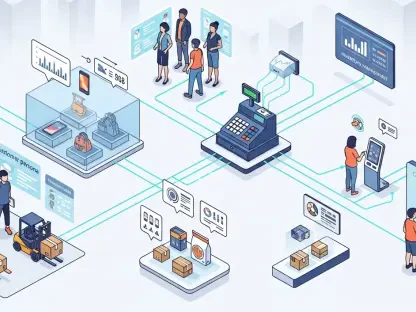
Even as the doors close on the Amazon Go stores, the core technology that powered them has emerged as a successful and highly scalable product in its own right. The “Just Walk Out” checkout-free system, once a novelty, has transitioned into a valuable commercial asset, demonstrating Amazon’s ability to salvage and monetize innovation from otherwise unsuccessful ventures. The technology has proven its value far beyond Amazon’s own retail experiments, finding a strong market in high-traffic, time-sensitive environments where speed is paramount.
The evidence of this scalability is clear and compelling. “Just Walk Out” technology is now deployed in over 360 third-party locations, including busy hospital cafeterias and major sports arenas, where it drastically reduces queues and improves the customer experience. Furthermore, Amazon is adopting the technology internally to streamline its own operations; it is already active in more than 40 of its North American Fulfillment Center breakrooms, allowing employees to grab meals without the friction of a checkout line. This successful commercialization serves as a powerful strategic lesson: even a failed storefront can yield a winning technology platform.
The Blueprint for the Future: What’s Next for Amazon’s Physical Retail Ambitions
This strategic pivot should be viewed as a calculated retreat, not a complete surrender of its long-term physical retail goals. By stepping back from its Amazon-branded stores, the company is freeing up resources to reconsider its approach while continuing to learn from smaller, more controlled experiments. This ongoing laboratory includes concepts like the “Amazon Grocery” format being tested in Chicago and innovative “store within a store” experiences, such as the one currently operating inside a Pennsylvania Whole Foods. These tests allow Amazon to continue gathering crucial data on consumer behavior in a physical setting without the massive capital expenditure of a nationwide chain.
This period of consolidation and experimentation is ultimately aimed at informing a much larger vision. The long-term objective appears to be the development of a new, large-format supercenter concept. This ambitious model would integrate groceries, household goods, and general merchandise under one roof, leveraging Amazon’s signature strengths in logistics, low prices, and convenience. While the path has proven more difficult than anticipated, the recent closures represent not an end to Amazon’s physical retail story, but a tactical reset before the next major chapter begins.
The decision to close its Amazon-branded grocery stores marked a pivotal moment, forcing the company to confront the limitations of its technology-first approach in a market driven by habit and human experience. By shifting its focus to the established brand equity of Whole Foods and the logistical superiority of its delivery network, Amazon acknowledged that its greatest strengths lay in refining existing models rather than inventing entirely new ones. This strategic pivot provided a clear blueprint for its future, one that favored pragmatic expansion and proven profitability over costly, high-risk experimentation, fundamentally reshaping its long-term battle plan for the American grocery aisle.