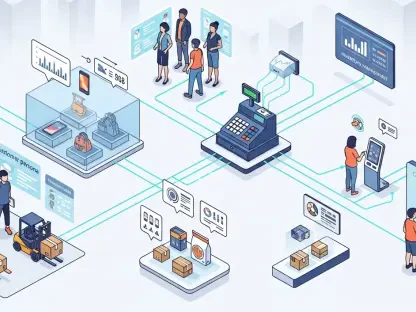

The rapid evolution of artificial intelligence from a back-office tool into a primary consumer interface is compelling businesses to rethink their entire digital strategy from the ground up. Agentic Commerce Platforms represent a significant advancement in the digital commerce sector. This review will explore the evolution of the technology, focusing on new offerings like commercetools’ AgenticLift, its key features, performance benefits, and its impact on enterprise retail. The purpose of this review is to provide a thorough understanding of agentic commerce, its current capabilities, and its potential future development for businesses.
The Dawn of Agentic Commerce
Agentic commerce marks a fundamental shift where AI-driven agents, such as those embedded in large language models, become the primary channels for consumer discovery and purchasing. Instead of navigating websites and apps, consumers can simply ask an AI assistant to find and buy products for them. This technology has emerged in direct response to evolving consumer expectations for more conversational, intuitive, and personalized shopping experiences. As users become more comfortable interacting with AI assistants for daily tasks, agentic commerce presents itself as the next frontier in the e-commerce landscape.
This transition places immense pressure on enterprises to ensure their products and services are visible and transactable within these new AI ecosystems. Failing to adapt means risking invisibility to a growing segment of consumers who rely on AI for their shopping journeys. Consequently, the ability to seamlessly integrate with these platforms is no longer a futuristic concept but an immediate competitive necessity.
A Closer Look at AgenticLift’s Architecture
As a leading example of an agentic commerce solution, commercetools’ AgenticLift provides a compelling model for how enterprises can navigate this new terrain. Its architecture is specifically designed to bridge the gap between existing digital infrastructures and the emerging world of AI-driven transactions. The platform’s value lies not in replacing what businesses have already built but in augmenting it for the agentic era.
Bridging Legacy Systems with AI Ecosystems
The primary function of AgenticLift is to connect existing commerce infrastructures—whether homegrown or legacy—to modern AI platforms like ChatGPT and Google Gemini. This approach directly addresses the “decision paralysis” that many businesses face when contemplating a massive technological overhaul. By serving as an intermediary layer, the solution enables enterprises to participate in AI-driven shopping without committing to a full and disruptive replatforming project.
This strategy allows businesses to begin capturing revenue from new channels immediately while planning for modernization at their own pace. It offers an incremental and low-risk pathway to innovation, empowering companies to test and learn in the agentic space without betting the entire operation on an unproven, large-scale transformation.
The Role of the AI Hub in Data Access
The technical foundation of this platform is the commercetools AI Hub, which facilitates the secure and real-time exchange of information. The hub provides AI agents with controlled access to essential product catalogs, inventory data, and commerce functionalities. This connection is critical for enabling agents to perform complex tasks on behalf of the user, such as sophisticated product discovery, dynamic cart building, and initiating checkout.
By externalizing commerce logic through APIs, the AI Hub ensures that the data presented to AI agents is accurate and consistent with the enterprise’s core systems. This prevents data silos and ensures that the AI-driven channel operates as a seamless extension of the business’s existing digital presence.
Ensuring Enterprise-Grade Security and Control
A significant concern for any enterprise venturing into new sales channels is maintaining security and governance. AgenticLift is designed to address this by allowing businesses to retain full control over their business rules, pricing policies, and compliance standards. Transactions initiated by AI agents are processed according to the same established protocols that govern traditional web or mobile sales.
This ensures that as businesses expand into AI-driven channels, they do not compromise on security or regulatory adherence. Enterprises can confidently engage with these new ecosystems, knowing that every transaction adheres to their stringent internal standards, thereby protecting both the business and its customers.
Current Market Trends and Innovations
The broader agentic commerce field is currently shaped by a dual pressure: the need for enterprises to maintain visibility and the industry’s push toward standardization. As AI assistants become more influential in consumer decision-making, the risk of being excluded from their recommendations is a powerful motivator for adoption. In response, the industry is moving to establish common frameworks to ensure interoperability.
This has led to the development of initiatives like the Model Context Protocol (MCP) and Stripe’s Agentic Commerce Protocol (ACP), which aim to create a universal language for how AI agents interact with commerce platforms. Solutions like AgenticLift are built in alignment with these emerging standards, positioning them as practical tools for businesses looking to participate in a more open and connected agentic ecosystem.
Practical Applications and Target Industries
The real-world applications of agentic commerce technology span numerous sectors, each with unique opportunities. In retail, these platforms can power hyper-personalized shopping assistants that understand nuanced customer requests and curate product selections in real-time. For B2B manufacturing and distribution, agentic commerce can streamline complex procurement processes, allowing business customers to place orders through simple conversational commands, thus reducing friction and improving efficiency.
These platforms enable businesses across industries to capture new revenue streams by meeting customers where they are—within the AI interfaces they are increasingly using. By leveraging AI-assisted discovery and purchasing, companies can not only enhance the customer experience but also unlock operational efficiencies, turning a technological shift into a tangible business advantage.
Overcoming Barriers to Adoption
Despite its potential, the widespread adoption of agentic commerce faces significant hurdles. Many enterprises are constrained by complex legacy architectures that are difficult to integrate with modern AI systems. Furthermore, conflicting internal priorities and budget constraints often delay necessary technological investments. The rapid evolution of AI standards also creates uncertainty, making some businesses hesitant to commit to a specific solution.
Frameworks designed for incremental adoption, such as AgenticLift, directly address these challenges. By offering a non-disruptive way to layer agentic capabilities onto existing systems, they provide a pragmatic path forward. This approach mitigates the risk associated with a complete overhaul and allows organizations to demonstrate value quickly, thereby building momentum for broader, long-term digital transformation.
The Future Trajectory of Agentic Commerce
The trajectory of agentic commerce points toward increasingly sophisticated and autonomous workflows. In the near future, AI agents will likely handle not just simple transactions but also complex, multi-step journeys involving negotiations, custom configurations, and post-purchase support. This evolution will require even deeper integration between AI and enterprise systems.
Early adoption of foundational agentic technologies prepares businesses for this future. By establishing a presence in AI channels now, companies can gather valuable data on consumer behavior, refine their AI interaction strategies, and build the necessary technical infrastructure. This proactive stance ensures they are well-positioned to capitalize on future advancements and maintain a central role in the shopping journey as it becomes increasingly AI-driven.
Final Assessment and Strategic Implications
The review of agentic commerce platforms, exemplified by solutions like AgenticLift, concluded that this technology had moved beyond a theoretical concept to become a strategic necessity. For enterprises looking to remain relevant, adopting an agentic commerce strategy was no longer a matter of if, but when. The primary value was found in its ability to generate immediate revenue from emerging AI ecosystems while providing a flexible pathway for long-term modernization. The non-disruptive, incremental approach offered a solution to the common problem of “decision paralysis” caused by legacy systems. Ultimately, these platforms represented a critical tool for any business aiming to secure its position in the next generation of digital commerce.