
As an e-commerce strategist focused on the intersection of customer engagement and in-store operations, I’ve seen firsthand how a clunky checkout process can undermine an otherwise fantastic shopping experience. For years, the point of sale has been a transactional bottleneck rather than a relationship-building opportunity. We’ll be exploring how retailers are now transforming this critical “last-mile” of the customer journey. We’ll delve into the shift from separate, single-function payment devices to integrated, interactive displays, discussing how this change not only declutters the cash wrap but also actively drives sales and loyalty. This conversation will also touch on how retailers can leverage moments of high customer attention to remove friction from processes like loyalty sign-ups and warranty offers, ultimately creating a more personalized and rewarding final impression.
Retailers often struggle with POS systems that can’t create a seamless checkout. How does combining payments and marketing into a single display tackle this “uninspired” experience, and what specific metrics, like transaction speed or upsell rates, demonstrate its impact?
That “uninspired” experience you mention is a huge pain point. It’s that moment where the customer, who has been enjoying the store’s ambiance and products, suddenly hits a wall of pure, dull transaction. Combining payments and marketing on one screen transforms this moment from a passive wait into an active engagement. While the associate is scanning, the customer isn’t just staring blankly; they’re interacting with a dynamic display showing personalized offers or recommended products. This fundamentally changes the feeling of the checkout line. In terms of impact, we see a clear boost in transaction speed because you’re eliminating the clumsy handoff to a separate payment terminal. More importantly, when you place relevant offers on a display that 54 percent of shoppers are already looking at, the potential for increased upsell and cross-sell rates is enormous. It becomes a fluid, single-stream process that feels faster and adds value, rather than just taking money.
With PCI PTS 5 certification expirations forcing a hardware refresh, can you walk me through the practical steps for a retailer to replace a separate card reader with CX Connect on a standard tablet? What are the main benefits for the cash wrap’s appearance and workflow?
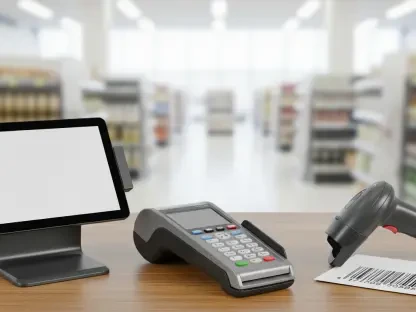
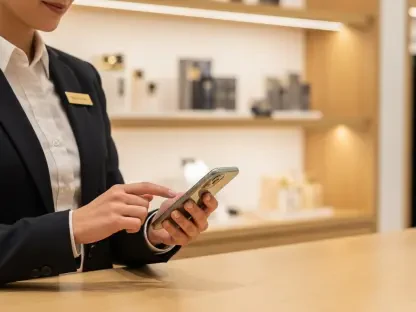
This PCI expiration is actually a golden opportunity for retailers to modernize, not just comply. The practical steps are surprisingly straightforward. Instead of purchasing another single-purpose payment terminal, a retailer simply procures a standard consumer tablet—an iPad, an Android device, or a Chrome OS tablet—and installs the CX Connect software. This one device now replaces the old card reader and often the customer display screen, too. The most immediate benefit is aesthetic. The cash wrap is suddenly clean, open, and modern, free of the clutter of multiple devices and cables. This creates a much more premium and less transactional feel. For the workflow, the associate no longer has to pivot between their screen and directing the customer to a separate device. Everything happens on one interactive surface, making the process more intuitive and seamless for both the employee and the shopper who can use features like Tap to Pay with incredible ease.
The system aims to remove friction from processes like loyalty sign-ups and warranty offers. Please share a detailed example of how this works during a transaction and explain how it improves the customer experience compared to a traditional cashier-led approach.
Absolutely. Let’s imagine a customer at a store like The Vitamin Shoppe. In the traditional model, the cashier has to verbally ask, “Would you like to join our loyalty program?” The customer might say yes, and then begins the awkward process of slowly spelling out their name and email address, holding up the line. With an integrated system, as the cashier scans the first item, the customer-facing screen can display a simple, non-intrusive prompt: “Join our rewards program now to save 15% on today’s purchase. Just enter your phone number.” The customer can type it in themselves in seconds. It’s private, fast, and driven by a clear incentive. This self-service approach removes the social pressure and potential for human error, making the customer feel empowered and in control, which is a far more positive experience than being put on the spot by a cashier.
Given that checkout displays command high engagement, how does CX Connect leverage this attention to drive incremental sales with personalized offers? Describe the mechanism for personalization and the typical ROI that retailers have experienced from these targeted interactions.
That checkout counter is arguably the most valuable real estate in the entire store for digital engagement. The customer is a captive audience. The system leverages this by turning that attention into an opportunity. The personalization kicks in the moment a customer identifies themselves, usually through their loyalty account. The system can then instantly access their purchase history and shopping patterns. So, for a customer at Build-A-Bear Workshop who previously bought a specific teddy bear, the display might showcase a new outfit or accessory for that exact bear. It’s not a generic ad; it’s a highly relevant suggestion. While specific ROI figures vary, the value comes from multiple streams: a direct lift in basket size from these targeted upsells, increased customer lifetime value from higher loyalty enrollment, and the operational savings of a more efficient checkout. You’re turning a cost center into a powerful engine for both revenue and relationship-building.
What is your forecast for the future of the in-store checkout experience?
My forecast is that the very concept of a fixed “checkout” will continue to dissolve. The future is about fluidity and embedding the transaction into the natural flow of the shopping journey. We’ll move further away from the single, static counter at the front of the store and toward more flexible, mobile, and personalized points of service. Technology will empower associates to help and transact anywhere on the floor. The checkout will cease to be a final, separate step and instead become an integrated service moment, powered by data to provide personal recognition, relevant offers, and effortless payment. It’s a future where the last impression a customer has in a store is one of seamless, personalized service, not of waiting in line.