
The most critical moments in a business-to-business relationship often happen in silence, a sudden drop in product usage or an overlooked sensor anomaly that precedes catastrophic failure, moments that traditional business systems were never designed to capture. For decades, the B2B world operated on a cadence of quarterly reports, annual reviews, and retrospective data analysis. This historical approach, while valuable for long-term planning, is fundamentally outpaced by the velocity of modern commerce. Customer expectations, shaped by the immediacy of the consumer digital experience, now demand proactive engagement and instantaneous solutions. This has created a critical inflection point where relying on yesterday’s information to solve today’s problems is no longer a viable strategy. The response to this challenge is a paradigm shift away from static “systems of record” and toward dynamic, signal-driven platforms that listen, interpret, and act on customer needs in the moment. This evolution is not merely an upgrade in technology; it is a complete reimagining of the B2B customer experience, transforming it from a series of delayed reactions into a continuous, anticipatory partnership.
The Obsolescence of Hindsight in a Real-Time World
The core of the issue lies within the architecture of legacy enterprise technology. Traditional Customer Relationship Management (CRM) and Enterprise Resource Planning (ERP) systems were engineered as databases of record. Their primary function is to store information—contacts, contracts, support tickets, and sales histories—providing a historical ledger of what has already occurred. These platforms typically operate in batch mode, processing and updating information on a delayed schedule, which results in a fragmented and time-lagged view of the customer. Consequently, they equip organizations to answer the question, “What happened last quarter?” but leave them profoundly unprepared to address the far more critical questions of today: “What is happening with our customer right now, and what is the next best action to take?” This backward-looking posture creates a perpetual state of reaction, where companies are always one step behind their customers’ evolving needs and frustrations.
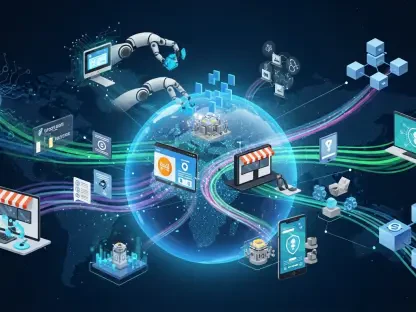
In stark contrast to this static model, a new architecture built on “signals” is emerging as the foundation for modern B2B customer experience. A signal is any piece of live, continuous data generated from a customer touchpoint, product, or operational process. These signals can include application telemetry showing how a client is using a software platform, IoT sensor data streaming from industrial machinery, real-time logistics information tracking a critical shipment, or even sentiment analysis derived from a live support chat. By capturing and processing these data streams as they occur, organizations can move from a state of historical analysis to one of immediate situational awareness. This transition represents a fundamental change from hindsight to foresight, providing the necessary infrastructure to build proactive, personalized, and agile customer relationships capable of thriving in an environment that rewards speed and prescience.
From Reactive Support to Anticipatory Service
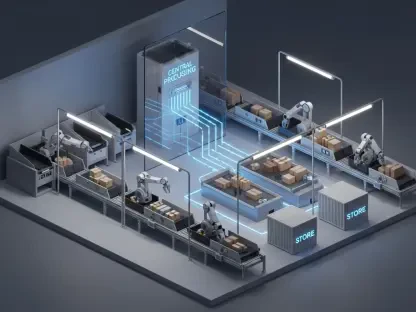
Perhaps the most powerful application of real-time signals is the revolution in customer service, shifting the entire function from a reactive cost center to a proactive loyalty driver. This transformation is vividly illustrated in the industrial sector, where companies are embedding IoT sensors into complex machinery sold to their B2B clients. These sensors continuously monitor performance metrics such as temperature, vibration, and output, streaming the data to a central analytics platform. When the system’s algorithms detect a pattern that indicates an impending component failure, it automatically triggers an alert. This allows the service team to schedule predictive maintenance, dispatch a technician with the correct part, or even apply a remote software fix before the customer experiences any operational downtime. One heavy-equipment manufacturer reported a dramatic surge in customer loyalty after implementing a system that allowed its team to diagnose and resolve potential issues remotely overnight, ensuring machinery was fully operational by the start of the next business day.
This anticipatory model is equally transformative in the digital realm. B2B software-as-a-service (SaaS) providers now leverage real-time application telemetry to gain deep visibility into how their clients are using their products. They can instantly detect performance bottlenecks, identify users struggling with a particular feature, or spot emerging security vulnerabilities. Instead of waiting for a frustrated customer to create a support ticket, the provider can preemptively reach out with a targeted solution, a helpful best-practice guide, or a necessary security patch. This proactive engagement not only resolves problems before they escalate but also demonstrates a deep commitment to the customer’s success. Companies that master this approach consistently see significant increases in key metrics like Net Promoter Score (NPS), as they have successfully transformed their support function into an engine for building trust and reinforcing the value of their partnership.
Hyper-Personalization Beyond the Static Persona
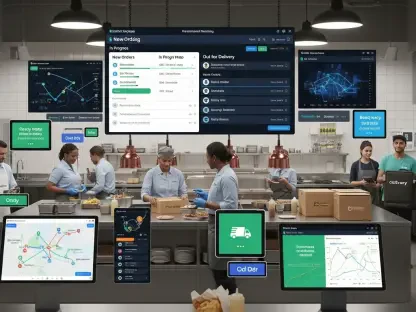
In an environment where B2B buyers expect the same level of tailored engagement they receive as consumers, generic, broad-stroke marketing is rapidly losing its effectiveness. Real-time signals are enabling a new frontier of hyper-personalization that moves far beyond static segmentation based on firmographics. By continuously analyzing streaming data from sources like website behavior, product usage patterns, and support interactions, companies can tailor every touchpoint to a customer’s immediate context and intent. A classic example is the “buying signal” generated when a key contact from a prospect account repeatedly visits a specific product’s pricing page. A signal-driven platform can flag this activity in real time, alerting a sales representative to initiate a timely and highly relevant conversation, a stark contrast to waiting for the prospect to appear in a weekly marketing report.
The true sophistication of this approach in the B2B context lies in its ability to navigate the complexity of multiple stakeholders within a single client organization. A real-time platform can correlate disparate signals to build a dynamic, holistic picture of an account’s evolving needs. For instance, it can detect a surge in product usage by the client’s engineering team, combined with specific feature-related queries in support chats, and simultaneous content downloads by a manager in their procurement department. This correlated intelligence allows the vendor to deliver precisely targeted and persona-based content. The engineer might receive an automated tip about an advanced feature they are exploring, while the procurement manager is sent a customized report on the solution’s return on investment. This multi-threaded personalization demonstrates a profound understanding of the client’s entire business, fostering deeper relationships and uncovering organic opportunities for upselling and expansion.
Forging a Unified Nerve Center for Operational Agility
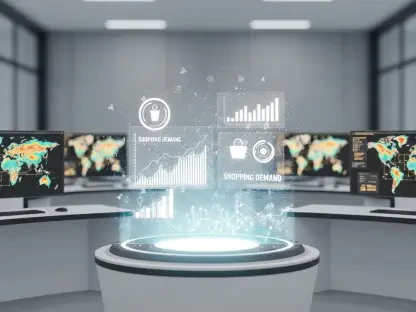
The complex and often lengthy B2B customer journey has traditionally been plagued by informational silos, with critical data locked away in separate departmental systems. This fragmentation creates blind spots and leads to slow, uncoordinated responses when disruptions occur. Real-time data integration is demolishing these silos, enabling the creation of a unified operational “nerve center” or “control tower” that provides a single, live view of the entire customer lifecycle. This centralized intelligence hub ingests and correlates signals from across the organization—from initial sales engagement and product implementation to logistics, billing, and ongoing support—to provide unprecedented end-to-end visibility.
This capability has proven to be a game-changer in sectors like supply chain management and logistics. A distributor can now use telematics to track the real-time location and condition of a shipment, integrate external data feeds on weather and traffic, and monitor warehouse inventory levels simultaneously. If a potential disruption is detected, such as a weather delay or a temperature fluctuation in a sensitive cargo hold, the system can instantly alert all relevant stakeholders and even automate corrective actions, like rerouting the shipment and sending a proactive notification to the customer with an updated, accurate delivery time. This level of transparency and reliability not only mitigates risk but also builds immense customer trust. Internally, this shared dashboard empowers cross-functional teams to collaborate with unparalleled efficiency. When a customer service agent, an account manager, and a logistics coordinator are all viewing the same live data, they can swarm an emerging issue in a seamless, coherent response, eliminating the frustrating delays and internal handoffs that have long defined poor B2B service experiences.
Cultivating a Culture of Immediacy and Action
The adoption of a real-time, signal-driven strategy is far more than a technological implementation; it catalyzes a profound cultural transformation that reorients the entire organization around the customer. The tangible returns on this investment provide a compelling business case, with studies and anecdotal evidence consistently showing that companies adopting proactive service models achieve significantly higher Net Promoter Scores and customer loyalty rates. The story of the heavy-equipment manufacturer that preemptively fixed machinery overnight is not an isolated incident but rather a clear example of the powerful link between real-time data, proactive service, and enduring customer relationships. These measurable outcomes provide the impetus for the deeper organizational changes required to fully leverage the technology.
This cultural shift moves an organization from a mindset of siloed responsibilities—where a customer issue is seen as “support’s problem” or “sales’ problem”—to one of collective ownership, where every employee understands their role in delivering a superior customer experience. The unified data hub becomes the “single source of truth” that aligns the entire company around the customer’s success. To activate this culture, leading organizations are establishing frameworks for immediate action. This begins with unifying intelligence by knitting together all customer data into a single, accessible hub. It continues with empowering cross-functional teams in “customer success war rooms” to monitor live dashboards and collaboratively address issues as they arise. Ultimately, it requires instilling an organization-wide mindset where every team is empowered and expected to act on real-time signals, making agility and customer-centricity the default operating mode.
The journey from static systems to dynamic signals had been a decisive one, fundamentally redefining the nature of business relationships. This was not merely about adopting faster technology; it was about fostering a deeper, more empathetic connection with the customer by listening and responding to their needs at the speed of business. The companies that successfully made this transition found that they were no longer just selling a product or a service. Instead, they were engaged in a continuous, intelligent conversation with their clients. The integration of real-time data had blurred the lines between product, service, and experience, creating a single, cohesive, and predictive partnership. This shift had not just been a trend; it had become the very foundation of competitive advantage and enduring success in the modern B2B landscape.