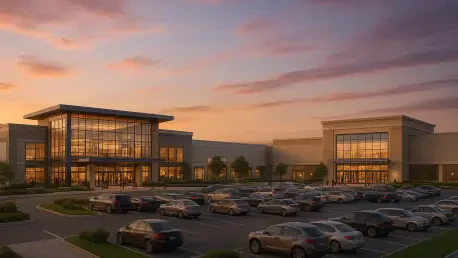

An upcoming 81,950-square-foot EVO Entertainment facility will serve as the primary leisure anchor for the Village at Gateway’s expanding entertainment sector. This massive 152-acre mixed-use project, situated roughly 25 miles east of Dallas, represents a pivotal shift in the local landscape. Developed by StreetLevel Investments, the site serves as the commercial core of the much larger 2,000-acre Gateway master-planned community. Forney, long known as a quiet suburban outpost, is rapidly transitioning into a major economic hub for North Texas. The scale of this undertaking is immense, with Phase I alone spanning over 750,000 square feet of high-density retail and service space. The architectural vision provided by GFF combined with the execution of Ridgemont Commercial Construction has created a modern, accessible layout at the critical intersection of North Gateway Boulevard and U.S. Highway 80. This location ensures that the project remains a central fixture for the thousands of residents moving into the region daily.
Anchoring a New Era of Retail
High-Profile Tenant Arrivals: Milestone Openings
The development has successfully secured a powerhouse lineup of national anchor tenants that function as primary traffic drivers for the entire Kaufman County region. A massive Target location recently opened its doors in mid-2026, marking a significant milestone for local consumers who previously traveled to neighboring cities for similar amenities. This retail giant joins other heavyweights such as Home Depot and a sprawling H-E-B grocery store, which provides essential services to the growing population. Notably, the site introduced the very first BJ’s Wholesale Club in Texas, signaling a strong confidence in the Forney market from major national brands. These anchors do more than just provide goods; they create a stable economic foundation that attracts further investment into the surrounding infrastructure. The sheer volume of foot traffic generated by these retailers ensures that the Village at Gateway remains a sustainable and vibrant commercial destination for years.
Diversity in Commerce: Specialty and Apparel Brands
Complementing these large-scale anchors is a diverse selection of apparel and specialty retailers designed to create a well-rounded and comprehensive shopping experience. Popular national brands like Burlington, Ross Dress for Less, and Five Below offer affordable fashion and household goods to a demographic that values both quality and value. By balancing these “soft goods” retailers with specialty shops such as James Avery and Bath & Body Works, the developer has catered to a wide variety of specific consumer needs and lifestyle preferences. This strategic tenant mix prevents the project from becoming a one-dimensional shopping center, instead fostering a daily-destination atmosphere. Whether residents are looking for luxury jewelry or budget-friendly home decor, the current phase of the Village at Gateway provides a localized solution that minimizes the need for long commutes. This intentional curation of brands reflects a deep understanding of the modern suburban consumer who demands convenience.
Future Growth and Regional Integration
Community Evolution: Expanding Entertainment and Dining
The vision for the Village at Gateway extends far beyond its current retail offerings, with plans already underway for an additional 120,000 square feet of service and dining space. Upcoming leisure attractions will be headlined by Dick’s Sporting Goods and the aforementioned EVO Entertainment facility, which is set to offer residents high-quality athletic equipment and diverse cinema-dining options close to home. These additions address a critical need for localized recreation in a region that has seen unprecedented residential growth. Furthermore, new dining entries like Luna Grill and Costa Vida are poised to bolster the local restaurant scene, providing fresh and healthy culinary variety for families and professionals alike. By integrating these social spaces, the development transitions from a simple commerce site into a community gathering place. This evolution is essential for maintaining long-term engagement as the Gateway master-planned community continues to welcome thousands of new homeowners.
Comprehensive Integration: Healthcare and Residential Infrastructure
Beyond commercial ventures, the development is evolving into a comprehensive regional hub through the integration of healthcare services and residential units. A 50-acre Texas Health Resources medical campus is currently under construction nearby, promising vital healthcare infrastructure and specialized medical care for the immediate community. This proximity to high-quality health services adds a layer of security and convenience for residents, making the area more attractive for long-term settlement. Additionally, the planned inclusion of multi-family residential units and various outparcels will further densify the area, creating a true “city within a city” model. This approach supports both the economic stability of the businesses and the personal well-being of Forney residents by offering a walkable, integrated lifestyle. As these components come online, the project effectively bridges the gap between suburban living and urban convenience, setting a new standard for mixed-use developments in the North Texas corridor.
Strategic Planning: Future Directions for Regional Growth
The expansion of the Village at Gateway demonstrated how strategic placement and a diverse tenant mix could revitalize a suburban economy. Stakeholders recognized that successful mixed-use projects required more than just retail; they needed a blend of essential services, entertainment, and healthcare to thrive. Developers and city planners who looked at the Forney model saw the importance of securing national anchors like H-E-B and Target early in the process to build immediate brand recognition. Urban planners prioritized similar integrations of medical facilities and high-density housing within commercial zones to ensure long-term sustainability and walkability. The project’s ability to attract the state’s first BJ’s Wholesale Club proved that underserved markets often held the greatest potential for unique brand entries. Local authorities monitored the synergy between residential growth and commercial infrastructure, as this balance remained the most reliable predictor of success.