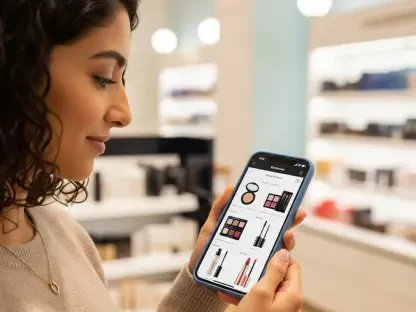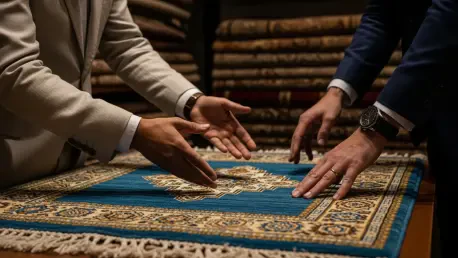

The sheer weight of a hand-woven Berber carpet hitting a stone floor creates a resonant thud that no digital checkout button can ever hope to replicate. In an age where commerce is increasingly defined by the sterile efficiency of algorithms and one-click purchasing, a profound tension exists between the high-volume precision of modern retail and the ancient, high-touch artistry of traditional trade. This exploration brings together the perspectives of corporate retail veterans and traditional marketplace masters to examine how the psychology of persuasion operates across vastly different environments. By dissecting a specific encounter between a former Merchandising Director for Walmart and a veteran carpet seller in Tangier, we can uncover how timeless human rituals continue to outperform modern data-driven strategies in the realm of emotional engagement.
From Bentonville to the MedinA Collision of Modern Retail and Ancient Artistry
The world of high-volume retail and the ancient trading floors of Tangier may seem worlds apart, yet they are governed by the same fundamental laws of human psychology. When a former Merchandising Director for Walmart—trained in the rigorous, data-driven negotiation tactics of the world’s largest retailer—steps into a Moroccan carpet warehouse, the result is a masterclass in the evolution of sales. This encounter serves as a vivid case study in how commerce is less about the transaction of goods and more about the orchestration of an immersive environment. Corporate experts often focus on price elasticity and inventory turnover, but the Moroccan master operates on the rhythm of human rapport and environmental control.
By examining the meeting between a veteran “merchant” and a Berber “master,” we can bridge the gap between corporate strategy and the timeless nuances of the human connection. While the merchant from Bentonville is accustomed to looking at spreadsheets and logistical efficiencies, the master in the medina looks at the dilation of a pupil or the slight hesitation in a customer’s step. This intersection reveals that regardless of whether the setting is a multi-billion dollar big-box store or a thousand-year-old stone warehouse, the successful close of a sale relies on the same neurological triggers. The transition from a buyer-seller relationship to a host-guest dynamic represents the pinnacle of this ancient art.
The Architecture of Persuasion: Beyond the Transactional Exchange
Orchestrating Reciprocity Through Ritual and Sensory Immersion
The sales process begins long before a product is even mentioned, rooted in the psychological principle of social indebtedness. In the Moroccan medina, this is embodied in the ritual of hot mint tea served in “crystal chalices”—a gesture that creates a social imbalance, making the guest feel an instinctive need to restore parity through a purchase. Industry analysts note that this is a heightened version of the “free sample” strategy, but with a significant cultural layer. Unlike the sterile environment of modern e-commerce, this approach utilizes sensory triggers—scent, taste, and the physical labor of workers rolling out heavy textiles—to transform a simple viewing into an emotional debt.
This level of immersion forces the customer to engage not just with an item, but with the effort and hospitality of the seller. When a guest watches half a dozen men struggle with the physical weight of massive rugs, the “cost” of the interaction is no longer just monetary. The buyer begins to feel a sense of responsibility for the labor being performed on their behalf. In this environment, the act of walking away without a purchase becomes a social transgression rather than a simple financial choice. By heightening the hospitality, the seller effectively raises the psychological stakes of the negotiation before the first price is ever uttered.
Navigating the “Turn” with Micro-Commitments and Behavioral Cues
A master salesperson transitions from exposition to the “close” by identifying subtle nonverbal signals—a lean forward, a lingering gaze, or a faint smile. Using the “foot-in-the-door” technique, the seller shifts the customer from a passive observer to an active participant through a binary choice: uħibb (I like it) or ya’khudh (discard it). This gamification of the selection process builds a series of micro-commitments, making it increasingly difficult for the buyer to retreat as they become co-creators of the curated selection. Experts in behavioral economics suggest that once a person has voiced a preference, they feel a psychological internal pressure to remain consistent with that choice.
This stage demonstrates that effective sales are not about a single “yes,” but a sequence of small agreements that lead to an inevitable conclusion. By narrowing the field from dozens of rugs to a select few based on the customer’s own input, the seller transfers the “ownership” of the choice to the buyer. The merchant is no longer pushing a product; the buyer is now defending their own taste. This subtle shift is vital because it reduces the friction of the final decision. When the “turn” happens, the customer isn’t just buying a rug; they are validating the series of small preferences they have expressed over the previous hour.
The Liking Principle and the Strategy of Shared Identity
To dissolve the natural skepticism of a seasoned buyer, the seller must bridge the gap of “otherness” through the similar-to-me bias. By finding common ground—whether through shared parenthood or professional kinship in the “secret society” of sales—the merchant transforms from a stranger into a peer. In the case of the Walmart executive, the Moroccan seller identified their shared background in the “trade,” creating an immediate sense of camaraderie. Compliments, even when recognized as tactical, trigger a self-enhancement bias that makes the recipient more receptive to the pitch.
This section explores how humanizing the seller and validating the buyer’s taste creates a protective layer of rapport that can withstand the friction of negotiation. When a seller relates stories of their own family or asks about the customer’s children, they are effectively moving the conversation from a commercial plane to a personal one. This tactic is especially effective against seasoned negotiators who are used to the adversarial nature of corporate deals. By becoming a “friend” or a “peer,” the seller makes it much harder for the buyer to employ their usual defensive tactics, as doing so would feel like a personal slight against someone they now “know.”
Narrating Value: Transforming Commodities into Cultural Artifacts
The most profound shift in the sales experience occurs when a product is stripped of its “merchandise” label and rebranded as a story. By highlighting the “village women” who spend months weaving each piece, the seller moves the conversation away from utility and toward heritage and emotional legacy. This storytelling adds value that is untethered to material costs, turning a rug into an heirloom. Retail strategists often refer to this as “brand narrative,” but in the medina, it is a lived reality. The rug is no longer just wool and dye; it is a vessel for a tradition that predates the buyer’s own country.
In a world of frictionless, faceless transactions, this emphasizes the power of “emotional equity”—the ability to create perceived value out of thin air by connecting a product to a larger, more meaningful human narrative. The merchant focuses on the longevity of the piece, suggesting it will be passed down to “children’s children,” which reframes the price from an expense to an investment in family history. This technique effectively bypasses the logical centers of the brain that calculate square-footage costs and instead targets the emotional centers that seek connection and permanence. By the time the story is finished, the physical object has become secondary to the meaning it represents.
Strategic Synthesis: Translating Ancient Wisdom into Modern CX
The encounter in Tangier reveals that the most effective customer experiences are those that prioritize meaning over mere convenience. For modern brands, the takeaway is clear: friction should not always be eliminated; sometimes, it should be designed to foster engagement. Leaders should focus on “high-touch” moments that trigger psychological reciprocity and use storytelling to differentiate in a crowded market. Convenience often leads to forgettable transactions, whereas a certain level of effort—on both the part of the seller and the buyer—creates a memory that tethers the customer to the brand long after the sale is complete.
Modern customer experience designers are beginning to realize that the “Amazon-ification” of retail has left a void in human connection that niche players can exploit. By adopting the “Master’s” approach of deep customer observation and emotional resonance, businesses can move beyond being a vendor to becoming a memorable part of the customer’s personal journey. This requires a shift from transactional metrics like “time on site” to more qualitative measures of engagement and story-sharing. The goal is to create an environment where the customer feels seen, understood, and valued, transforming a simple purchase into a significant life event.
The Enduring Power of the Human Touch in Global Trade
The collision of Walmart’s disciplined merchandising and Morocco’s centuries-old sales pedigree reinforced a singular truth: commerce was, and remained, an inherently social act. While technology changed the medium, the psychological triggers of reciprocity, storytelling, and social proof remained the bedrock of any successful exchange. The experience demonstrated that even the most sophisticated buyers were susceptible to the power of ritual and the pressure of social indebtedness. As retail continued to move toward automation, the lessons from the medina reminded the industry that the most significant competitive advantage was the ability to create an experience that resonated long after the tea had gone cold.
Ultimately, great salesmanship was not about closing a deal; it was about opening a relationship through a story worth believing in. For businesses moving forward, the next step involves integrating these “high-touch” psychological principles into digital and hybrid environments. This might mean leveraging personalized video interactions, using generative AI to craft bespoke product narratives, or intentionally introducing “meaningful friction” into the user journey to slow the customer down and invite deeper engagement. Future leaders will need to balance the efficiency of the machine with the warmth of the mint tea, ensuring that even in a globalized, automated economy, the human connection remains at the heart of the trade. Success will belong to those who can make their customers feel like “Abdul”—not a number, but a guest in a story.