
The ability to predict exactly how a crowd will interact with a new physical environment before the first brick is laid has shifted from science fiction to a baseline requirement for modern infrastructure and retail design. This synthetic approach represents a significant advancement in the retail and digital signage sectors, moving past the limitations of traditional observational data. By leveraging high-fidelity modeling, organizations can now visualize consumer journeys with a degree of precision that was previously impossible. This review explores the evolution of the technology, its key features, and the impact it has had on various industrial applications, providing a thorough understanding of its current capabilities and the trajectory of its development.
The Convergence of AI and Spatial Digital Twins
The emergence of synthetic consumer simulation marks a decisive transition from reactive analytics toward proactive behavioral forecasting. At its core, this technology combines high-fidelity digital twins—virtual replicas of physical environments—with AI-generated agents programmed to mimic real-world shopping behaviors. This framework allows for the creation of a behavioral laboratory where retailers can test complex hypotheses without the overhead of physical construction or the risks associated with unproven pilot programs. By integrating vast datasets into dynamic entities, the technology has evolved from static demographic profiles into active participants capable of navigating spaces and responding to diverse stimuli.
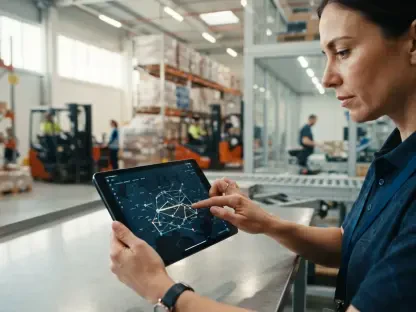
Moreover, the integration of these two distinct technologies ensures that the simulation is not just a mathematical model but a spatial experience. The digital twin provides the physical constraints, while the AI provides the human logic. This synergy allows planners to observe how a change in aisle width or the height of a digital display affects the flow of traffic in real time. Consequently, the design process becomes an iterative cycle of simulation and refinement, ensuring that the final physical space is optimized for the specific goals of the operator, whether those goals are increased sales or improved safety.
Core Mechanisms of Behavioral Modeling
The sophistication of modern simulations relies on the interplay between the actors and their environment. These systems do not merely move dots across a screen; they simulate the cognitive load and sensory inputs that a human experiences when walking through a crowded terminal or a narrow grocery aisle. By grounding the simulation in the laws of physics and the patterns of human psychology, developers have created a tool that reflects the nuances of physical existence.
Autonomous Synthetic Agents
These digital entities are the primary components of the simulation, programmed with extensive consumer data to replicate human decision-making processes. Unlike traditional models that rely on simplified pathfinding, these agents are dynamic actors that navigate virtual stores while reacting to variables such as pricing, product placement, and visual cues. Their performance is measured by how accurately they mirror the purchasing decisions and movement patterns of real-world shoppers. This provides a granular look at the motivations behind consumer actions, allowing for a deeper understanding of the shopping experience.
High-Fidelity Spatial Digital Twins
The second critical feature is the digital twin, which acts as a precise virtual reconstruction of a physical venue, such as a convenience store or an airport terminal. This component provides the necessary context in which synthetic agents operate. By simulating environmental factors like lighting, shelf height, and the placement of structural pillars, the system offers an in-depth look at how physical architecture influences movement and dwell time. This allows planners to identify bottlenecks or dead zones before any expensive hardware is installed, saving time and resources.
Shifts in Retail Planning and Industry Behavior
The latest developments in this field highlight a significant move away from professional guesswork toward empirical validation. A major trend is the professionalization of Retail Media Networks, which now demand the same level of forecasting precision found in online advertising platforms. There is a notable shift toward pre-production validation, where digital signage networks and store layouts are optimized in the virtual phase rather than adjusted after the fact. This trend is driven by the high cost of post-deployment changes, pushing the industry to treat physical space with the same agility as a digital interface.
Furthermore, this shift has changed the relationship between brands and retailers. Instead of negotiating based on estimated foot traffic, parties now use simulated engagement scores to determine the value of a specific display location. This data-driven approach fosters a more transparent marketplace where the return on investment for any given square foot can be projected with high confidence. It essentially levels the playing field, allowing smaller retailers to compete with larger chains by using superior spatial optimization rather than just massive physical footprints.
Real-World Applications and Sector Deployment
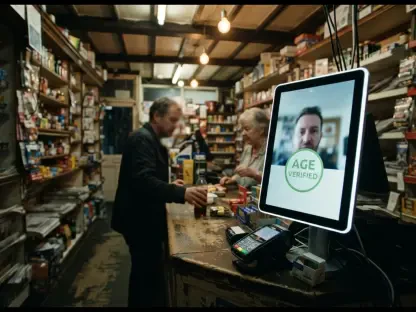
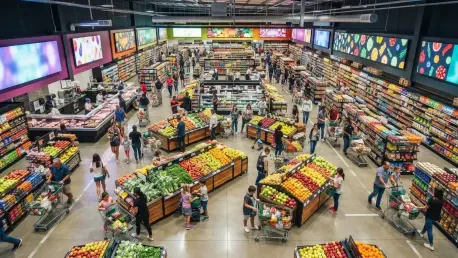
The technology is currently seeing significant adoption in the high-density retail sector, with pioneers like the South Korean giant CU using simulations to refine store layouts and maximize efficiency. Beyond convenience stores, these models are being deployed in large-scale infrastructure projects that require complex crowd management. Transit hubs like airports and railway stations use these simulations to manage passenger flow and optimize the placement of information and advertising displays, ensuring that critical messages are seen by the right people at the right time.
Retail media optimization has also become a primary use case, as brands use virtual audiences to pre-test high-end creative content and motion graphics. This ensures maximum resonance and prevents the deployment of content that might be visually overwhelming or ignored. Additionally, architectural firms utilize these simulations to validate the structural and financial feasibility of screen placements relative to power and structural constraints. This comprehensive application across sectors demonstrates that synthetic simulation is no longer a niche tool but a foundational element of modern spatial design.
Challenges and Technical Constraints
Despite its clear potential, the technology faces several significant hurdles that prevent universal implementation. Technical limitations exist in modeling the full spectrum of unpredictable human emotions and the various external environmental variables that can influence behavior on a whim. There is also the persistent challenge of data integrity, as the simulation is only as good as the real-world data used to train the synthetic agents. If the underlying data is biased or incomplete, the resulting simulation will inevitably produce flawed insights.
Furthermore, widespread adoption is currently limited by the high computational power required to run high-fidelity simulations in a timely manner. The market also faces the obstacle of integrating these advanced data sciences into traditional architectural and construction workflows, which are often resistant to radical change. However, as processing power becomes more accessible and the demand for efficiency grows, these barriers are expected to diminish. The industry must continue to refine the balance between complexity and usability to ensure that these tools are accessible to more than just the largest corporations.
The Future of Predictive Spatial Analytics
The technology is heading toward a more seamless integration of AI and spatial computing, where simulations become a standard requirement for any physical development. Future breakthroughs may include real-time feedback loops, where data from operational stores is fed back into the digital twin to refine the synthetic models continuously. This would create a living document of a store’s performance, allowing for rapid adjustments to be made as consumer trends evolve or new products are introduced.
Long-term, this could lead to a simulate-before-you-build mandate across all public sectors, permanently blurring the line between data science and physical architecture. We are likely to see the rise of autonomous design systems where the AI not only tests layouts but actively proposes the most efficient configurations based on a set of defined parameters. This evolution will prioritize the human experience, as spaces will be designed around the predicted needs and movements of the people who use them, rather than the convenience of the builder.
Final Assessment of Synthetic Simulation
The evaluation of synthetic consumer simulation revealed a profound shift in how physical environments were conceptualized and executed. Stakeholders recognized that the primary value of this technology was found in the massive reduction of financial risk and the ability to justify capital expenditure with evidence-based projections. Rather than viewing simulations as an optional or secondary step, forward-thinking firms began treating them as a mandatory blueprint for all future developments. The industry moved toward a standard where every physical screen or product shelf was the calculated result of a thousand virtual trials, ensuring that human-centric design was no longer a matter of chance.
Ultimately, the transition to these predictive models empowered designers to solve problems before they manifested in the real world. The lessons learned from early adopters like CU and transit authorities provided a roadmap for a future where data and architecture are inseparable. As the accuracy of AI agents improved, the gap between the virtual and the physical narrowed significantly. This technological journey ensured that the physical displays of the future would be more than just hardware; they would be the optimized focal points of a perfectly choreographed consumer experience. Organizations that embraced this shift early found themselves better positioned to adapt to the rapidly changing demands of a more informed and mobile public.